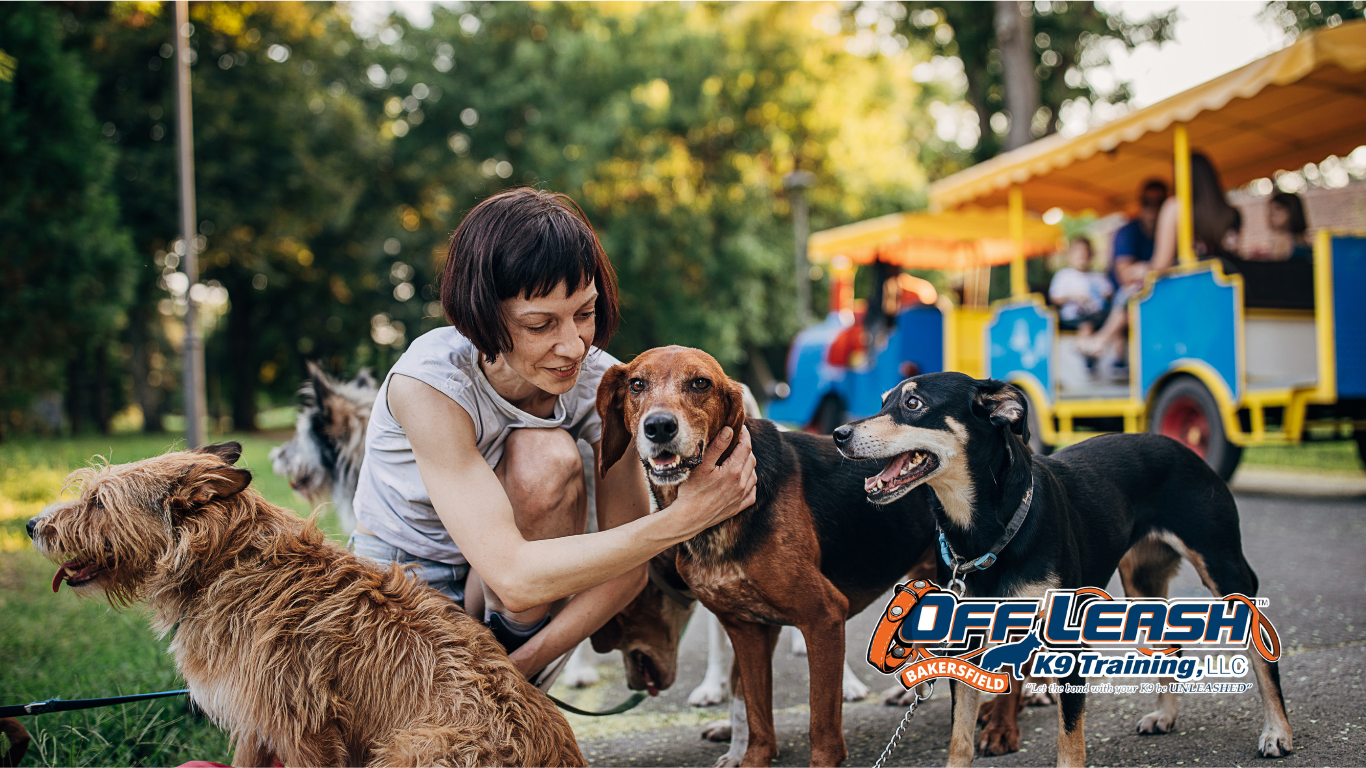
Better Behavior in Public Places: Why Dogs Need Better Behavior in Public Places
Better Behavior in Public Places is one of the most valuable goals for any dog owner. While many dogs behave well at home, public environments introduce distractions that can make even familiar commands difficult to follow. New people, dogs, traffic, bicycles, food smells, loud noises, and unfamiliar surroundings all compete for a dog’s attention.
Without proper training, these situations may lead to barking, pulling, jumping, lunging, or ignoring commands. These behaviors are rarely caused by stubbornness alone. More often, they occur because emotional arousal rises faster than the dog’s ability to regulate their behavior.
Dogs that need better behavior in public places may:
- Pull on the leash
- Bark at strangers
- Jump on people
- Ignore commands
- Become distracted easily
- Lunge toward other dogs
- Beg for food
- React to loud noises
- Pace or whine
- Struggle to settle
Public manners require more than simple obedience. Dogs must also develop confidence, impulse control, emotional regulation, and the ability to recover from unexpected events. These life skills help dogs remain calm even when exciting or unfamiliar situations arise.
Training should begin in quiet environments before gradually introducing more challenging locations. As dogs gain confidence through repeated success, they become better able to generalize their training to parks, sidewalks, outdoor restaurants, pet-friendly stores, veterinary clinics, and community events.
For Bakersfield dog owners, strong public behavior makes everyday activities more enjoyable and less stressful. Whether visiting local parks, walking through neighborhoods, attending outdoor festivals, or dining at pet-friendly patios, a calm and well-mannered dog is safer, easier to manage, and more welcome in public spaces.
The encouraging news is that public manners are teachable. Through structured exposure, positive reinforcement, and consistent practice, most dogs can develop the confidence and self-control needed to behave politely wherever life takes them.
Key Takeaways
- Public behavior is a learned skill.
- Emotional regulation is essential for success in busy environments.
- Confidence reduces unwanted reactions.
- Impulse control improves public manners.
- Gradual exposure builds resilience.
- Reward calm behavior consistently.
- Practice in increasingly distracting locations.
- Avoid overwhelming your dog during training.
- Consistency creates reliable public obedience.
- Most dogs can learn excellent public manners through structured, positive training.
What Does “Better Behavior in Public Places” Mean?
When dogs demonstrate better behavior in public places, they remain calm, focused, and responsive despite the many distractions surrounding them. Instead of reacting impulsively to people, dogs, traffic, food, or loud noises, they are able to stay engaged with their owner and make thoughtful decisions.
Good public behavior goes far beyond knowing basic obedience commands.
A dog may perform a perfect Sit in the living room but struggle to listen in a busy park filled with unfamiliar sights and sounds.
Public manners require dogs to combine several important life skills, including:
- Confidence
- Emotional regulation
- Impulse control
- Focus
- Adaptability
- Recovery after surprises
These skills help dogs remain relaxed even when the environment becomes busy or unpredictable.
Dogs that need better behavior in public places may:
- Pull on the leash
- Bark at strangers
- Jump on people
- Lunge toward other dogs
- Ignore commands
- Beg for food
- Whine
- Become overstimulated
- Pace constantly
- React to loud noises
These behaviors usually result from emotional overload rather than stubbornness.
Understanding this helps owners focus on building confidence instead of simply correcting unwanted behavior.
Why Public Behavior Is Different From Home
Dogs naturally feel safer in familiar environments.
At home they understand:
- Household routines
- Familiar sounds
- Family members
- Known smells
- Predictable surroundings
Public environments remove much of that predictability.
Every outing introduces new information that the dog’s brain must process.
Why Public Environments Challenge Dogs
Dogs experience public places very differently than people.
While humans primarily notice visual changes, dogs constantly process:
- Smells
- Sounds
- Movement
- Body language
- Environmental changes
A simple walk through a shopping area may expose a dog to:
- Children running
- Shopping carts
- Automatic doors
- Food smells
- Other dogs
- Birds
- Bicycles
- Loud vehicles
- Construction equipment
- Crowds
Each distraction competes for the dog’s attention.
Sensory Overload
When too much information arrives at once, dogs may experience sensory overload.
Instead of calmly observing their surroundings, they begin reacting automatically.
Common behaviors include:
- Barking
- Pulling
- Lunging
- Freezing
- Ignoring commands
- Refusing treats
- Hypervigilance
Learning becomes much more difficult once emotional arousal rises too high.
Why Familiarity Builds Confidence
The more often dogs experience an environment successfully, the more predictable it becomes.
Confidence develops through repetition.
Eventually, places that once felt overwhelming begin to feel routine.
Fear vs. Excitement Around Distractions
Not every reactive dog feels frightened.
Some become excited.
Others become anxious.
The behaviors may appear similar even though the emotional causes differ.
Fearful Dogs May:
- Freeze
- Tremble
- Pull away
- Hide behind their owner
- Refuse treats
- Avoid eye contact
These dogs want more distance from the situation.
Excited Dogs May:
- Pull forward
- Jump
- Bark enthusiastically
- Spin
- Rush toward people
- Attempt to greet everyone
Their goal is interaction rather than escape.
Why Identifying the Emotion Matters
Two dogs may bark at the same person.
One is asking:
“Can I say hello?”
The other is asking:
“Please stay away.”
Training should address the underlying emotion rather than focusing only on stopping the barking.
Common Public Triggers
Every dog has individual triggers.
Some dogs react strongly to only one or two situations.
Others become overwhelmed by many different distractions.
Common public triggers include:
- Other dogs
- Children
- Joggers
- Bicycles
- Skateboards
- Scooters
- Shopping carts
- Food
- Wildlife
- Loud vehicles
- Construction equipment
- Umbrellas
- Hats
- Strollers
- Crowds
Identifying specific triggers allows owners to create gradual training plans.
Trigger Stacking
Dogs sometimes handle one distraction well.
However, multiple distractions occurring together may overwhelm them.
For example:
A dog notices another dog.
Then a bicycle passes.
Next a child runs nearby.
Finally a loud truck drives past.
Although each distraction alone might be manageable, together they exceed the dog’s emotional threshold.
This process is called trigger stacking.
Emotional Regulation in Busy Environments
Emotional regulation allows dogs to experience exciting or unfamiliar situations without becoming overwhelmed.
Dogs with strong emotional regulation can:
- Notice distractions.
- Continue walking calmly.
- Accept treats.
- Follow commands.
- Recover quickly after surprises.
These skills improve through repeated successful experiences.
Why Calm Dogs Learn Faster
When dogs remain emotionally balanced, they can:
- Listen carefully
- Solve problems
- Make better decisions
- Remember cues
- Recover after mistakes
Calm minds learn more effectively than overwhelmed ones.
The Importance of Impulse Control
Impulse control allows dogs to pause before reacting.
Instead of immediately barking, jumping, or pulling, they learn to think first.
Examples include:
Seeing another dog.
Looking at their owner.
Receiving a reward.
Instead of:
Seeing another dog.
Lunging immediately.
Helpful impulse-control exercises include:
- Wait
- Place
- Leave It
- Stay
- Loose leash walking
- Delayed food rewards
- Calm greeting practice
Each successful repetition strengthens the dog’s ability to remain thoughtful under increasing levels of distraction.
Over time, these everyday exercises build reliable public manners because dogs learn that calm behavior consistently leads to positive outcomes. Rather than reacting automatically to every person, dog, sound, or movement they encounter, they develop the confidence to observe their surroundings, remain focused on their owner, and navigate busy public places with patience, self-control, and emotional balance.
Common Owner Mistakes
Teaching better behavior in public places requires patience, consistency, and realistic expectations. Many owners unintentionally make training more difficult by asking too much too soon or reinforcing behaviors they hope to eliminate.
Understanding these common mistakes helps dogs gain confidence while improving public manners.
Going to Busy Locations Too Early
One of the biggest mistakes is taking dogs directly into highly distracting environments before they have mastered basic skills.
Examples include:
- Crowded parks
- Outdoor shopping centers
- Festivals
- Farmers markets
- Busy sidewalks
- Pet stores
These environments can overwhelm even friendly, well-behaved dogs.
Instead, begin in quieter locations and gradually increase distractions as your dog’s confidence improves.
Expecting Perfect Obedience Everywhere
Dogs do not automatically understand that commands learned at home also apply in public.
A dog may perform a flawless Sit in the living room but struggle to respond in a busy park.
Generalization takes practice.
Training should gradually progress from:
- Home
- Backyard
- Quiet neighborhood
- Community park
- Busier public areas
Each successful step builds reliability.
Tightening the Leash
Many owners instinctively shorten or tighten the leash whenever distractions appear.
Unfortunately, constant leash tension can increase:
- Frustration
- Anxiety
- Pulling
- Reactivity
Whenever possible:
- Stay relaxed.
- Maintain a loose leash.
- Create distance if necessary.
- Reward calm behavior.
Repeating Commands
Owners often say:
- Heel.
- Sit.
- Leave it.
- Watch me.
over and over when their dog is distracted.
If the dog is emotionally overwhelmed, repeated commands usually become less effective.
Instead, move farther away from distractions until your dog can successfully respond.
Correcting Instead of Teaching
Public training should focus on teaching desired behaviors rather than constantly correcting mistakes.
Reward your dog whenever they:
- Look at you.
- Walk calmly.
- Ignore distractions.
- Stay beside you.
- Recover after being startled.
Dogs repeat behaviors that consistently earn rewards.
Teaching Calm Public Manners
Public manners develop through hundreds of successful experiences.
The goal is not to eliminate curiosity.
The goal is helping dogs remain emotionally balanced while exploring the world.
Start With Quiet Environments
Choose locations with few distractions.
Examples include:
- Quiet residential streets
- Empty parks
- Calm walking paths
- Open fields
These environments allow dogs to practice successfully before progressing to busier areas.
Reward Engagement
Every time your dog voluntarily checks in with you:
- Offer praise.
- Give a reward.
- Continue walking.
Frequent engagement teaches dogs that paying attention to their owner is valuable.
Practice Loose Leash Walking
Loose leash walking creates calmer emotional states.
Whenever your dog walks beside you without pulling:
- Praise calmly.
- Reward frequently.
- Keep moving.
Calm movement often encourages calm thinking.
Build Confidence Gradually
Introduce new environments one step at a time.
Allow your dog to:
- Observe
- Sniff
- Process
- Recover
Confidence grows through repeated success—not forced exposure.
Teach Settle and Place
Relaxation skills transfer well to public settings.
Practice Place or Settle during:
- Outdoor dining
- Park visits
- Sporting events
- Community gatherings
- Waiting areas
Dogs that know how to relax remain calmer around distractions.
Better Behavior in Public Places in Bakersfield
Bakersfield offers many excellent opportunities for public training.
Dogs regularly encounter:
- Community parks
- Residential neighborhoods
- Outdoor shopping centers
- Farmers markets
- Pet-friendly businesses
- Walking trails
- Veterinary clinics
- Grooming salons
Each environment helps strengthen confidence when introduced gradually.
Professional dog training helps Bakersfield owners improve:
- Loose leash walking
- Emotional regulation
- Public obedience
- Calm greetings
- Confidence around distractions
- Impulse control
Real-world practice prepares dogs for everyday adventures while reducing stress for both owners and pets.
Long-Term Benefits of Public Training
Teaching calm public behavior improves much more than outings.
Long-term benefits include:
- Better emotional regulation
- Increased confidence
- Improved focus
- Better impulse control
- Reduced leash reactivity
- Safer public behavior
- Stronger owner engagement
- Easier veterinary visits
- More enjoyable travel
- Greater freedom to participate in family activities
Confident dogs become more adaptable because they learn that unfamiliar environments are safe.
Frequently Asked Questions
1. Why does my dog behave well at home but poorly in public?
Public environments contain many distractions that compete for your dog’s attention. Your dog may understand commands but struggle to perform them when emotionally overstimulated.
2. At what age should dogs begin public training?
Puppies can begin safe socialization and public exposure after guidance from their veterinarian regarding vaccinations. Early positive experiences help build lifelong confidence.
3. How long should public training sessions last?
Keep sessions short and successful. Ten to twenty minutes is often enough for beginners before mental fatigue develops.
4. Should I let strangers pet my dog?
Only if your dog remains calm and comfortable. Not every interaction is beneficial, and forcing greetings may increase anxiety or excitement.
5. Why won’t my dog take treats in public?
Refusing food often means your dog is above their emotional threshold. Move to a quieter area where they can relax enough to eat.
6. Can professional training improve public behavior?
Yes. Professional trainers provide structured exposure, confidence-building exercises, and practical coaching that helps dogs succeed in real-world environments.
7. Is barking always caused by fear?
No. Dogs may bark because of excitement, frustration, curiosity, or fear. Identifying the underlying emotion leads to more effective training.
8. Should I avoid busy places completely?
No. Gradual exposure is important. Simply introduce challenging environments slowly so your dog remains successful throughout the learning process.
9. Can older dogs learn better public manners?
Absolutely. Adult and senior dogs continue learning throughout life. While progress may take time, consistent positive training can improve public behavior at any age.
10. Will my dog ever ignore distractions completely?
Probably not—and that’s okay. The goal is not to eliminate awareness but to teach your dog to notice distractions, remain calm, and quickly refocus on you.
Comprehensive Conclusion
Better Behavior in Public Places is about far more than teaching obedience commands. It is about helping dogs develop the confidence, emotional regulation, and impulse control needed to remain calm when the world around them becomes busy and unpredictable. Whether walking through a neighborhood, visiting a park, dining on a pet-friendly patio, or attending a community event, dogs encounter countless distractions that challenge their ability to focus.
The encouraging news is that public manners can be taught. By starting in quiet environments, rewarding calm choices, practicing loose leash walking, and gradually introducing more challenging locations, owners help dogs replace impulsive reactions with thoughtful behavior. Every successful outing teaches the dog that unfamiliar people, sounds, and surroundings are safe and manageable.
For Bakersfield dog owners, these skills create opportunities to enjoy more activities together. A dog that behaves politely in public is easier to take on walks, visit local businesses with, attend outdoor events, and include in family adventures. Strong public manners also improve safety, reduce stress, and strengthen the bond between dog and owner.
Ultimately, great public behavior is built one positive experience at a time. With patience, consistency, and confidence-based training, most dogs learn to navigate busy environments without becoming overwhelmed. As they gain experience, they become calmer, more adaptable companions who can confidently enjoy the world alongside the people they trust most.
Website Contact Form
"*" indicates required fields