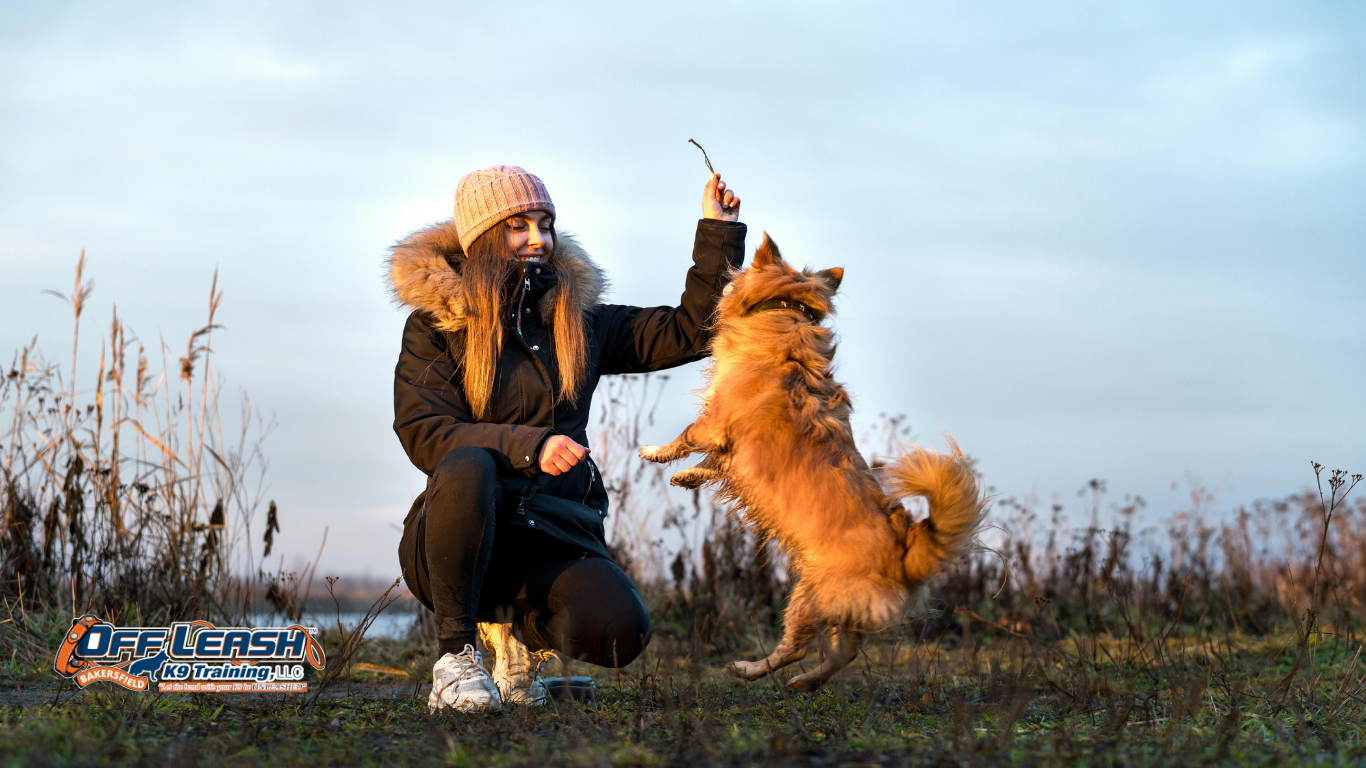
Does the Owner Need to Participate in Dog Training?
Professional dog training can teach valuable skills, but the owner’s involvement can play an important role in helping those skills become part of everyday life. A dog may learn a behavior during a structured training session, but the behavior still needs to be practiced and reinforced in the environments where the dog actually lives.
Owner participation does not mean the owner has to become a professional trainer. It means understanding what the dog is learning, following consistent guidelines, and practicing appropriate behaviors between training sessions.
When the owner and trainer communicate clearly and use similar expectations, dogs can have a more predictable learning experience.
What Does “Owner, Participate” Mean in Dog Training?
Owner participation means taking an active role in the dog’s ongoing learning process.
This can include:
- Learning the training techniques being used
- Practicing behaviors at home
- Reinforcing appropriate responses
- Following the trainer’s recommendations
- Maintaining consistent household rules
- Practicing around everyday distractions
- Communicating changes or concerns to the trainer
The owner’s role may look different depending on the training program.
Some programs involve owners directly in every session, while others may include structured handoff sessions where the trainer teaches the owner how to continue the work.
The important point is that training does not have to end when the formal session ends.
Why Dogs Need Consistency From Their Owners
Dogs learn through repetition and experience.
If a dog is expected to behave one way during training but receives completely different expectations at home, learning can become confusing.
For example, imagine a dog is being taught to wait calmly before going through a doorway.
If the owner consistently rewards waiting, the dog receives a clear message.
If the dog is sometimes expected to wait but is allowed to rush through the doorway at other times, the expectation becomes less predictable.
Consistency can apply to:
- Doorways
- Greetings
- Feeding
- Leash walking
- Furniture rules
- Jumping
- Barking
- Recall
- Impulse control
- Basic obedience
Consistency does not mean perfection.
The Role of the Owner During Professional Training
The owner’s role depends on the type of training being provided.
During some training programs, owners may participate directly while the trainer demonstrates techniques and provides guidance.
In other programs, the trainer may work with the dog first and then teach the owner how to continue the behaviors.
In either case, owners can benefit from understanding:
- What behavior is being taught
- What cue is being used
- What the dog should do
- How the behavior should be rewarded
- What mistakes to avoid
- How to practice the behavior at home
- How to gradually increase distractions
A successful handoff is important.
The dog should not simply learn how to respond to a trainer. The owner should also learn how to communicate with the dog and reinforce the behaviors appropriately.
How Owners Can Reinforce Training at Home
Home practice does not have to involve long training sessions.
Many behaviors can be incorporated into normal routines.
For example, an owner can practice waiting before:
- Going outside
- Eating
- Getting into the car
- Going through a doorway
- Greeting visitors
- Receiving a toy
Owners can also reward appropriate behavior when the dog naturally offers it.
If the dog calmly settles on a bed while the family is busy, that calm behavior can be reinforced.
If the dog checks in with the owner during a walk, that moment can also become a training opportunity.
Short, frequent practice can help make training part of everyday life rather than something that only happens during formal sessions.
Communication Between the Dog, Owner, and Trainer
Clear communication is important for everyone involved.
The owner should understand what the trainer is teaching and have an opportunity to ask questions.
It is also useful for owners to tell the trainer about changes they notice at home.
For example:
- Is the dog improving?
- Are certain behaviors returning?
- Are new triggers appearing?
- Is the dog struggling in a particular environment?
- Are family members having difficulty following the training plan?
This information can help the training approach remain practical.
Dogs also communicate through body language and behavior. Owners who learn to recognize early signs of excitement, stress, frustration, or uncertainty may be better prepared to adjust a situation before the behavior escalates.
Common Owner Mistakes That Can Slow Training Progress
Even well-intentioned owners can accidentally make training more difficult.
Inconsistent Rules
Allowing a behavior one day and correcting it the next can make expectations unclear.
Practicing Only During Formal Sessions
Dogs need opportunities to use learned behaviors in everyday environments.
Expecting Immediate Results
Behavior changes often take time and repetition.
Increasing Difficulty Too Quickly
A dog that succeeds in a quiet room may not immediately succeed around significant distractions.
Repeating Commands
Repeatedly saying a cue without giving the dog an opportunity to respond can make communication less clear.
Accidentally Rewarding Unwanted Behavior
Attention, access, movement, and other consequences can sometimes reinforce behaviors without the owner realizing it.
Not Communicating With the Trainer
If something is not working at home, sharing that information allows the training approach to be adjusted.
How Much Should an Owner Participate in Dog Training?
There is no single amount of participation that works for every dog or every training program.
The appropriate level depends on:
- The dog’s behavior
- The owner’s goals
- The training program
- The dog’s learning history
- The complexity of the behavior
- The owner’s schedule
- The environment where the skills need to be used
However, owners generally benefit from learning how to maintain the behaviors their dogs are being taught.
Even a few minutes of focused practice can provide useful opportunities for reinforcement.
The goal is not to turn every moment into a training session.
Instead, owners can integrate training into normal life.
A walk can become leash-training practice.
Mealtime can become an opportunity to practice patience.
Visitors can provide an opportunity to practice calm greetings.
Daily routines can become natural reinforcement opportunities.
Helping Owners Build Better Training Habits With BakersfieldDogTrainer.com
BakersfieldDogTrainer.com can help owners understand how their participation fits into the training process.
Owners may need support with practical skills such as:
- Following training instructions
- Reinforcing appropriate behaviors
- Improving timing
- Understanding body language
- Practicing around distractions
- Maintaining consistency
- Applying training in everyday situations
The goal is to help owners feel more confident continuing appropriate training outside formal sessions.
Every dog and household is different, so training should be adapted to the individual situation.
Long-Term Benefits of Owner Participation
Potential benefits include:
- Clearer communication
- More consistent expectations
- Better everyday manners
- Stronger owner-dog cooperation
- Improved reliability
- Better behavior around distractions
- More effective reinforcement
- Greater confidence for the owner
- Better maintenance of learned skills
- A stronger foundation for continued training
Professional training can provide valuable guidance, but the dog’s everyday environment is where many behaviors are ultimately practiced.
Owner participation helps connect those two parts of the process.
10 Frequently Asked Questions
1. Does the owner have to participate in dog training?
2. Can a trainer train my dog without me being present?
Some training programs allow trainers to work with dogs independently. However, owners may still need instruction on how to continue the training afterward.
3. How much should I practice with my dog?
Short, consistent sessions can be effective. Training can also be incorporated into normal daily activities.
4. Can inconsistent rules confuse a dog?
Yes. Dogs can have difficulty understanding expectations when behaviors are rewarded or discouraged inconsistently.
5. Should everyone in the household follow the same training rules?
Ideally, household members should understand the basic expectations and use consistent communication.
6. What if I don’t have much time for training?
Training can often be incorporated into routines such as walks, meals, doorways, greetings, and play rather than requiring long dedicated sessions.
7. What should I do if a behavior gets worse at home?
Document what is happening and communicate with the trainer. The behavior may need to be practiced at a different difficulty level or in a different environment.
8. Do dogs remember training after sessions end?
Dogs can maintain learned behaviors through continued reinforcement and practice. Without reinforcement, some behaviors may become less reliable over time.
9. Can owners learn to train reactive or fearful dogs?
Owners can learn useful training and management techniques, but more challenging behavior may benefit from individualized professional guidance.
10. Is owner participation important for puppies?
Yes. Early training provides an opportunity to establish consistent communication, routines, manners, and appropriate behaviors from the beginning.
Comprehensive Conclusion
Owner participation can be an important part of successful dog training.
A professional trainer can teach behaviors, demonstrate techniques, and provide structured guidance, but the owner is the person who typically shares the dog’s everyday environment. That makes the owner’s understanding and consistency especially valuable.
The best approach is not necessarily to spend hours training every day. Instead, owners can reinforce appropriate behavior during normal routines and consistently apply the skills their dogs are learning.
When owners and trainers communicate clearly, dogs receive more predictable guidance. Over time, this can help learned behaviors become more reliable in real-world situations.
Dog training is ultimately a team effort between the dog, owner, and trainer. With consistent practice, clear communication, and realistic expectations, owners can play an active role in helping their dogs maintain and build upon the skills they learn. BakersfieldDogTrainer.com can provide additional support for owners looking to make professional training part of their dog’s long-term development.
Website Contact Form
"*" indicates required fields