Can Treats Help With Reactive Dog Training?
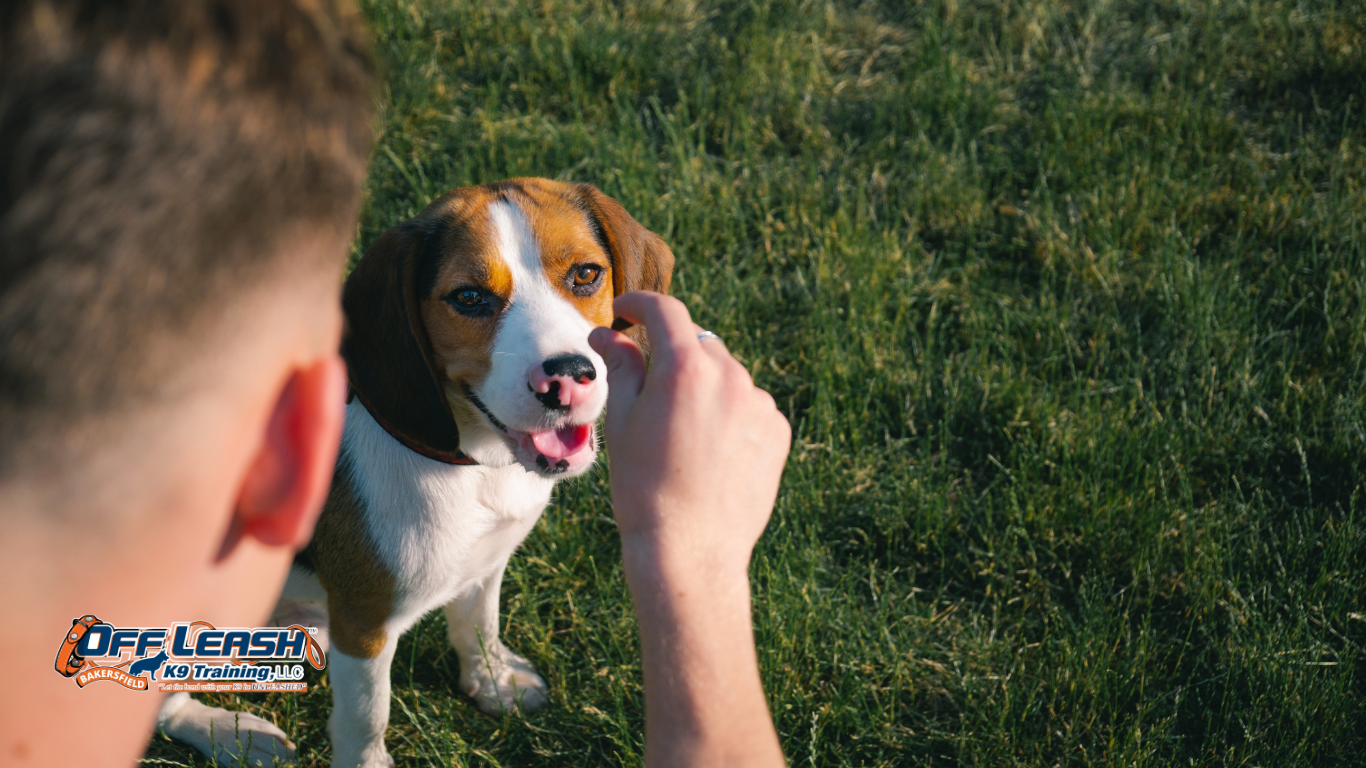
Treats can be a useful tool in reactive dog training when they are used thoughtfully and at the right moment. Food rewards can help reinforce calm behaviors, encourage a dog to focus on their handler, and create more positive associations with situations that previously caused a strong reaction.
However, treats are not a magic solution. A dog that is already overwhelmed may not be interested in food or may be unable to respond to training. In those situations, changing the environment, increasing distance, and helping the dog recover may be more appropriate.
The goal is to use treats as part of a broader training strategy that teaches the dog what to do instead of simply trying to stop unwanted behavior.
What Role Do Treats Play in Reactive Dog Training?
Treats can serve as a reward for behaviors you want to see more often.
For a reactive dog, those behaviors might include:
- Looking at the owner
- Remaining calm
- Turning away from a trigger
- Walking with a loose leash
- Responding to their name
- Following a cue
- Choosing not to approach a trigger
- Recovering after noticing something stressful
Why Food Rewards Can Help Change a Dog’s Response
When a dog repeatedly experiences a trigger and something positive happens while they remain within a manageable level of stress, training can help build a different association.
For example:
Dog notices trigger → remains calm → looks toward owner → receives reward
With repetition, this pattern can become familiar.
The dog begins to learn that noticing a trigger does not automatically mean they need to bark, lunge, or pull toward it.
Food rewards can also help strengthen alternative behaviors.
Instead of focusing exclusively on stopping the unwanted response, training gives the dog something appropriate to do.
When to Use Treats Around Reactive Triggers
Timing is extremely important.
Treats are most useful when the dog is still able to think, respond, and learn.
Signs that your dog may still be in a workable training zone include:
- They can respond to their name
- They can take food normally
- They can look away from the trigger
- Their body remains relatively relaxed
- They can follow a simple cue
- They can return their attention to you
Instead of repeatedly offering treats, consider increasing distance or moving to a quieter environment.
The goal is to train below the point where the dog becomes overwhelmed.
Choosing the Right Treat for a Reactive Dog
The best training reward depends on the individual dog.
Possible options include:
- Small pieces of cooked meat
- Soft commercial training treats
- Small pieces of cheese, when appropriate for the individual dog
- High-value commercial treats
- Regular kibble for low-distraction environments
Treats should generally be small enough that the dog can eat them quickly and return to training.
Avoid using excessively large treats that interrupt the flow of training.
Also consider your dog’s dietary needs. If your dog has food allergies, medical restrictions, or a special diet, speak with your veterinarian about appropriate reward options.
How Treats Can Build Focus and Disengagement
One of the most valuable skills for a reactive dog is learning to disengage from a trigger.
Disengagement means the dog can notice something interesting or concerning and then shift their attention elsewhere.
For example:
See dog → notice dog → look back at owner → receive reward
At first, the owner may need to help the dog by creating distance and providing a simple cue.
Over time, the dog can become more capable of making that choice independently.
Treats can reinforce the moment the dog disengages.
This is particularly useful because the dog is not being taught to pretend the trigger does not exist. Instead, they are learning that noticing the trigger and then returning attention to their handler is an appropriate response.
Treats, Distance, and Managing a Dog’s Threshold
Distance is one of the most important considerations when working with reactive behavior.
A dog may be calm when another dog is 100 feet away but react strongly when that dog approaches within 20 feet.
That difference matters.
If the dog is already reacting intensely, simply offering more treats may not solve the problem.
Increasing distance can help bring the dog back into a state where learning is possible.
You can think of the process as:
More distance → calmer dog → trigger appears → appropriate response → reward
As the dog becomes more comfortable, the training distance can sometimes be gradually reduced.
Progress should be based on the individual dog rather than a fixed distance or timeline.
Common Owner Mistakes When Using Treats
Treats are helpful, but how they are used matters.
Using Treats Too Late
If the dog is already fully reacting, the opportunity to reinforce calm behavior may have passed.
Getting Too Close to the Trigger
Using Treats as a Bribe
The goal is not to wave food constantly in front of the dog’s face. The reward should reinforce an appropriate behavior.
Rewarding the Wrong Moment
Timing matters. Reward the behavior you actually want to strengthen.
Expecting Treats to Solve Everything
Food rewards are one part of training. Management, distance, consistency, focus, leash skills, and emotional regulation can also be important.
Increasing Difficulty Too Quickly
If the dog repeatedly reacts, the training environment may be too challenging.
How to Use Treats Effectively During Reactive Dog Training
Begin in an environment where your dog is comfortable.
Practice simple behaviors such as:
- Responding to their name
- Looking toward you
- Touching your hand
- Walking beside you
- Turning away from a distraction
- Following a simple cue
Reward these behaviors consistently.
Then introduce a mild version of a trigger at a comfortable distance.
When your dog notices the trigger without reacting intensely, reward the appropriate response.
For example:
Notice trigger → stay calm → look toward owner → reward
As the dog improves, gradually practice in more realistic environments.
Keep Training Sessions Short
Reactive-dog training can be mentally demanding.
Short, successful sessions are often more productive than prolonged exposure that repeatedly pushes the dog beyond their comfort level.
Reinforce Calm Choices
Don’t wait for a perfect response.
Reward small improvements, such as:
- Briefly looking at you
- Turning their head away
- Relaxing their body
- Taking a step away
- Responding to their name
- Walking calmly past a manageable distraction
Those small choices can become the foundation for more reliable behavior.
Helping Reactive Dogs Build Better Skills With BakersfieldDogTrainer.com
BakersfieldDogTrainer.com can help owners work toward practical skills such as:
- Focus
- Disengagement
- Leash control
- Impulse control
- Calm behavior
- Appropriate responses to distractions
- Better handler communication
- Real-world obedience
Training should be adapted to the individual dog.
Some dogs may need to begin at significant distances from their triggers, while others may be able to work around mild distractions relatively quickly.
The goal is to build reliable skills without repeatedly overwhelming the dog.
Long-Term Benefits of Positive Reinforcement Training
For reactive dogs, this can support:
- Better focus
- Improved disengagement
- More appropriate responses to triggers
- Stronger handler communication
- Improved impulse control
- Better leash behavior
- Greater confidence
- More predictable behavior
Training is a process.
The objective is not necessarily to eliminate every reaction immediately. Instead, owners can work toward helping their dogs respond more appropriately and recover more effectively.
10 Frequently Asked Questions
1. Can treats really help a reactive dog?
2. What if my reactive dog won’t take treats?
Your dog may be too stressed or excited to eat. Increase distance from the trigger and allow your dog to settle before trying again.
3. Should I give my dog treats while they are barking?
It is generally more useful to reinforce appropriate behavior before the reaction becomes intense. If the dog is already overwhelmed, focus first on creating distance and reducing the intensity of the situation.
4. What are the best treats for reactive dog training?
Small, highly motivating treats that your dog enjoys and can eat quickly can work well. The best option varies between dogs.
5. Can treats make a dog dependent on food?
Food rewards can be gradually adjusted as training progresses. The goal is to teach the behavior, reinforce it consistently, and eventually vary rewards where appropriate.
6. Should I use treats before my dog sees a trigger?
Treats can be used strategically before and during exposure to manageable triggers. Timing depends on the behavior being taught and the dog’s individual response.
7. How far away should my dog be from a trigger?
8. Can treats stop leash reactivity?
Treats can support leash-reactivity training, but they are only one component. Distance management, leash skills, focus, and appropriate behavior strategies may also be needed.
9. How long does reactive dog training take?
There is no fixed timeline. Progress depends on the dog’s history, triggers, environment, consistency, and individual learning needs.
10. Should I get professional help for my reactive dog?
Professional guidance can be helpful when reactions are intense, difficult to manage, involve safety concerns, or are not improving with your current training approach.
Comprehensive Conclusion
The goal is not simply to feed a dog whenever a trigger appears. Instead, treats can reinforce meaningful behaviors such as staying calm, checking in, disengaging, responding to a cue, and choosing an appropriate alternative to reacting.
Distance is equally important. A dog needs to be in a state where they can actually learn. If they are already overwhelmed, increasing distance and reducing the intensity of the situation may be more useful than continuing to offer food.
With patience, consistent training, appropriate rewards, and careful management of triggers, owners can help reactive dogs develop better responses over time.
The most important lesson is simple:
Don’t just reward the absence of a reaction—teach and reward the behavior you want your dog to choose instead.
For owners looking for structured support, BakersfieldDogTrainer.com can help turn these principles into practical training strategies for real-world situations.
Website Contact Form
"*" indicates required fields