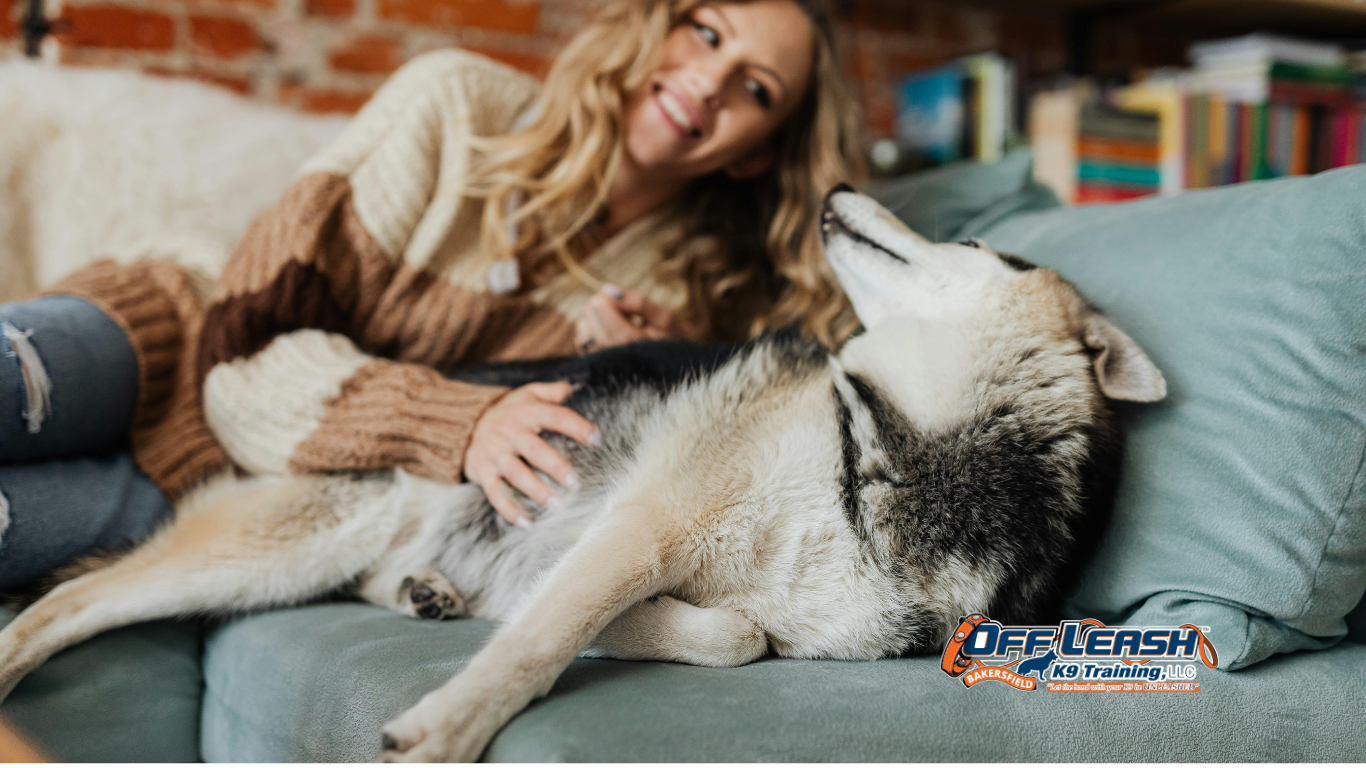
Why Dogs Follow Owners From Room to Room: Understanding Clingy and Shadowing Behavior
Some dogs seem to have a built-in rule:
You walk into the kitchen, and your dog follows.
You move to the bedroom, and they follow.
You sit on the couch, and suddenly they’re right beside you.
For many dogs, following their owners from room to room is completely normal. Dogs are social animals, and staying close to familiar people can be rewarding, comforting, and interesting.
However, there is a difference between a dog that simply enjoys being near their owner and a dog that appears unable to relax unless their owner is nearby.
A dog that frequently follows owners may be motivated by:
- Social attachment
- Curiosity
- Habit
- Anticipation of rewards
- Attention
- Household activity
- Security
- Anxiety about separation
Some dogs follow because something interesting might happen.
The kitchen may mean food.
The front door may mean a walk.
The living room may mean attention.
The backyard may mean play.
Following can therefore become a predictable strategy for staying close to opportunities.
Other dogs follow because proximity to their owner makes them feel safer.
Understanding the reason behind the behavior matters because the appropriate training approach depends on the dog’s emotional state.
A confident dog may simply need opportunities to learn that relaxing independently is also rewarding.
A dog showing signs of distress when separated may need a more gradual behavior-modification approach.
The goal is not necessarily to stop a dog from following.
Instead, healthy household behavior means a dog can choose to be near their owner while also feeling comfortable resting independently.
Key Takeaways
- Following owners from room to room is often normal social behavior.
- Dogs may follow because they enjoy companionship.
- Food, walks, play, and attention can reinforce following.
- Curiosity can make dogs interested in every household movement.
- Some dogs follow because proximity provides security.
- Excessive shadowing may indicate difficulty relaxing independently.
- Following alone does not automatically mean separation anxiety.
- Teaching Place and settle skills can encourage independence.
- Rewarding calm independent behavior helps create healthier habits.
- Professional dog training can help determine whether following is normal attachment or a more significant behavior concern.
What Does “Follow Owners” Mean?
When dogs follow owners from room to room, they remain close to their person as the owner moves around the home. A dog may get up whenever their owner stands, walk behind them into another room, or settle nearby whenever the owner stops.
For many dogs, this is completely normal.
Dogs are social animals, and staying close to familiar people can provide companionship, security, and opportunities for interaction.
A dog that follows their owner may simply be thinking:
- “Where are you going?”
- “Is something interesting happening?”
- “Will there be food?”
- “Are we going outside?”
- “Can I spend time with you?”
The behavior becomes more important when a dog seems unable to relax unless their owner is physically nearby.
Some dogs may:
- Follow constantly
- Become restless when the owner sits down
- Immediately get up when the owner moves
- Wait outside bathroom or bedroom doors
- Become distressed when separated
- Interrupt household activities to maintain proximity
Following by itself does not mean a dog has an anxiety disorder. Context and body language matter.
The goal is not necessarily to prevent a dog from following their family. Instead, healthy independence means a dog can enjoy being close while also feeling comfortable resting alone.
Why Dogs Follow Their Owners Around the House
There are many reasons dogs follow their owners.
Dogs Enjoy Social Contact
Dogs often prefer being near people they trust.
Your presence may provide:
- Companionship
- Attention
- Security
- Affection
- Predictability
Following can simply be a way of maintaining social contact.
Dogs Expect Something to Happen
Dogs are excellent at recognizing household routines.
If getting up from the couch usually means a walk, your dog may immediately follow.
If walking toward the kitchen usually means food, they may follow there too.
Over time, dogs learn that certain movements predict rewarding events.
Curiosity
Dogs are naturally curious.
When their owner leaves the room, they may want to investigate what is happening.
A dog may follow simply because they do not want to miss an interesting event.
Attention Can Reinforce Following
If a dog follows their owner and consistently receives:
- Petting
- Praise
- Eye contact
- Treats
- Play
the behavior becomes rewarding.
The dog learns:
Follow owner → receive attention.
This does not mean owners should never interact with their dogs. It simply explains why following can become a strong habit.
Dogs Like Predictability
Dogs often feel comfortable when they know where their family members are.
Following provides information about what happens next.
The owner’s movement may signal:
- Walk time
- Meal time
- Play
- Visitors
- Bedtime
For some dogs, staying close is simply part of understanding the household routine.
Attachment vs. Anxiety
One of the most important distinctions is whether a dog is following because they want to be near their owner or because they cannot cope when separated.
These can look similar at first.
Healthy Attachment
A securely attached dog may follow their owner but remain relaxed.
For example, the dog might follow into the kitchen and then:
- Lie down
- Chew a toy
- Sniff around
- Rest nearby
If the owner walks into another room, the dog may occasionally stay where they are.
This suggests the dog is comfortable with some independence.
Possible Anxiety
A dog struggling with separation or independence may show stronger signs of distress.
These can include:
- Pacing
- Whining
- Barking
- Scratching at doors
- Repeatedly attempting to follow
- Inability to settle
- Destructive behavior when separated
The emotional response matters more than the simple act of following.
Following Does Not Automatically Mean Separation Anxiety
This distinction is important.
A dog can follow their owner everywhere without having separation anxiety.
Likewise, a dog that does not constantly follow can still experience distress when left alone.
Professional evaluation should focus on the dog’s behavior when separation actually occurs.
How Following Becomes a Learned Habit
Following can begin as a natural behavior and gradually become a habit through reinforcement.
Consider a common pattern:
Owner stands up → dog follows → owner gives attention.
The dog learns that following produces something valuable.
Reinforcement Happens Naturally
Owners do not have to intentionally train a behavior for reinforcement to occur.
Everyday interactions can teach dogs:
- Following leads to petting.
- Following leads to food.
- Following leads to walks.
- Following leads to play.
- Following means staying involved.
The dog therefore has little reason to remain in another room.
Following Can Become Automatic
After enough repetition, the dog may stand up before thinking about it.
Owner moves.
Dog moves.
Owner stops.
Dog stops.
This creates a predictable pattern that can be difficult to change without teaching an alternative.
Rewarding Independence Changes the Pattern
Instead of only rewarding proximity, owners can also reinforce calm independence.
For example:
Dog remains on bed while owner walks away → reward.
This teaches the dog:
Staying here can be rewarding too.
That simple change can gradually increase the dog’s comfort with independent relaxation.
Why Some Dogs Struggle to Relax Independently
Some dogs have difficulty settling unless their owner is nearby.
Several factors can contribute.
Limited Relaxation Skills
A dog may simply never have learned how to settle independently.
If every quiet moment involves human interaction, the dog may expect constant engagement.
Teaching a reliable relaxation behavior gives the dog another option.
High Energy
Young and energetic dogs may follow because they are looking for something to do.
If they have not received enough appropriate physical and mental activity, following can become a way to seek stimulation.
Helpful outlets include:
- Sniffing
- Training games
- Food puzzles
- Chewing
- Structured play
- Age-appropriate exercise
Environmental Awareness
Some dogs constantly monitor household activity.
They want to know:
- Who is moving?
- Where is everyone going?
- Is someone leaving?
- Is food being prepared?
- Is something happening outside?
These dogs may have difficulty switching off.
Uncertainty
Dogs that are uncertain about changes in their environment may stay close because proximity feels predictable.
A consistent household routine can help reduce uncertainty.
Past Experiences
Changes in household routines, previous instability, or significant changes in a dog’s environment may influence how strongly they seek proximity.
Individual history matters.
Body Language When Dogs Follow Owners
Body language can help determine whether following is relaxed or emotionally driven.
Relaxed Following
A comfortable dog may:
- Walk loosely
- Have relaxed muscles
- Move casually
- Sniff along the way
- Settle easily
- Show soft facial expressions
The dog appears comfortable rather than desperate to maintain contact.
Anxious Following
A more concerned dog may:
- Pant when there is no obvious reason
- Pace
- Whine
- Stare intensely
- Remain tense
- Become restless
- Immediately get up whenever the owner moves
The overall body language may appear watchful rather than relaxed.
Watch for Changes
The most useful information often comes from comparing behavior.
If your dog follows you but can comfortably settle afterward, independence may not be a major concern.
If your dog becomes increasingly distressed whenever you move away, additional training may be appropriate.
Emotional Regulation and Independence
Healthy independence is closely connected to emotional regulation.
A dog does not need to be isolated to become independent.
Instead, they need to learn:
“I can relax even when my owner is moving around.”
Teaching Calmness
Owners can create predictable opportunities for independent relaxation.
For example:
- Ask the dog to settle on a bed.
- Reward calm behavior.
- Take a few steps away.
- Return before the dog becomes distressed.
- Reward calmness again.
- Gradually increase distance and duration.
This teaches independence in manageable steps.
Reward the Dog for Staying Put
If the dog remains comfortably on their bed while the owner moves around, reward that decision.
The reward does not always need to be food.
It can be:
- Calm praise
- A chew
- A toy
- Attention after a successful period
- Access to another activity
The important lesson is that remaining relaxed independently has value.
Independence Should Be Gradual
A dog that struggles with separation should not simply be forced to remain alone for long periods.
Training should progress according to the dog’s ability to remain comfortable.
Small successful experiences build confidence.
Over time, the dog can learn that their owner moving from room to room is ordinary household activity—not something they need to monitor constantly.
Ultimately, healthy independence does not mean creating distance between a dog and their family. It means giving the dog the confidence to choose relaxation even when their favorite person is temporarily somewhere else.
Common Owner Mistakes
When dogs follow owners from room to room, the behavior is easy to reinforce without realizing it. Most owners are not doing anything wrong intentionally. They are simply responding naturally to a dog that wants to stay close.
Understanding how these habits develop can make it easier to encourage healthier independence.
Rewarding Constant Following
If a dog follows the owner and immediately receives attention, treats, or play, following becomes valuable.
For example:
Owner stands → dog follows → owner pets dog.
The dog learns that staying close produces rewards.
Instead of rewarding every instance of following, owners can also reward the dog for remaining settled independently.
Giving Attention Every Time the Dog Approaches
Dogs naturally seek interaction.
However, responding to every approach can create a pattern where the dog expects constant engagement.
Owners can balance attention with opportunities for independent activities such as:
- Chewing
- Resting
- Sniffing
- Food puzzles
- Relaxation exercises
Expecting Independence Too Quickly
A dog that has followed their owner for years will not necessarily become comfortable relaxing alone after a few training sessions.
Independence should develop gradually.
Start with short periods of separation that the dog can handle successfully.
Ignoring Signs of Distress
There is an important difference between a dog that simply wants to follow and a dog that becomes distressed when unable to do so.
Watch for:
- Persistent whining
- Pacing
- Scratching
- Destructive behavior
- Excessive barking
- Inability to settle
If these behaviors occur, increasing separation abruptly may make the problem worse.
Using Punishment to Create Distance
Telling a dog to “go away” or punishing them for following can create confusion.
The dog may not understand what behavior is expected instead.
Teaching an alternative such as Placegives the dog a clear, rewarding behavior to perform.
Teaching Dogs to Relax Without Following
The goal of independence training is not to make dogs less attached to their owners.
It is to teach them that they can be comfortable even when their owner is moving around the home.
Teach Place
Place training can provide a predictable location for relaxation.
Begin by rewarding the dog for going to their bed or mat.
Then gradually practice while you:
- Stand up
- Walk across the room
- Enter another room
- Perform household activities
- Return
Reward the dog for remaining calm.
Practice Short Separations
Start with very small distances.
For example:
Dog settles → owner takes two steps away → owner returns → reward.
Once that becomes easy, gradually increase the challenge.
The dog learns that the owner leaving temporarily is predictable and safe.
Reward Independent Choices
Pay attention to moments when your dog chooses independence without being asked.
Maybe they:
- Lie down in another room
- Relax on their bed
- Chew a toy independently
- Rest while you work
- Stay settled while you prepare food
These are excellent opportunities for reinforcement.
Create a Relaxation Routine
A predictable routine can help dogs understand when it is time to settle.
For example:
Walk → enrichment → Place → quiet rest.
Over time, the dog learns that not every period of the day needs to involve active interaction.
Provide Appropriate Enrichment
Some dogs follow because they are bored.
Providing appropriate mental activities can encourage independent engagement.
Options include:
- Food puzzles
- Snuffle activities
- Safe chews
- Scent games
- Training exercises
- Appropriate toys
The activity should be suitable for the individual dog and supervised when necessary.
Avoid Creating Constant Excitement
If every owner movement predicts something exciting, the dog has a reason to monitor every movement.
Sometimes the owner should simply move around without initiating an activity.
This helps normalize ordinary household movement.
Follow Owners in Bakersfield
For Bakersfield dog owners, a dog that constantly follows owners can become especially noticeable during busy household routines.
Dogs may follow family members while they:
- Prepare meals
- Move between rooms
- Get ready for work
- Complete household chores
- Answer the door
- Prepare for walks
- Interact with visitors
Professional dog training can help families determine whether the behavior is normal attachment, learned attention-seeking, boredom, or difficulty with independence.
Training can focus on:
- Place training
- Relaxation
- Impulse control
- Independent enrichment
- Household manners
- Confidence building
- Calm transitions
The goal is to create a dog that can enjoy family interaction without feeling that they need to monitor every movement.
Long-Term Benefits of Healthy Independence
Teaching dogs to relax independently can provide benefits throughout their lives.
Greater Confidence
Dogs learn that they can be comfortable without constant physical proximity to their owners.
This can make everyday changes easier to handle.
Better Relaxation
A dog that knows how to settle independently can spend more time resting instead of constantly monitoring household activity.
Improved Household Manners
Independent dogs are often easier to manage during:
- Meals
- Work hours
- Household chores
- Family gatherings
- Quiet evenings
Better Emotional Regulation
Learning to remain calm when an owner moves away strengthens the dog’s ability to regulate emotions.
This skill can transfer to other situations.
Stronger Owner-Dog Relationship
Healthy independence does not weaken the bond between dog and owner.
In many cases, it creates a more balanced relationship because the dog can enjoy closeness without becoming dependent on constant interaction.
Frequently Asked Questions
1. Why does my dog follow me everywhere?
Dogs may follow because they enjoy companionship, expect rewards, are curious about household activity, or feel more secure near their owners. The behavior is often completely normal.
2. Is it bad if my dog follows me from room to room?
Not necessarily. Following becomes more concerning when the dog cannot relax independently or becomes distressed whenever physical separation occurs.
3. Does following me mean my dog has separation anxiety?
No. Following alone does not establish separation anxiety. The dog’s behavior when actually separated from their owner is much more informative.
4. How can I teach my dog to stay in one room?
Start with short periods of calm independence. Use Place training, enrichment, and rewards for remaining settled while you move around.
5. Should I ignore my dog when they follow me?
You do not need to completely ignore your dog. Instead, balance social interaction with rewards for independent relaxation.
6. Why does my dog immediately get up when I move?
Your movement may have become a predictor of something rewarding, such as food, walks, attention, or going outside. It can also simply be a learned habit.
7. Can puppies learn independence?
Yes. Puppies benefit from learning both social connection and age-appropriate independent relaxation. Short, positive periods of independence can help build confidence.
8. What if my dog becomes anxious when I leave the room?
Begin with very short separations that remain below the dog’s distress threshold. If the dog shows significant anxiety, professional behavior guidance can help determine an appropriate training plan.
9. Does crate training help dogs become more independent?
A properly introduced crate can provide a safe resting space, but crate training should be positive and gradual. A crate should not be used simply to force a distressed dog to tolerate separation.
10. When should I seek professional dog training?
Consider professional help if following is accompanied by significant anxiety, destructive behavior, persistent vocalization, inability to settle, or distress when separated. A professional can help identify the underlying cause and develop an individualized plan.
Comprehensive Conclusion
When dogs follow owners from room to room, the behavior is often a normal expression of social attachment, curiosity, or learned anticipation. Dogs naturally want to know what their family members are doing, and staying nearby can provide companionship and access to rewarding activities.
The important distinction is whether the dog can also relax independently.
A dog that casually follows their owner into the kitchen and then settles on the floor is very different from a dog that becomes distressed whenever their owner moves out of sight. Understanding this difference prevents owners from treating normal attachment as a problem while also recognizing when additional support may be appropriate.
Healthy independence can be taught gradually. Place training, predictable routines, enrichment, short periods of separation, and rewards for independent relaxation all help dogs discover that being alone for a short period can be safe and rewarding.
Owners should also avoid accidentally reinforcing constant shadowing. If every instance of following results in attention, food, play, or another exciting activity, the dog has a strong reason to continue monitoring their owner. Providing rewards for calm independent behavior creates a more balanced pattern.
For Bakersfield families, these skills can make everyday household life easier. Dogs that can settle while their owners cook, work, clean, move between rooms, or interact with guests are generally easier to manage and less likely to become overwhelmed by normal household activity.
Ultimately, the goal is not to make a dog distant or less affectionate. Healthy independence and a strong bond can exist together.A confident dog can happily spend time beside their owner and also choose to rest on their own when nothing interesting is happening.
With patience, consistency, positive reinforcement, and gradual practice, dogs can learn an important life skill: their owner can move away, and they can remain calm, comfortable, and secure.
Website Contact Form
"*" indicates required fields