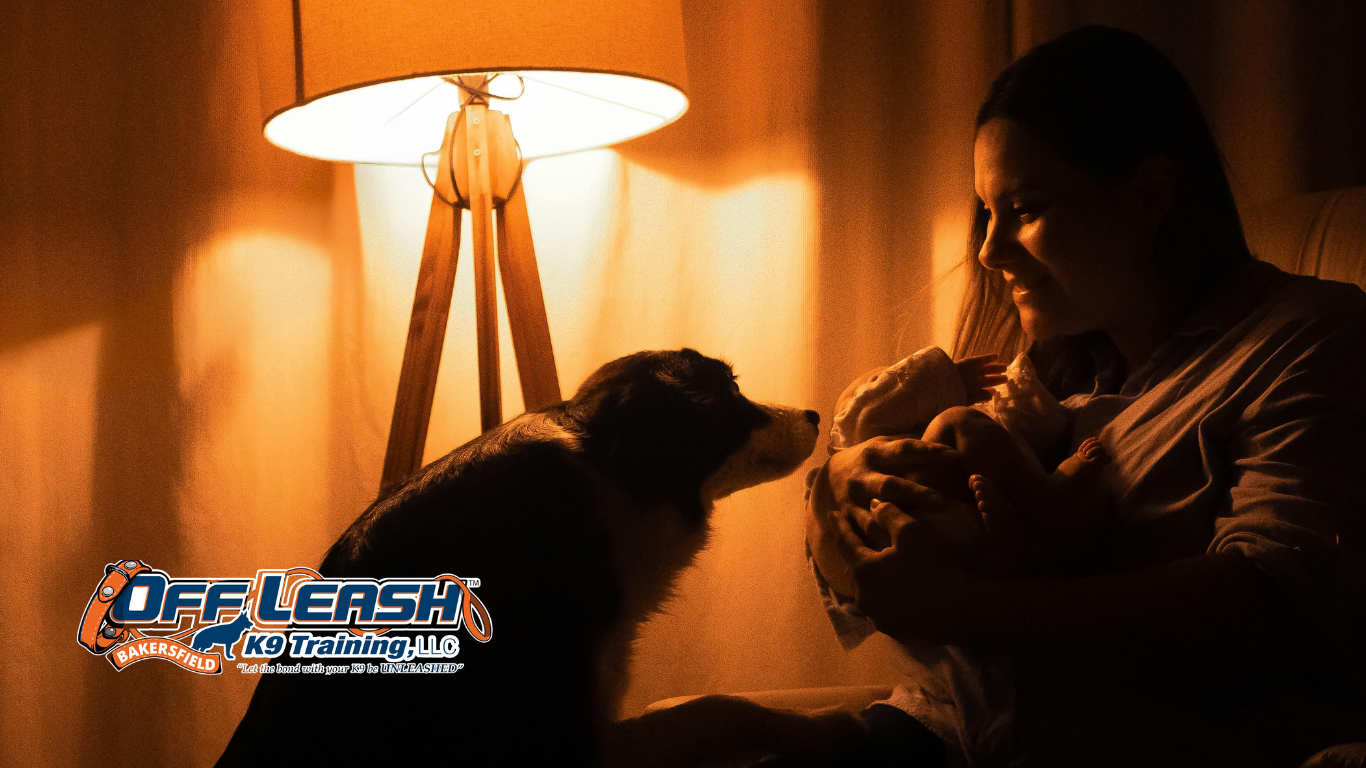
Trouble Settling at Night: Why Dogs Have Trouble Settling at Night
Trouble Settling at Night is a common concern for dog owners. After a full day of activity, many people expect their dog to naturally relax and fall asleep. Instead, some dogs pace around the house, bark, whine, follow family members from room to room, demand attention, or suddenly become energetic just as everyone is getting ready for bed.
These evening behaviors can be frustrating, especially when they disrupt sleep or make it difficult for the household to unwind. However, most dogs are not being stubborn or intentionally difficult. In many cases, they simply have not learned how to transition from daytime activity to nighttime relaxation.

Dogs that have trouble settling at night may display behaviors such as:
- Pacing around the house
- Barking for attention
- Whining
- Restlessness
- Zoomies before bedtime
- Following family members constantly
- Jumping on furniture
- Difficulty lying down
- Scratching at doors
- Waking repeatedly during the night
Several factors can contribute to these behaviors, including:
- Inconsistent daily routines
- Excess emotional arousal
- Insufficient mental enrichment
- Anxiety
- Changes in the household
- Lack of relaxation training
- Medical discomfort
- Age-related cognitive changes
It is also important to understand that physical exercise alone is not always the answer. Many dogs become physically tired while remaining mentally stimulated. Without learning how to relax, they may continue pacing or seeking interaction even after a long walk or play session.
Teaching dogs to settle is a valuable life skill. Calm bedtime routines, place training, enrichment activities, and positive reinforcement help dogs recognize that nighttime is a period for rest rather than activity.
For Bakersfield dog owners, nighttime relaxation is especially important during warm summer months when outdoor exercise often takes place later in the evening. Establishing consistent bedtime habits helps dogs adjust more easily while improving sleep quality for the entire family.
Fortunately, most dogs can learn to settle peacefully at night with structured training, patience, and consistent daily routines.
Key Takeaways
- Trouble settling at night is often caused by emotional arousal rather than excess energy.
- Predictable bedtime routines help dogs relax.
- Mental enrichment supports better nighttime rest.
- Relaxation is a learned skill.
- Place and settle training improve bedtime behavior.
- Anxiety and household changes can affect sleep.
- Reward calm behavior before bedtime.
- Medical issues should be ruled out if nighttime restlessness begins suddenly.
- Consistency is the foundation of successful bedtime routines.
- Most dogs can learn to sleep calmly through the night with appropriate training.
What Does “Trouble Settling at Night” Mean?
When dogs have trouble settling at night, they struggle to transition from the activity of the day into a calm, restful state. Instead of relaxing when the household begins winding down, they may continue pacing, barking, whining, following family members, or searching for something to do.
For many owners, this behavior seems confusing.
After all, the dog has exercised, eaten dinner, and spent time with the family.
Yet bedtime arrives, and instead of lying down peacefully, the dog appears more energetic than ever.
This behavior usually reflects emotional arousal rather than simple disobedience.
Many dogs have never learned that nighttime is meant for rest.
Instead, they remain mentally alert, waiting for the next exciting event.
Dogs with trouble settling at night may:
- Pace through the house
- Bark at small noises
- Whine for attention
- Follow family members constantly
- Jump on furniture
- Wander from room to room
- Scratch at doors
- Refuse to lie down
- Experience evening zoomies
- Wake frequently overnight
These behaviors often indicate that the dog is having difficulty regulating their emotions before bedtime.
Why Bedtime Is a Learned Routine
Dogs thrive on predictable routines.
Just as they learn when meals occur or when walks begin, they also learn when it is time to sleep.
If bedtime changes every night, or if exciting activities continue late into the evening, dogs may struggle to understand when they are expected to relax.
Consistent evening habits help the brain prepare for rest.
Why Dogs Struggle to Relax Before Bed
Several factors may prevent dogs from settling comfortably at night.
Often, more than one contributes to the problem.
Excess Emotional Arousal
Many dogs remain emotionally stimulated long after physical activity ends.
Exciting events such as:
- Fetch
- Wrestling
- Zoomies
- Visitors
- Loud play
- Evening walks
may increase adrenaline levels.
Without a structured cool-down period, some dogs remain mentally active for hours.
Inconsistent Evening Routines
Dogs appreciate predictability.
If bedtime varies significantly each evening, dogs may remain uncertain about what comes next.
One night may involve:
- Playing
- Snacks
- Television
- Guests
Another may involve immediate bedtime.
The inconsistency makes it more difficult for dogs to transition into relaxation.
Lack of Mental Recovery
Owners often focus on physical exercise.
However, mental recovery is equally important.
Dogs need opportunities to:
- Rest
- Process experiences
- Calm their nervous system
- Recover emotionally
Without these opportunities, excitement may continue into the evening.
Why Puppies Often Struggle More
Puppies experience enormous amounts of stimulation every day.
Everything is new.
Everything requires learning.
As a result, puppies often become overtired rather than simply energetic.
Common evening behaviors include:
- Zoomies
- Barking
- Biting
- Hyperactivity
- Difficulty lying down
These behaviors frequently indicate fatigue rather than excess energy.
Teaching puppies scheduled naps and calm bedtime routines helps prevent these habits from continuing into adulthood.
Physical Exercise vs. Mental Relaxation
One of the most common misconceptions is that more exercise automatically creates better sleep.
Exercise is essential.
However, exercise alone does not teach relaxation.
A physically tired dog may still remain mentally alert.
For example:
A dog plays fetch for forty-five minutes.
Their muscles become tired.
Their brain, however, remains excited.
Without calming activities afterward, the dog may continue pacing despite physical fatigue.
What Physical Exercise Provides
Appropriate exercise improves:
- Fitness
- Weight control
- Joint health
- Cardiovascular health
- Muscle strength
These benefits are extremely valuable.
However, they address only part of the picture.
What Mental Relaxation Provides
Mental relaxation helps the nervous system return to a balanced state.
Helpful calming activities include:
- Slow sniff walks
- Food puzzle toys
- Nose work
- Gentle chewing
- Stuffed enrichment toys
- Place training
- Quiet crate time
These activities encourage thoughtful behavior rather than excitement.
The Importance of Balance
Healthy dogs benefit from both:
- Physical exercise
- Emotional recovery
Too much excitement without adequate recovery often creates restless evenings.
Anxiety and Nighttime Restlessness
Not every dog struggles because of excess energy.
Some dogs become restless because they feel anxious.
Nighttime can amplify uncertainty.
Household activity changes.
Outdoor sounds become more noticeable.
Family members disappear into different rooms.
The environment becomes quieter.
Some dogs respond by becoming more alert instead of more relaxed.
Common Causes of Nighttime Anxiety
Examples include:
- Separation concerns
- New environments
- Household changes
- Storms
- Fireworks
- Strange outdoor sounds
- Previous frightening experiences
- Generalized anxiety
An anxious dog often struggles to settle even when physically tired.
Why Senior Dogs May Become Restless
Older dogs sometimes develop nighttime restlessness because of:
- Arthritis
- Reduced hearing
- Vision changes
- Cognitive dysfunction
- Discomfort
If nighttime pacing begins suddenly in an older dog, veterinary evaluation is recommended before assuming the issue is purely behavioral.
Signs Your Dog Is Overtired or Overstimulated
Many owners mistakenly believe restless dogs need more activity.
Often, they actually need more recovery.
Common signs include:
- Evening zoomies
- Constant pacing
- Barking at minor sounds
- Difficulty lying down
- Restlessness after exercise
- Mouthiness
- Jumping
- Hyperactivity
- Whining
- Inability to settle
These behaviors frequently suggest emotional overload rather than insufficient exercise.
Body Language of an Overstimulated Dog
Dogs experiencing high emotional arousal often display:
- Wide eyes
- Fast breathing
- Constant movement
- Difficulty focusing
- Rapid tail wagging
- Frequent scanning
- Restless pacing
Recognizing these signals helps owners begin calming routines before behavior escalates.
Emotional Regulation Before Bedtime
Emotional regulation is a dog’s ability to shift from activity into relaxation without becoming frustrated or anxious.
Dogs with strong emotional regulation can:
- Lie down calmly.
- Ignore minor household sounds.
- Relax while family members move around.
- Sleep peacefully.
- Recover quickly after excitement.
These skills are learned through consistent practice.
Helpful bedtime exercises include:
- Place training
- Calm petting
- Gentle chewing
- Nose work
- Quiet enrichment
- Soft praise for relaxed behavior
- Predictable bedtime routines
Each peaceful evening teaches the dog’s brain that nighttime is safe, predictable, and designed for rest. Over time, these repeated experiences strengthen emotional regulation, making it easier for dogs to settle naturally without pacing, barking, or seeking constant attention. As relaxation becomes part of the nightly routine, both dogs and their families enjoy more restful evenings and better overall well-being.
Common Owner Mistakes
When dogs have trouble settling at night, owners often try to help but unintentionally reinforce the very behaviors they hope to eliminate. Because bedtime happens every day, small habits quickly become established routines.
Understanding these common mistakes helps dogs learn that evenings are for relaxation rather than excitement.
Playing High-Energy Games Before Bed
Many owners play fetch or engage in rough play shortly before bedtime to “wear the dog out.”
While exercise is important, intense activity immediately before sleep often increases:
- Adrenaline
- Excitement
- Heart rate
- Emotional arousal
Instead of relaxing, the dog may become even more energized.
Whenever possible, finish vigorous exercise at least an hour before bedtime and transition into calmer activities.
Rewarding Restless Behavior
Owners sometimes respond immediately whenever their dog:
- Whines
- Barks
- Paces
- Nudges them
- Brings toys repeatedly
Although the intention is comforting the dog, repeated attention teaches:
“Restlessness gets interaction.”
Instead, reward moments of calm and relaxation.
Inconsistent Bedtimes
Dogs thrive on predictable routines.
If bedtime varies dramatically every evening, dogs often remain uncertain about when it is time to settle.
Consistency helps regulate both behavior and sleep patterns.
Assuming More Exercise Is Always the Answer
Some dogs certainly benefit from additional activity.
Others simply need help learning how to relax.
Adding more physical exercise without teaching emotional recovery sometimes creates a dog with greater endurance but no better ability to settle.
A balanced routine should include both movement and recovery.
Ignoring Medical Changes
If an older dog suddenly begins pacing or struggling to sleep, do not assume the issue is purely behavioral.
Medical concerns such as:
- Arthritis
- Cognitive dysfunction
- Pain
- Digestive discomfort
- Vision changes
can all affect nighttime behavior.
A veterinary examination is recommended whenever restlessness develops suddenly or worsens without an obvious explanation.
Creating a Consistent Bedtime Routine
Dogs relax more easily when evenings follow a predictable pattern.
A consistent routine helps the nervous system prepare for sleep.
End the Evening Calmly
After the final walk or play session, begin reducing stimulation.
Helpful activities include:
- Slow sniff walks
- Gentle petting
- Quiet brushing
- Calm obedience practice
- Place training
These activities encourage emotional recovery rather than excitement.
Feed and Potty on a Schedule
Many dogs settle more comfortably when meals and bathroom breaks occur at consistent times.
A predictable routine helps reduce unnecessary nighttime waking.
Practice Place Training
Teach your dog to relax on a designated:
- Bed
- Mat
- Cot
- Blanket
Practice Place while you:
- Watch television
- Read
- Prepare for bed
- Finish household chores
Reward calm behavior generously.
Eventually, your dog begins choosing their resting place automatically.
Use Calm Enrichment
Mental enrichment before bedtime often encourages relaxation.
Good options include:
- Stuffed food toys
- Frozen enrichment toys
- Snuffle mats
- Safe chew items
- Food puzzles
These activities satisfy natural instincts while lowering emotional arousal.
Reward Relaxation
Owners often reward active behaviors while overlooking quiet ones.
Instead, notice when your dog:
- Lies down voluntarily
- Sighs and relaxes
- Rests quietly
- Ignores distractions
- Settles on their own
Quiet praise or an occasional reward reinforces these desirable habits.
Trouble Settling at Night in Bakersfield
For Bakersfield dog owners, bedtime routines can become especially important during periods of hot weather.
Summer temperatures often shift walks and outdoor activities into the evening, making it easier for dogs to remain stimulated close to bedtime.
Common Bakersfield challenges include:
- Late evening walks
- Warm temperatures
- Neighborhood activity
- Outdoor family gatherings
- Holiday fireworks
- Busy residential areas
Professional dog training helps Bakersfield owners develop:
- Emotional regulation
- Place training
- Household manners
- Impulse control
- Calm bedtime routines
- Relaxation skills
These abilities help dogs transition smoothly from active evenings to restful nights.
Long-Term Benefits of Healthy Sleep Habits
Teaching dogs to settle peacefully at night improves far more than bedtime.
Long-term benefits include:
- Better emotional regulation
- Improved focus during training
- Reduced anxiety
- Less nighttime barking
- Better household manners
- Improved impulse control
- Better recovery after exercise
- Stronger daily routines
- Improved overall well-being
- Better quality sleep for both dogs and owners
Well-rested dogs often perform better during obedience training because they begin each day emotionally balanced and mentally prepared to learn.
Frequently Asked Questions
1. Why does my dog get the zoomies before bed?
Evening zoomies are often caused by emotional arousal, overtiredness, or difficulty transitioning from activity to rest. A calm bedtime routine can help reduce these bursts of energy.
2. Is my dog restless because they need more exercise?
Not always. Some dogs are physically tired but mentally overstimulated. Mental enrichment and relaxation training are just as important as physical exercise.
3. Should I ignore my dog if they pace at night?
First determine the cause. If your dog has recently exercised, gone outside, and has no medical concerns, calmly encouraging relaxation without reinforcing pacing is usually more effective than constant attention.
4. Can puppies learn bedtime routines?
Absolutely. Puppies benefit greatly from predictable schedules, quiet naps, and consistent bedtime routines that teach them when it is time to rest.
5. What if my dog wakes up several times each night?
Frequent nighttime waking may result from anxiety, inconsistent routines, medical conditions, or environmental disturbances. Persistent changes should be discussed with your veterinarian.
6. Does Place training help at bedtime?
Yes. Place training teaches dogs to remain calm in one comfortable location and often becomes one of the most valuable relaxation skills they learn.
7. Can anxiety prevent dogs from sleeping?
Yes. Fear, separation concerns, loud noises, or household changes can all make it difficult for dogs to relax and sleep soundly.
8. Should I give my dog a chew before bed?
For many dogs, an appropriate long-lasting chew or food enrichment toy encourages relaxation and provides a calming activity before sleep.
9. Can professional training improve nighttime behavior?
Yes. Professional trainers can teach emotional regulation, relaxation routines, impulse control, and household manners that make bedtime much easier.
10. Will my dog eventually learn to settle naturally?
Most dogs do. With consistent routines, calm leadership, and positive reinforcement, relaxation becomes a habit rather than something owners must constantly encourage.
-
Comprehensive Conclusion
Trouble Settling at Night is a common challenge, but it is rarely a sign that a dog is being stubborn or intentionally disruptive. More often, nighttime restlessness reflects emotional arousal, inconsistent routines, anxiety, insufficient mental recovery, or simply a lack of experience with settling calmly. Dogs, like people, benefit from clear routines that signal when the day is ending and it is time to rest.
The encouraging news is that relaxation is a skill that can be taught. By combining appropriate physical exercise with mental enrichment, structured downtime, place training, and predictable bedtime habits, owners help their dogs shift from excitement to calmness. Rewarding relaxed behavior instead of attention-seeking teaches dogs that evenings are peaceful and predictable, making it easier for them to unwind each night.
For Bakersfield dog owners, healthy bedtime routines are particularly valuable during warm seasons when outdoor activities often happen later in the day. Whether your dog enjoys an evening walk, backyard play, or time with the family, finishing those activities with calming exercises creates a smoother transition into sleep. Over time, these routines improve not only nighttime behavior but also daytime focus, emotional regulation, and overall confidence.
Ultimately, a dog that sleeps well is often a dog that lives well. Consistent relaxation training helps dogs recover from daily stimulation, reduces stress, and creates a calmer home environment for everyone. With patience, structure, and positive reinforcement, most dogs can learn to settle peacefully at night, allowing both dogs and their families to enjoy restful evenings and wake up ready for the day ahead.
Website Contact Form
"*" indicates required fields