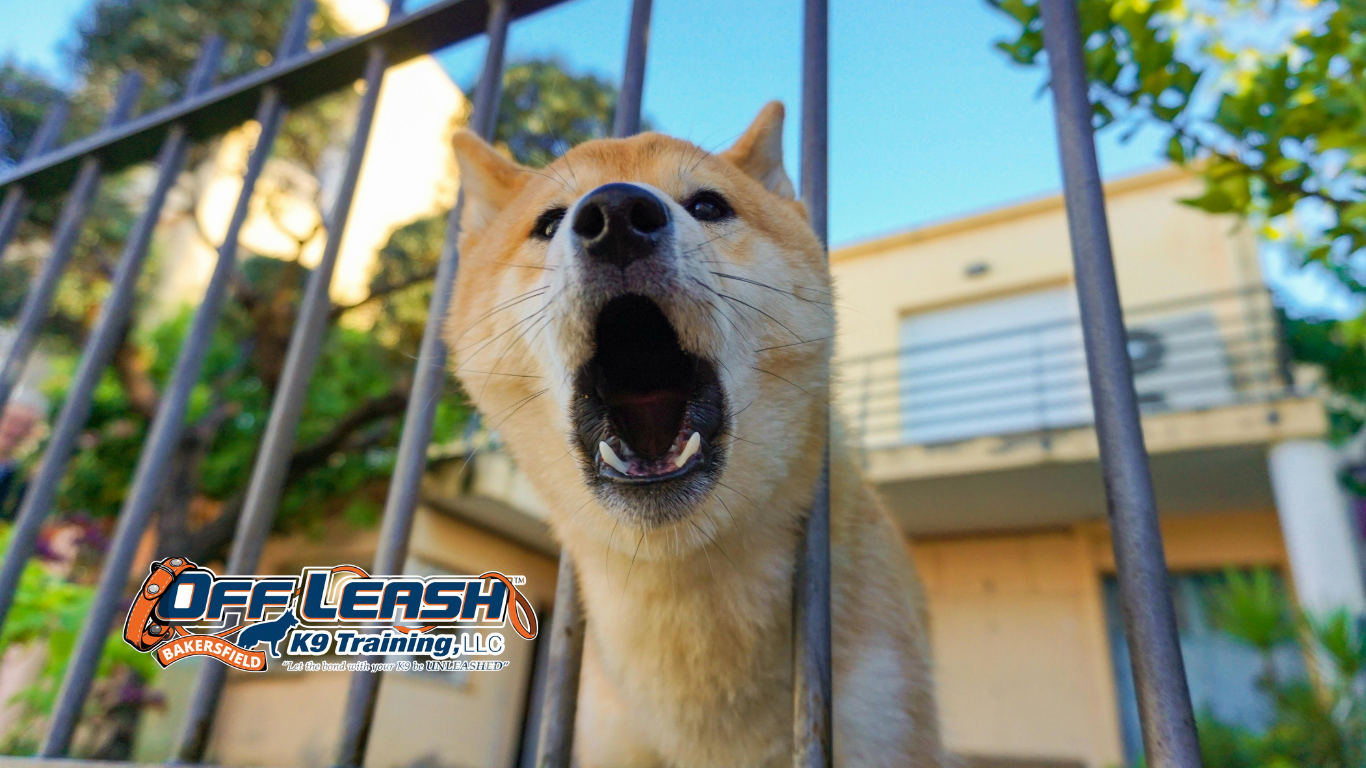
Bark More in New Neighborhoods: Why Dogs Bark More in New Neighborhoods
Bark More in New Neighborhoods is a common concern for dog owners who have recently moved or started walking in unfamiliar areas. A dog that behaves calmly in their usual neighborhood may suddenly begin barking at people, dogs, bicycles, parked cars, or everyday sounds when exploring somewhere new.
This change often surprises owners because the dog may already have solid obedience skills at home. However, dogs rely heavily on familiarity to feel safe. A new neighborhood presents hundreds of unfamiliar sights, sounds, smells, and movement patterns that require constant attention. As the dog’s brain processes all of this new information, emotional arousal naturally increases, making calm behavior more difficult.

Dogs that bark more in new neighborhoods may also:
- Pull on the leash
- Whine during walks
- Freeze or hesitate
- Bark at strangers
- React to other dogs
- Ignore commands
- Refuse treats
- Scan constantly
- Become startled easily
- Follow every movement
These behaviors are usually signs of emotional overload rather than stubbornness. The dog is trying to understand an unfamiliar environment while deciding what is safe and what might require caution.
Several factors can contribute to increased barking in new neighborhoods, including:
- Unfamiliar smells
- New dogs and people
- Different traffic patterns
- Construction noise
- Reduced confidence
- Limited exposure to new environments
- Anxiety
- Lack of routine
The encouraging news is that most dogs adjust well with patient, structured training. By gradually introducing new environments, rewarding calm behavior, and building confidence one successful walk at a time, owners help their dogs develop emotional resilience that carries into many other situations.
For Bakersfield dog owners, learning to stay calm in unfamiliar neighborhoods is especially valuable because dogs regularly encounter parks, shopping areas, residential communities, and busy streets. A confident dog that can explore new places without excessive barking is easier to manage, safer in public, and more enjoyable to walk.
Key Takeaways
- New neighborhoods expose dogs to many unfamiliar stimuli.
- Barking often results from emotional arousal rather than disobedience.
- Confidence influences how dogs respond to new environments.
- Gradual exposure builds emotional resilience.
- Calm behavior should always be rewarded.
- Loose leash walking supports confidence.
- Emotional regulation improves public behavior.
- Avoid overwhelming dogs during early introductions.
- Consistent routines help dogs adapt more quickly.
- Most dogs become comfortable in new neighborhoods with structured, positive training.
What Does “Bark More in New Neighborhoods” Mean?
When dogs bark more in new neighborhoods, they react vocally because unfamiliar surroundings create excitement, uncertainty, or anxiety. A dog that walks quietly through familiar streets may suddenly begin barking at people, other dogs, parked cars, bicycles, or everyday neighborhood activity after moving to a new area or visiting an unfamiliar location.
This behavior often surprises owners.
At home, the dog may appear well trained.
In a new neighborhood, however, they suddenly seem distracted and reactive.
This does not usually mean the dog has forgotten their training.
Instead, their brain is processing an overwhelming amount of new information.
Dogs rely heavily on familiarity to determine what is safe.
When everything changes at once, they naturally become more alert.
Dogs that bark more in new neighborhoods may also:
- Pull on the leash
- Whine during walks
- Freeze unexpectedly
- Scan constantly
- Ignore commands
- Refuse treats
- Bark at unfamiliar people
- React to other dogs
- Startle easily
- Rush toward new objects
These behaviors often reflect emotional overload rather than disobedience.
Understanding this helps owners focus on building confidence instead of simply correcting barking.
Why Familiar Places Feel Easier
Dogs quickly memorize their everyday environment.
Over time they recognize:
- Regular walking routes
- Familiar neighbors
- Common sounds
- Local dogs
- Predictable traffic
These repeated experiences build confidence.
Eventually, the environment becomes routine.
A new neighborhood removes that predictability.
Why New Environments Feel Overwhelming
Dogs experience the world primarily through their senses.
New neighborhoods introduce hundreds of unfamiliar experiences simultaneously.
Examples include:
- Different smells
- New people
- Unfamiliar dogs
- Moving vehicles
- Different landscaping
- Construction equipment
- Wildlife
- Delivery trucks
- Lawn equipment
- New walking surfaces
Each unfamiliar detail requires attention.
Instead of relaxing, the dog’s brain begins evaluating everything.
Sensory Overload
Dogs cannot instantly determine whether unfamiliar sights or sounds are safe.
Their brain gathers information continuously.
When enough new stimuli appear at once, sensory overload develops.
Common signs include:
- Constant scanning
- Barking
- Pulling
- Hypervigilance
- Difficulty listening
- Refusing food
- Pacing
- Startling easily
Learning becomes much harder during these moments.
Why Predictability Builds Confidence
Dogs feel safest when they understand their surroundings.
Predictability allows them to relax because they know what to expect.
New neighborhoods remove that sense of certainty.
Until repeated positive experiences occur, many dogs remain cautious.
Confidence develops through familiarity.
Fear vs. Excitement in Unfamiliar Places
Not every barking dog feels frightened.
Some become excited.
Others become anxious.
The behaviors may appear similar while the emotional causes differ.
Fearful Dogs May:
- Freeze
- Tremble
- Pull away
- Hide behind their owner
- Avoid strangers
- Refuse treats
Their goal is increasing distance from unfamiliar situations.
Excited Dogs May:
- Pull forward
- Bark enthusiastically
- Jump
- Spin
- Rush toward people
- Chase movement
Their goal is exploring everything around them.
Both emotional states reduce focus.
Both make obedience more difficult.
Why Emotion Matters More Than Behavior
Two dogs may bark at the same cyclist.
One wants to investigate.
The other wants the cyclist to move away.
Although the barking sounds similar, the emotional motivation differs.
Understanding the emotion allows owners to choose appropriate training methods.
The Power of New Smells and Sounds
Humans primarily experience neighborhoods visually.
Dogs rely much more heavily on smell and hearing.
Every new neighborhood contains thousands of unfamiliar scent messages.
Dogs may detect:
- Other dogs
- Wildlife
- Food
- Landscaping chemicals
- Garbage collection
- Construction materials
- New people
- Other animals
These scents provide enormous amounts of information.
Processing them requires mental effort.
Why Sounds Matter
Dogs also hear many sounds people barely notice.
Examples include:
- Barking several streets away
- Lawn equipment
- Birds
- Wind
- Car doors
- Delivery trucks
- Children’s voices
- Air conditioning units
Each unfamiliar sound requires evaluation.
Some dogs respond by becoming increasingly alert.
Smells Trigger Curiosity
Strong smells encourage exploration.
Many dogs stop repeatedly to investigate.
While sniffing is healthy, constant environmental investigation may reduce attention toward the owner until the dog becomes more comfortable.
Body Language Before Barking
Dogs rarely bark without first communicating through body language.
Recognizing early warning signs allows owners to intervene before barking begins.
Common signals include:
- Slowing down
- Stiff posture
- Tail lowering
- Pinned ears
- Lip licking
- Whale eye
- Looking repeatedly toward a distraction
- Refusing treats
- Heavy panting
- Scanning constantly
These subtle changes often appear several seconds before barking.
Responding early improves training success.
Escalation Happens Gradually
Most reactive behaviors follow a predictable pattern.
The dog first notices something unusual.
Next they become more alert.
If emotional arousal continues increasing, barking begins.
Recognizing the earliest signs prevents full emotional escalation.
Emotional Regulation During Neighborhood Walks
Emotional regulation allows dogs to experience unfamiliar environments without becoming overwhelmed.
Dogs with strong emotional regulation can:
- Notice distractions.
- Stay relaxed.
- Continue walking.
- Accept treats.
- Respond to commands.
- Recover quickly after surprises.
These skills develop gradually through repeated positive experiences.
Helpful exercises include:
- Loose leash walking
- Engagement games
- Rewarding calm observation
- Short exploration sessions
- Confidence-building walks
- Controlled exposure to new environments
Rather than rushing dogs through unfamiliar neighborhoods, allow them time to observe, sniff, and process their surroundings at a comfortable pace. Every successful outing teaches the brain that new places are safe, predictable, and manageable. Over time, curiosity begins replacing uncertainty, barking decreases, and dogs develop the confidence needed to explore unfamiliar neighborhoods calmly while remaining focused on their owner.
Common Owner Mistakes
When dogs bark more in new neighborhoods, owners often react with good intentions but accidentally increase their dog’s stress or excitement. Because unfamiliar environments already require significant mental effort, even small mistakes can make it harder for dogs to build confidence.
Understanding these common mistakes helps create calmer, more successful walks.
Expecting Normal Behavior Immediately
One of the biggest mistakes is expecting a dog to behave exactly as they do in familiar surroundings.
A dog that walks politely in their own neighborhood may need time to adjust before showing the same level of focus elsewhere.
New environments naturally challenge:
- Confidence
- Attention
- Impulse control
- Emotional regulation
Lower your expectations at first and reward small successes.
Walking Into Busy Areas Too Soon
Many owners immediately take their dog into the busiest part of a new neighborhood.
Examples include:
- Crowded sidewalks
- Busy intersections
- Shopping districts
- Dog parks
- Outdoor cafés
For some dogs, this amount of stimulation is overwhelming.
Instead, begin in quieter streets and gradually work toward busier locations as your dog’s confidence improves.
Tightening the Leash
As soon as barking begins, many owners tighten the leash.
While intended for safety, constant leash tension may increase frustration or anxiety.
Whenever possible:
- Stay calm.
- Maintain a loose leash.
- Create distance if needed.
- Reward calm choices.
Dogs often respond better when handlers remain relaxed.
Repeating Commands
Owners frequently repeat:
- Heel.
- Sit.
- Watch me.
- Leave it.
If the dog is emotionally overwhelmed, they may struggle to process these commands.
Rather than repeating cues, increase the distance from distractions until your dog can respond successfully.
Rushing the Walk
Some owners continue walking quickly through stressful situations.
Instead, allow your dog time to:
- Observe
- Sniff
- Process
- Recover emotionally
Confidence grows through thoughtful exposure, not speed.
Teaching Calm Confidence in New Areas
Helping dogs succeed in unfamiliar neighborhoods requires patience, structure, and positive experiences.
The goal is not to eliminate curiosity.
The goal is to help dogs remain emotionally balanced while exploring.
Start Small
Choose quiet streets before introducing busy environments.
Allow your dog to investigate calmly without feeling rushed.
Short, successful outings are often more effective than long walks through highly stimulating areas.
Reward Calm Observation
Whenever your dog notices something new without barking:
- Praise calmly.
- Offer a reward.
- Continue walking.
This teaches your dog that calm observation—not barking—is the behavior that earns positive outcomes.
Encourage Check-Ins
Reward your dog every time they voluntarily look at you.
Frequent check-ins strengthen engagement and remind your dog that you are a source of guidance and security.
Build Familiarity Gradually
Walk the same new route several times before introducing another unfamiliar area.
Repeated exposure allows your dog to:
- Recognize landmarks
- Predict routines
- Develop confidence
As the environment becomes familiar, barking often decreases naturally.
Keep Sessions Positive
End walks before your dog becomes mentally exhausted.
Finishing on a successful note builds confidence and makes future outings easier.
Bark More in New Neighborhoods in Bakersfield
Bakersfield offers many different walking environments, each presenting unique challenges for dogs.
Examples include:
- Residential neighborhoods
- Community parks
- Downtown sidewalks
- Apartment complexes
- Outdoor shopping areas
- School zones
- Walking trails
- Pet-friendly business districts
Each location introduces different combinations of people, dogs, vehicles, smells, and sounds.
Professional dog training helps Bakersfield owners improve:
- Loose leash walking
- Emotional regulation
- Public obedience
- Confidence in unfamiliar environments
- Engagement with the owner
- Calm behavior around distractions
Real-world practice helps dogs become adaptable rather than dependent on one familiar route.
Long-Term Benefits of Confidence-Based Training
Teaching dogs to remain calm in unfamiliar neighborhoods improves far more than walking behavior.
Long-term benefits include:
- Increased confidence
- Reduced barking
- Better leash manners
- Improved focus
- Faster recovery after surprises
- Better emotional regulation
- Greater adaptability
- Improved public behavior
- Stronger owner engagement
- More enjoyable adventures together
Confident dogs learn that new environments are opportunities to explore rather than situations to fear.
Frequently Asked Questions
1. Why does my dog bark more in a new neighborhood than at home?
New neighborhoods contain unfamiliar smells, people, dogs, sounds, and movement. This increased stimulation can make dogs feel excited or uncertain, leading to more barking.
2. Is my dog afraid of the new neighborhood?
Possibly. Some dogs bark because they are nervous, while others bark out of excitement or curiosity. Observing your dog’s body language helps determine the underlying emotion.
3. Should I avoid new places?
No. Gradual exposure helps dogs build confidence. Avoid overwhelming situations, but continue introducing new environments at a pace your dog can handle.
4. Why won’t my dog take treats during the walk?
5. How long does it take for dogs to adjust?
Every dog is different. Some adapt within a few walks, while others need several weeks of consistent, positive exposure.
6. Can puppies benefit from exploring new neighborhoods?
Yes. Safe, positive exposure during puppyhood helps build confidence and reduces the likelihood of fear-based behaviors later in life.
7. Should I let my dog sniff during walks?
Absolutely. Sniffing helps dogs gather information, reduces stress, and can make unfamiliar environments feel less intimidating.
8. Can professional training help?
Yes. Professional trainers can develop structured confidence-building plans that improve emotional regulation and public behavior in unfamiliar settings.
9. What if my dog barks at every person we pass?
Increase your distance from people until your dog can remain calm, reward quiet behavior, and gradually decrease the distance over multiple successful sessions.
10. Will my dog eventually become comfortable in new neighborhoods?
Most dogs do. With patience, consistency, and positive reinforcement, they learn that unfamiliar environments are safe and become much more relaxed over time.
Comprehensive Conclusion
Bark More in New Neighborhoods is a common behavior because unfamiliar environments challenge a dog’s confidence and require them to process an enormous amount of new information. Different smells, unfamiliar people, changing traffic patterns, neighborhood dogs, and unexpected sounds all compete for the dog’s attention. As emotional arousal increases, barking often becomes a natural response to excitement, uncertainty, or caution rather than a sign of disobedience.
Fortunately, this behavior can improve through thoughtful, confidence-based training. Gradual exposure, rewarding calm observation, encouraging engagement, and allowing dogs to explore at their own pace help create positive experiences in unfamiliar places. Instead of rushing through new environments, owners can use each walk as an opportunity to strengthen emotional regulation and build trust.
For Bakersfield dog owners, learning to navigate different neighborhoods confidently opens the door to more enjoyable walks, visits to parks, pet-friendly businesses, and community events. A dog that remains calm in unfamiliar surroundings is easier to manage, safer in public, and better prepared to adapt to life’s changes.
Ultimately, confidence grows one successful experience at a time. Each calm walk, each relaxed response to a new sight or sound, and each positive interaction teaches the dog that unfamiliar neighborhoods are not something to fear. With patience, consistency, and positive reinforcement, most dogs learn to replace barking with curiosity, transforming new adventures into enjoyable experiences for both the dog and their owner.
Website Contact Form
"*" indicates required fields