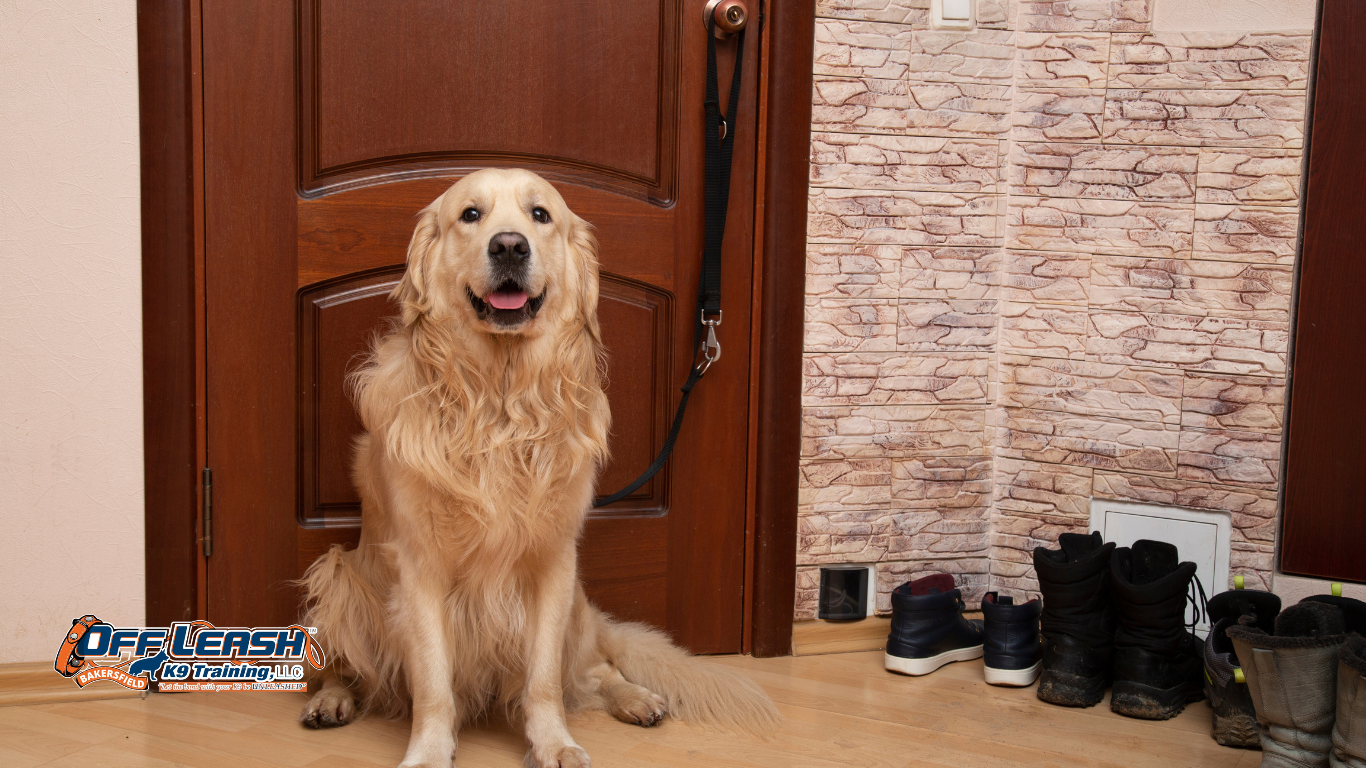
How to Train Your Dog to Remain Calm When You Answer the Door
A knock at the door, a ringing doorbell, or the sound of someone approaching the entrance can quickly change a dog’s behavior. Some dogs begin barking immediately, while others rush toward the doorway, jump excitedly, or struggle to settle when visitors arrive. What should be a simple part of everyday life can become stressful for everyone in the household.
Dogs often react strongly to door-related activity because it combines unfamiliar sounds, movement, anticipation, and social excitement. They may believe someone is arriving to play, bring attention, or enter their territory. Without clear guidance, these experiences can encourage habits that become increasingly difficult to manage.
Learning how to train your dog to remain calm when you answer the door can make a significant difference in your daily routine. Your dog can learn to respond to the doorbell without rushing, wait while you greet visitors, and settle in an appropriate location.
The goal is not necessarily to eliminate every bark or prevent your dog from noticing visitors. Instead, you want to teach your dog how to respond appropriately, follow familiar cues, and remain manageable when someone arrives.
Understanding Why Dogs Become Excited When Someone Approaches the Door
Dogs may become excited when someone approaches the door for several reasons. The doorway is often associated with interesting events, including visitors, deliveries, walks, and opportunities for social interaction.
Over time, dogs begin recognizing the sounds and movements that predict these events.
For example, your dog might hear footsteps outside and immediately run toward the entrance. When the doorbell rings, they may bark because they have learned that the sound usually means someone is coming inside.
Several factors can contribute to this behavior.
Anticipation: Your dog expects something exciting to happen when someone arrives.
Territorial responses: Some dogs become alert when unfamiliar people approach their home.
Social excitement: Dogs that enjoy meeting people may become overly enthusiastic before visitors even enter.
Learned behavior: If barking or rushing toward the door has repeatedly produced attention, your dog may continue doing it.
Limited impulse control: Your dog may struggle to pause and follow directions when excitement increases.
Uncertainty: Some dogs react because they are uncomfortable with unfamiliar people or unexpected noises.
Understanding your dog’s motivation is important. A dog barking from excitement may need different support than a dog showing fear or defensive behavior.
How Doorbells, Knocking, and Visitor Sounds Trigger Dog Behavior
Doorbells and knocking sounds can become powerful signals for dogs.
Even when no one is visible, these sounds may cause an immediate reaction because your dog has learned to associate them with visitors.
The sequence often happens quickly:
-
Your dog hears a doorbell or knock.
-
They recognize the sound as a possible visitor arriving.
-
Their excitement or alertness increases.
-
They run toward the entrance or begin barking.
-
You approach the door, which may increase their anticipation.
-
The visitor enters, creating even more stimulation.
Some dogs react to additional sounds, such as footsteps, voices, gates opening, or vehicles stopping outside.
The challenge is that the dog may become excited before you have an opportunity to give instructions.
To improve this behavior, you need to teach your dog what to do when these sounds occur. Practicing with doorbell recordings, gentle knocking, and controlled visitor arrivals can help your dog develop a calmer response.
Start at an intensity your dog can handle. If a sound immediately causes intense barking or distress, reduce its volume or increase the distance from the source.
The Connection Between Doorway Excitement, Territorial Behavior, and Anticipation
A dog’s reaction to visitors is not always caused by excitement alone.
Some dogs become alert because they perceive the entrance as an important boundary. They may bark when unfamiliar people approach because they are responding to changes in their environment.
Other dogs are primarily motivated by anticipation. They recognize that visitors often bring attention, affection, or playtime.
These different motivations can produce similar outward behaviors.
For example, two dogs may bark when someone knocks, but one may be eager to greet the visitor while the other may feel uncomfortable about the approaching person.
Watch your dog’s overall body language to better understand the reaction.
An excited dog may have a loose, wiggly body, relaxed facial expression, and frequent movement. A worried dog may appear stiff, retreat, keep their weight shifted backward, or show other signs of discomfort.
Some dogs may display a combination of excitement and uncertainty.
Avoid assuming that every barking dog simply wants to greet people. If your dog shows fear, growling, snapping, or aggressive behavior, prioritize safety and seek qualified professional guidance.
Common Signs Your Dog Is Struggling to Remain Calm at the Door
Common signs include:
-
Repeated barking: Your dog barks whenever someone approaches or knocks.
-
Rushing toward the entrance: Your dog immediately runs to the door when hearing a visitor.
-
Jumping: Your dog jumps on people when they enter.
-
Whining: Your dog vocalizes because they are excited or uncertain.
-
Pacing: Your dog moves restlessly while waiting for the door to open.
-
Scratching at the door: Your dog tries to reach the person outside.
-
Pulling on the leash: Your dog struggles to move toward visitors during controlled greetings.
-
Ignoring familiar cues: Your dog becomes less responsive when the doorbell rings.
-
Crowding the entrance: Your dog stands directly in the doorway, making it difficult to open the door safely.
-
Difficulty settling: Your dog continues barking or moving around after visitors enter.
Recognizing these signs helps you identify when your dog needs more distance, a calmer environment, or additional training.
How to Train Your Dog to Remain Calm When You Answer the Door
Teaching calm doorway behavior requires preparation and repetition. Your dog should learn what to do before you begin practicing realistic visitor arrivals.
Use positive reinforcement, clear cues, and controlled training situations. Keep your dog at a manageable level of excitement so they can learn successfully.
Step 1: Identify What Triggers Your Dog’s Doorway Reactions
Start by observing what causes your dog to react.
Does your dog bark when someone knocks? Do they respond to the doorbell, footsteps, voices, or the sound of the gate opening?
You may discover that your dog reacts to certain triggers more strongly than others.
For example, your dog might remain calm when someone knocks softly but become extremely excited when the doorbell rings.
Pay attention to:
-
The sounds that trigger barking.
-
How quickly your dog reacts.
-
Whether they approach or retreat from the door.
-
Whether they become more excited when you stand up.
-
How they respond when someone enters.
-
Whether their behavior changes depending on the visitor.
This information helps you design training exercises around your dog’s specific challenges.
If your dog reacts strongly, begin practicing away from the entrance or behind a secure barrier.
Step 2: Teach Your Dog a Reliable Place or Settle Cue
A designated resting area can give your dog a clear alternative to rushing toward the entrance.
Choose a comfortable mat, dog bed, or other appropriate location away from the doorway.
Start practicing when there are no visitors.
Invite your dog onto the mat using a cue such as “place” or “settle.” Reward them for approaching it, standing on it, sitting, or lying down.
Gradually increase the amount of time your dog remains there.
Once your dog understands the cue, practice while you walk toward the door and return.
Reward your dog for remaining in the designated area.
Do not expect your dog to stay on the mat during a real visitor arrival before they have learned the behavior in easier situations.
The goal is to make the resting area a familiar, rewarding place where your dog can relax while you handle the entrance.
Step 3: Practice Doorbell and Knocking Sounds at Low Intensity
Help your dog become more comfortable with the sounds that usually trigger excitement.
You can use a recording of a doorbell or knocking, or ask someone to knock gently from outside.
Begin with a very quiet sound or a knock at a distance.
When your dog hears it and remains calm, offer a reward.
Repeat the exercise several times, keeping the experience short and positive.
If your dog starts barking intensely, increase the distance or lower the volume.
You can also pair the sound with a familiar cue that encourages your dog to move to their mat.
Gradually increase the sound intensity only when your dog can respond comfortably.
The purpose is not to overwhelm your dog until they stop reacting. It is to create a positive learning experience that helps them develop a more appropriate response.
Step 4: Reward Calm Behavior Before Opening the Door
One of the most useful habits is teaching your dog that calm behavior happens before the door opens.
Start by practicing with no visitor present.
Walk toward the door while your dog remains in their designated area or another comfortable location.
If your dog stays calm, reward them.
If they begin rushing forward, pause and return to an easier version of the exercise.
Gradually practice:
-
Standing up from your chair.
-
Walking toward the entrance.
-
Reaching for the doorknob.
-
Touching the doorknob.
-
Opening the door slightly.
-
Closing it again.
Reward calm behavior throughout the process.
This teaches your dog that the movements associated with answering the door do not require an immediate reaction.
Step 5: Teach Your Dog to Wait While You Approach the Door
Your dog should learn that they do not need to follow you directly to the entrance.
Begin by teaching a simple waiting behavior in a quiet environment.
Ask your dog to sit or remain on their mat while you take one step away. Return and reward them if they stay calm.
Gradually increase the distance and duration.
Once your dog understands the exercise, practice walking toward the door while they remain in their designated location.
If they get up, calmly reset the exercise. Avoid repeatedly calling or scolding them.
You can also use a baby gate or another secure barrier to prevent your dog from rushing into the doorway.
Management is especially important if your dog is large, strong, or likely to bolt outside when the door opens.
Step 6: Practice Opening and Closing the Door Without Visitors
Many dogs become excited simply because the door opens.
They may assume that opening the door always means someone is entering or that they will be allowed outside.
Practice opening and closing the door when nobody is waiting outside.
Start with small movements.
Open the door slightly, close it, and reward your dog for remaining calm.
Gradually open it farther and practice stepping through while your dog stays in a safe location.
Keep the exercises short.
If your dog becomes excited, reduce the difficulty. You may need to return to simply touching the doorknob before practicing a larger door movement.
This exercise teaches your dog that the door can open without requiring them to rush forward.
Always maintain a secure setup so your dog cannot escape during practice.
Step 7: Introduce Calm and Controlled Visitor Greetings
Once your dog can handle the earlier exercises, introduce a familiar helper.
Ask the visitor to follow your instructions rather than immediately approaching or exciting your dog.
Start with the visitor outside.
Have your dog remain in their designated location or behind a secure barrier. Reward calm behavior as the person approaches.
When your dog can remain comfortable, you can practice opening the door.
The visitor should avoid reaching toward, staring at, or crowding your dog.
If your dog is friendly and comfortable, allow a brief greeting when they are calm enough to participate appropriately.
Reward four paws on the floor, gentle approaches, and relaxed behavior.
If your dog becomes overly excited, increase distance and give them time to settle.
Some dogs are more comfortable remaining behind a barrier or in another room while visitors enter. They do not need to greet every person who comes to the house.
Step 8: Gradually Practice With Different Visitors and Situations
Once your dog handles familiar visitors more successfully, introduce variety.
Practice with different people, different knocking patterns, and different arrival situations.
For example, your dog may first learn to remain calm when a family member knocks gently. Later, you can practice with a friend arriving at a different time of day.
Change one element at a time.
Avoid immediately practicing with several visitors, loud conversations, and an open doorway if your dog is still learning the basics.
Continue rewarding calm responses and using your dog’s designated resting area.
As your dog becomes more reliable, you can gradually reduce the amount of assistance needed while maintaining appropriate safety measures.
The goal is to help your dog understand that visitors arriving is a normal event, not a reason to become overwhelmed.
Common Mistakes That Make Doorway Behavior Worse
Avoid these common mistakes:
Opening the door while your dog is rushing forward: This may allow the dog to practice the exact behavior you want to reduce.
Yelling over barking: Raising your voice can increase excitement or stress rather than helping your dog settle.
Allowing immediate greetings every time: If your dog always gets access to visitors while jumping or pulling, those behaviors may continue.
Practicing only during real visitor arrivals: Real arrivals are often too exciting for dogs that have not learned the basic skills.
Expecting instant results: Doorway behavior takes repetition. Dogs need time to understand and practice new responses.
Forcing interactions with visitors: Some dogs are uncomfortable meeting unfamiliar people. Forcing greetings can make their reactions worse.
Using inconsistent rules: If your dog is sometimes allowed to rush toward visitors and sometimes corrected for it, the expectations become unclear.
Ignoring safety: A dog that can rush through an open door creates a risk for themselves, visitors, and people outside.
A successful training plan combines clear expectations, gradual practice, and practical management.
How to Respond When Your Dog Becomes Overexcited at the Door
Even with regular practice, your dog may occasionally become overexcited when someone arrives.
When this happens, stay calm and focus on managing the situation safely.
If your dog is rushing toward the entrance, avoid opening the door further. Use a secure barrier, close an interior door, or move your dog to a safe location if possible.
Give your dog time to settle before attempting another greeting.
If your dog knows a place cue, use it when they are still able to respond. Reward them for moving to the designated area.
If they are too excited to follow instructions, do not repeat commands continuously. Reduce stimulation and give them more space.
For some dogs, the safest option is to remain in another room while visitors enter. You can decide whether a greeting is appropriate after your dog has relaxed.
If your dog growls, lunges, snaps, or shows signs of fear around visitors, do not force contact. Use secure separation and seek help from a qualified behavior professional.
The priority is always safety and emotional comfort, not making your dog greet every visitor.
Building Reliable Doorway Manners Through Everyday Practice
Calm doorway behavior develops through consistent experiences.
You do not need to wait for visitors to practice. Everyday activities provide many opportunities to reinforce the behaviors you want.
For example, you can practice when:
-
Someone walks past the entrance.
-
You pick up your keys.
-
You approach the front door.
-
You open the door to retrieve a delivery.
-
A family member comes home.
-
Your dog hears a familiar outdoor sound.
-
You practice a short waiting exercise near the entrance.
Reward your dog for remaining in an appropriate location, responding to familiar cues, and recovering calmly after a sound or movement.
Keep training sessions short and manageable.
It is also helpful to provide sufficient exercise, enrichment, and rest. Dogs that have appropriate outlets for their energy may find it easier to manage excitement around visitors.
Remember that the goal is not necessarily silence. A dog may briefly bark to alert you to a visitor and still learn to settle afterward.
What matters is that your dog can respond appropriately and that you can safely manage the entrance.
How BakersfieldDogTrainer.com Can Help Your Dog Remain Calm When You Answer the Door
BakersfieldDogTrainer.com can help owners understand the behaviors behind these challenges and develop practical strategies for improving doorway manners.
A structured training approach can focus on:
-
Teaching dogs to respond calmly to doorbells and knocking.
-
Reducing excessive barking and rushing toward the entrance.
-
Building reliable place and settle behaviors.
-
Improving impulse control around visitors.
-
Teaching polite and controlled greetings.
-
Helping dogs manage excitement and uncertainty.
-
Establishing consistent household expectations.
-
Improving communication between dogs and their owners.
Every dog has different experiences and comfort levels. Some need help managing excitement, while others need a gradual approach to feeling comfortable around unfamiliar people.
The goal is to create a safer, more predictable experience for everyone involved.
With consistent practice, positive reinforcement, and appropriate guidance, dogs can learn that answering the door does not require rushing, jumping, or becoming overwhelmed.
FAQs
1. Why does my dog get excited when I answer the door?
Your dog may associate doorbells, knocking, and approaching footsteps with visitors and exciting social interactions. They may also become alert to unfamiliar people near the home. Consistent training can help them develop a calmer response to these triggers.
2. How can I stop my dog from barking when someone knocks?
Start by practicing with quiet knocking sounds at a distance. Reward your dog for remaining calm and gradually increase the sound intensity as they become comfortable. You can also teach a place cue so your dog has an appropriate behavior to perform when someone knocks.
3. Should I let my dog greet visitors immediately?
Not necessarily. Your dog should first be calm enough to participate safely. If they are jumping, barking intensely, or rushing toward the entrance, use a barrier or another safe arrangement until they settle. Some dogs may be more comfortable not greeting visitors at all.
4. How do I teach my dog to go to their bed when the doorbell rings?
First, teach your dog to go to their bed using a cue such as “place.” Reward them for going there and remaining relaxed. Once the behavior is reliable in a quiet setting, introduce low-volume doorbell sounds and reward your dog for moving to the bed.
5. Why does my dog jump on guests when they enter?
Jumping is often an attempt to greet people, gain attention, or express excitement. If visitors respond by petting or talking to the dog while they jump, the behavior may become stronger. Teach your dog to greet people with four paws on the floor and reward calm approaches.
6. Can I train my dog to remain calm when the doorbell rings?
Yes. You can gradually teach your dog to associate the doorbell with a calm routine. Begin with low-intensity sounds, reward relaxed behavior, and practice a familiar response such as going to a designated mat.
7. Should I use treats when teaching my dog doorway manners?
Yes. Treats are useful for rewarding calm behavior, following cues, and remaining in a designated area. Use small rewards during practice and gradually introduce other rewards, such as praise or appropriate social interaction.
8. What should I do if my dog runs toward the door?
Prioritize safety. Use a secure barrier, leash, or interior door to prevent your dog from rushing outside or reaching visitors. Practice waiting and place behaviors separately before introducing realistic visitor arrivals.
9. How can I introduce visitors to an overly excited dog?
Begin with a controlled setup and ask visitors to avoid immediately approaching or exciting your dog. Keep your dog at a comfortable distance or behind a secure barrier. Reward calm behavior and allow a greeting only if your dog is comfortable and manageable.
10. How long does it take to teach a dog to remain calm at the door?
The timeline depends on your dog’s temperament, previous experiences, and the intensity of their reactions. Some dogs improve within a few weeks of consistent practice, while others need longer. Focus on gradual progress and prioritize safety throughout training.
Conclusion: Helping Your Dog Stay Calm and Well-Mannered When Visitors Arrive
Doorway excitement is a common challenge, but dogs can learn more appropriate ways to respond when someone arrives.
By identifying your dog’s triggers, teaching a reliable place cue, practicing doorbell sounds, and rewarding calm behavior, you can make visitor arrivals more manageable.
Start with simple exercises when nobody is visiting. Gradually introduce door movements, knocking sounds, and controlled greetings as your dog becomes more confident.
Remember that calm behavior does not always mean your dog will never bark. A brief alert is different from becoming so excited or distressed that they cannot respond to you.
With clear expectations, positive reinforcement, and consistent practice, your dog can learn to remain calm while you answer the door, greet visitors safely, and settle more comfortably afterward.
Website Contact Form
"*" indicates required fields