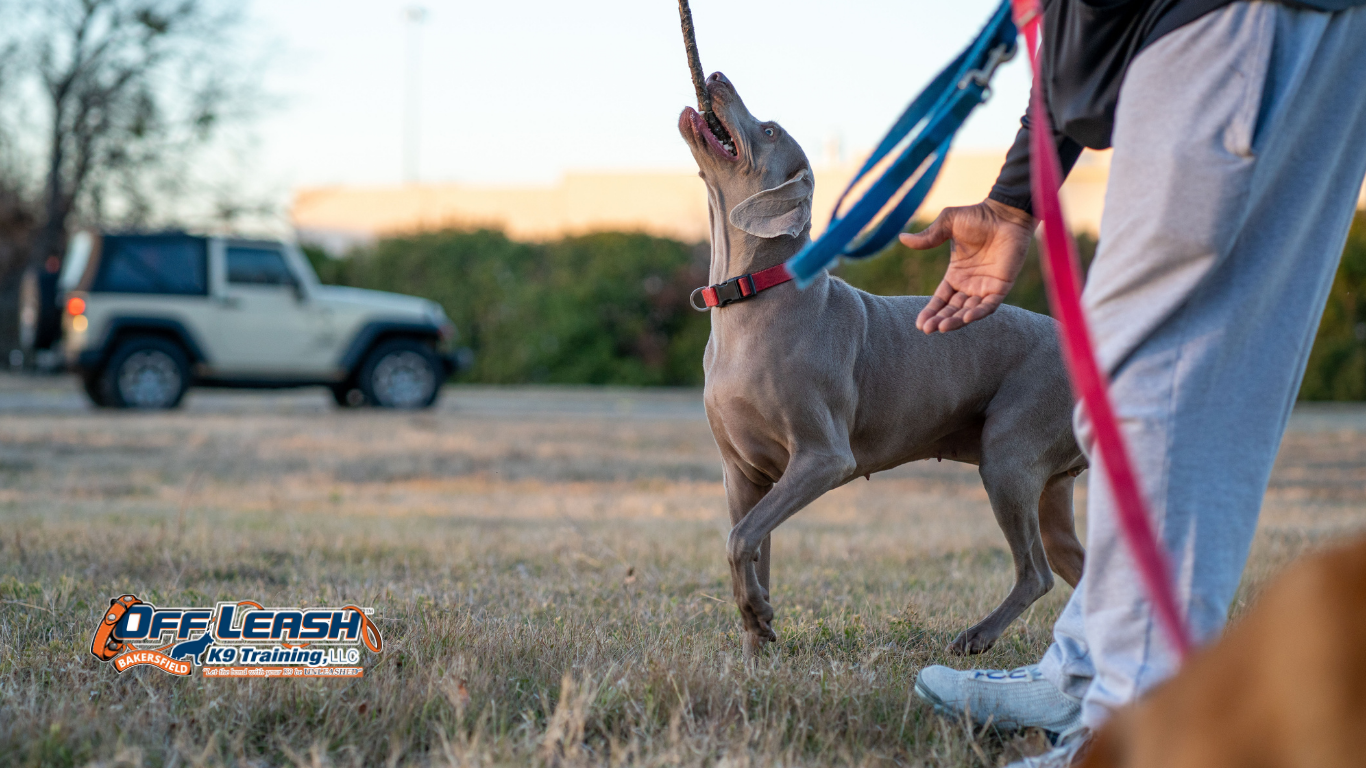
The Secret to Effective Dog Training: Discover What You’re Missing
The Secret to Effective Dog Training: Discover What You’re Missing!
Many dog owners assume effective dog training is all about teaching commands. Sit, stay, come, down, and heel are useful skills, but successful training goes much deeper than memorizing cues. The real secret to effective dog training is learning how your dog thinks, communicates, responds to motivation, and handles different environments.
A dog may understand a command perfectly in the living room but struggle to respond when visitors arrive, another dog walks nearby, or an exciting distraction appears. This does not necessarily mean the dog is stubborn or incapable of learning. It often means the training needs to become more consistent, clear, motivating, and appropriate for the dog’s current level of emotional control.
Effective training is built through communication and repetition. Dogs need to understand which behaviors are rewarded, which responses are expected, and how to make good choices even when distractions are present.
The good news is that improving your training approach does not require complicated techniques. Small changes in timing, consistency, motivation, and daily practice can make a significant difference. By focusing on the skills behind the behavior—not just the behavior itself—you can create a stronger foundation for long-term success.

What Is the Secret to Effective Dog Training?
The secret to effective dog training is not one magical command or technique. Instead, it is a combination of clear communication, consistency, appropriate motivation, good timing, realistic expectations, and an understanding of your individual dog.
Every dog learns differently. Age, personality, previous experiences, environment, energy level, and current emotional state can all influence how a dog responds during training.
Effective training therefore begins by asking a simple question: What is my dog experiencing right now?
A dog that cannot focus because they are extremely excited may need a simpler exercise or greater distance from the distraction. A dog that appears hesitant may need more confidence-building and a slower introduction. Recognizing these differences allows training to become more productive.
The goal is not simply to make a dog obey. It is to help the dog understand what is expected and develop reliable behaviors that can be used in everyday life.
Why Understanding Your Dog Matters
Understanding your dog is one of the most overlooked parts of training. Dogs communicate constantly through body language, movement, facial expressions, vocalizations, and changes in behavior.
Before asking your dog to perform a difficult behavior, consider their current level of attention and arousal. If your dog is distracted, overwhelmed, or extremely excited, repeatedly giving the same command may not solve the problem.
Learning to recognize your dog’s signals can help you determine when to increase difficulty and when to make training easier.
For example, a dog that becomes increasingly distracted during a training session may benefit from:
- Shorter training sessions
- Fewer distractions
- Greater distance from triggers
- Higher-value rewards
- Easier exercises
- More opportunities to succeed
- Additional time to settle
Understanding your dog allows you to train with your dog rather than simply expecting your dog to comply.
Consistency Is One of the Biggest Keys to Success
Consistency is one of the strongest foundations of effective dog training. Dogs learn through repeated experiences, so unclear or changing expectations can make learning more difficult.
If a dog is allowed to jump on people sometimes but corrected for jumping at other times, they may struggle to understand what behavior is expected. The same applies to barking, pulling, rushing through doorways, jumping on furniture, or waiting for food.
Consistency means establishing clear household expectations and reinforcing them regularly.
Everyone involved with the dog should ideally use similar cues and responses. This creates a predictable learning environment.
Consistency does not mean training for hours every day. Even a few minutes of focused practice can be valuable when repeated regularly.
The key is to make desired behavior part of everyday life rather than treating training as something that only happens during formal sessions.
The Role of Timing and Clear Communication
Timing can have a major impact on how quickly a dog understands what behavior is being reinforced.
When a dog performs the desired behavior, the reward or feedback should happen close enough to that behavior for the dog to make the connection. If the reward comes too late, the dog may associate it with something completely different.
Clear communication also matters. Dogs do not automatically understand human language. They learn associations between cues, behaviors, consequences, and environmental patterns.
Keep training signals as clear and predictable as possible. Avoid repeatedly changing commands or giving multiple confusing cues at once.
Instead, aim for:
Clear cue → Desired behavior → Immediate reinforcement
Over time, this helps the dog understand exactly what earns reinforcement and makes training easier to follow.
Why Motivation Makes Training More Effective
Motivation is another important piece of successful dog training. Dogs are more likely to repeat behaviors that produce outcomes they value.
Food rewards are one common form of reinforcement, but motivation can take many forms. Depending on the individual dog and situation, rewards may include praise, toys, play, access to the environment, or an opportunity to participate in something the dog enjoys.
The important question is not simply, “What reward do I normally use?” It is “What does my dog find valuable in this particular situation?“
A reward that works well in a quiet home may not be motivating enough around a major distraction.
Training can also teach dogs that calm behavior provides access to things they want. For example, waiting politely may lead to going outside, receiving a toy, greeting someone, or continuing a walk.
This makes motivation a practical tool for building better choices rather than simply getting a dog to perform commands.
Emotional Regulation and Impulse Control
A dog may know exactly what their owner wants but still struggle to respond when emotions become intense.
Excitement, frustration, fear, anticipation, and environmental stimulation can all affect a dog’s ability to focus. This is why emotional regulation and impulse control are important components of effective training.
Impulse control helps dogs pause before acting. Emotional regulation helps them remain functional when something exciting or challenging occurs.
These skills can be practiced through everyday activities such as:
- Waiting before going through a doorway
- Remaining calm before meals
- Pausing before greeting people
- Walking past distractions
- Settling after play
- Waiting for permission to access toys
- Checking in with an owner during walks
The goal is not to eliminate excitement from a dog’s life. Instead, it is to help the dog learn that excitement does not have to control their behavior.
Common Dog Training Mistakes That Slow Progress
Even well-intentioned owners can accidentally make training more difficult.
One common mistake is expecting too much too quickly. A dog may perform a behavior reliably in a quiet room but struggle in a busy environment. Immediately increasing distractions can create frustration for both the dog and owner.
Another mistake is focusing heavily on unwanted behavior without teaching an alternative. Instead of only telling a dog what not to do, identify a behavior you would like them to perform instead.
Other common training mistakes include:
- Inconsistent household rules
- Training for sessions that are too long
- Repeating commands excessively
- Using unclear cues
- Rewarding behaviors too late
- Expecting immediate results
- Increasing distractions too quickly
- Ignoring early signs of stress or excitement
- Failing to practice outside formal training sessions
Successful training is usually built through many small successes rather than one dramatic breakthrough.
How to Build an Effective Dog Training Routine
An effective training routine does not need to be complicated. In fact, short and consistent sessions can be easier for both dogs and owners.
Begin with behaviors your dog already understands, then gradually introduce distractions and increase difficulty. Keep sessions engaging and end when your dog is still able to succeed.
A simple routine can include:
Practice: Work on one or two specific skills.
Apply: Use those skills during normal household activities.
Generalize: Practice in different locations and environments.
Reward: Reinforce the behaviors you want your dog to repeat.
Progress: Gradually increase distractions and difficulty.
Training should become part of everyday life. Waiting at a doorway, walking calmly to the car, settling while the family eats, or checking in during a neighborhood walk can all become opportunities to reinforce good behavior.
The most effective routine is one that owners can realistically maintain.
Effective Dog Training in Bakersfield
For families seeking effective dog training in Bakersfield, real-world practice is especially valuable. Dogs need to learn how to respond not only inside the home but also around the everyday distractions they encounter in their community.
Training can focus on practical skills such as leash manners, calm greetings, impulse control, obedience, focus, doorway manners, and appropriate responses to distractions.
Bakersfield dog owners may encounter busy neighborhood environments, visitors, outdoor activity, other dogs, vehicles, wildlife, and changing surroundings. A dog that has only practiced commands in a quiet room may not automatically know how to apply those skills in more stimulating situations.
This is why effective training should gradually bridge the gap between controlled practice and real-world behavior.
With consistent guidance, owners can learn how to recognize their dog’s behavior, adjust the difficulty of training, reinforce desirable responses, and build skills that are useful throughout everyday life.
Long-Term Benefits of Effective Dog Training
The benefits of effective dog training extend well beyond basic obedience. A well-structured training program can help dogs and owners communicate more clearly and navigate everyday situations with greater predictability.
Long-term benefits may include:
- Better communication between dogs and owners
- Improved impulse control
- Stronger focus around distractions
- More reliable obedience
- Calmer everyday behavior
- Better leash manners
- Improved household routines
- Greater confidence
- More appropriate social interactions
- Stronger owner-dog relationships
Perhaps most importantly, effective training gives owners practical tools for handling new situations. Instead of relying on a single command, owners learn how to recognize behavior, adjust the environment, reinforce good choices, and help their dogs succeed.
That foundation can continue to benefit the dog throughout different stages of life.
10 Frequently Asked Questions
1. What is the biggest secret to effective dog training?
2. How long should dog training sessions be?
Short, focused sessions are often easier for dogs to handle. The ideal length depends on the individual dog, the behavior being practiced, and the dog’s ability to remain engaged.
3. Why does my dog listen at home but not outside?
Outside environments usually contain more distractions. Your dog may need additional practice and gradual exposure before they can reliably perform the same behavior in more challenging settings.
4. Is positive reinforcement effective for dog training?
Positive reinforcement can be an effective way to encourage behaviors you want a dog to repeat. The reward should be meaningful to the individual dog and delivered appropriately.
5. Why is consistency so important?
Dogs learn from repeated experiences. Consistent expectations make it easier for them to understand which behaviors are desirable and what outcomes follow those behaviors.
6. Can older dogs still learn new behaviors?
Yes. Dogs can continue learning throughout their lives. Training may need to be adjusted according to the dog’s previous experiences, physical abilities, motivation, and environment.
7. Why does my dog ignore commands when excited?
High excitement can make it harder for a dog to focus and respond. Training impulse control and gradually practicing around distractions can help improve reliability.
8. How can I make dog training more effective?
Use clear cues, reward desired behavior, practice consistently, keep sessions manageable, and gradually increase distractions. Understanding why your dog is struggling can also help you adjust the training plan.
9. Should everyone in the household participate in training?
Ideally, yes. When everyone follows consistent expectations and uses the same basic cues, the dog receives clearer information and has fewer conflicting rules to navigate.
10. When should I consider professional dog training?
Professional training can be especially useful when behavior problems are persistent, difficult to manage, or involve significant fear, aggression, reactivity, or safety concerns. A qualified professional can help create a training plan suited to the individual dog.
Comprehensive Conclusion
The secret to effective dog training is not a complicated trick. It is understanding that lasting behavior change comes from clear communication, consistency, motivation, appropriate timing, patience, and regular practice.
Dogs are constantly learning from their environment and from the consequences of their behavior. When owners consistently reinforce desirable choices and make expectations clear, dogs have a better opportunity to understand what is being asked of them.
Effective training also goes beyond basic obedience. Teaching a dog to sit or stay is valuable, but helping them remain calm around distractions, control impulses, recover from excitement, and respond reliably in everyday situations creates a much stronger foundation.
Most importantly, remember that progress does not always happen overnight. Training is a process. Small improvements repeated consistently can eventually become dependable habits.
Whether you are working with a puppy, an adult dog, or a dog struggling with specific behaviors, the right approach can make training more productive and rewarding. When you understand what your dog needs to learn—not just what you want them to stop doing—you unlock a more effective path toward better behavior and a stronger relationship.
Website Contact Form
"*" indicates required fields