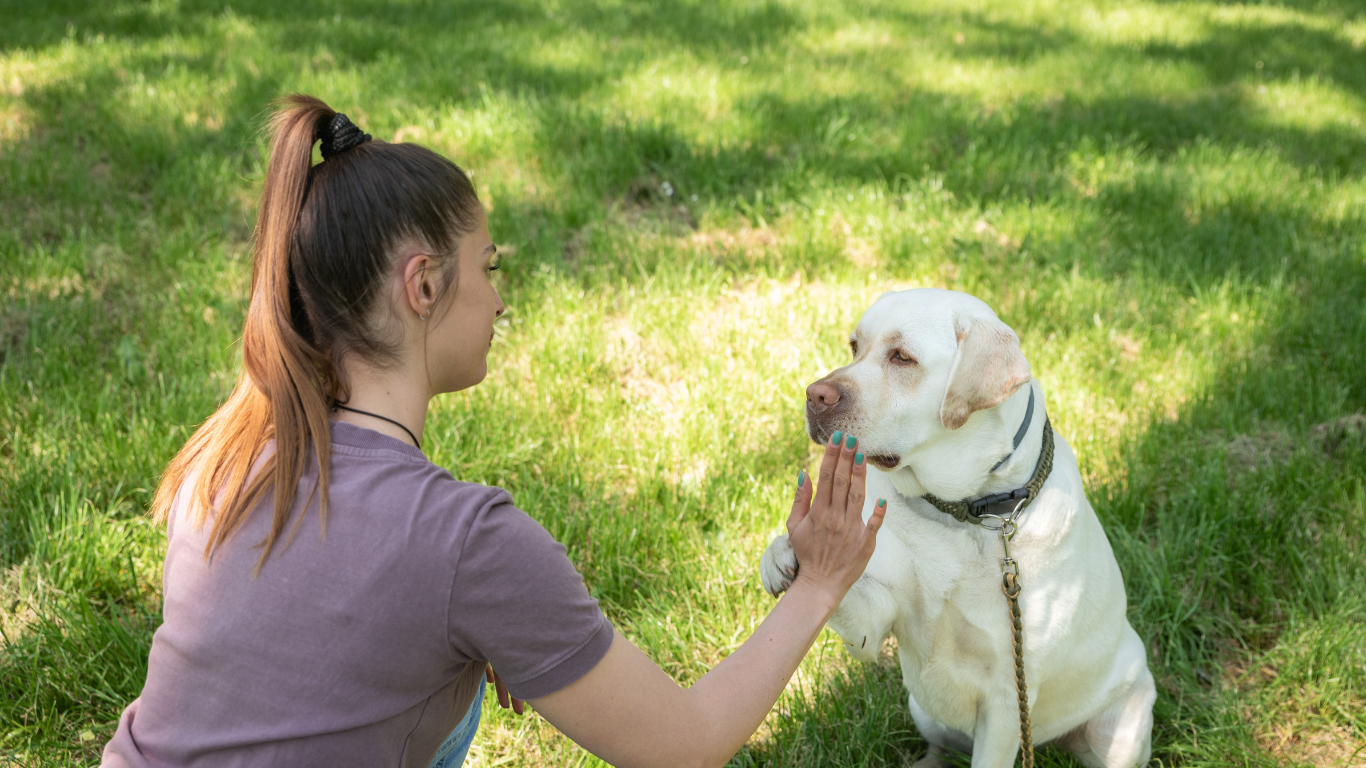
How to Teach Your Dog to Switch From Play Mode to Calm Mode
Play is an important part of a dog’s life. It provides physical activity, mental stimulation, opportunities for social interaction, and an outlet for natural behaviors. However, some dogs struggle to settle down once play becomes exciting. They may continue jumping, barking, running around, grabbing clothing, or demanding attention long after the activity should have ended.
Learning to switch from play mode to calm mode helps dogs handle these transitions more successfully.
The goal is not to eliminate excitement or prevent dogs from enjoying themselves. Instead, it is to teach them that energetic activities have a beginning and an end, and that relaxing afterward is another valuable skill.
For example, a dog can learn to play with a toy, respond when the owner signals that play is finished, and then settle on a mat or engage in a quiet activity. This transition may not happen immediately, especially for young dogs or dogs that become highly stimulated during play.
With consistent practice, appropriate rewards, and clear expectations, dogs can learn to regulate their behavior and recover more effectively after exciting activities.
What Do “Play Mode” and “Calm Mode” Mean in Dog Training?
In dog training, play mode describes a period when a dog is actively engaged in an exciting activity. The dog may run, chase toys, jump, tug, or interact enthusiastically with people or other dogs.
Calm mode describes a more settled state in which the dog can relax, respond to cues, and participate in quieter activities.
These are useful descriptions of behavior, not literal switches inside a dog’s brain.
A dog does not need to become completely motionless to be calm. Relaxed sniffing, chewing an appropriate toy, resting nearby, or quietly exploring can all be reasonable alternatives to high-energy play.
Examples of play-mode behaviors include:
-
Chasing a ball
-
Tugging on a toy
-
Running around the yard
-
Engaging in energetic social play
-
Jumping for attention
-
Barking excitedly during games
Examples of calm-mode behaviors include:
-
Settling on a mat
-
Lying down comfortably
-
Chewing an appropriate enrichment toy
-
Resting in a designated area
-
Walking calmly beside the owner
-
Responding to a familiar cue despite mild excitement
The important skill is learning to transition between activities without becoming increasingly frantic or frustrated.
Why Some Dogs Struggle to Calm Down After Play
Some dogs remain excited because they have not learned how to transition from an energetic activity to a quieter one.
Others may be tired but still highly stimulated, making it difficult for them to settle immediately.
Several factors can contribute to this challenge.
High Excitement Levels
Limited Impulse Control
A dog that struggles to pause, wait, or respond during exciting activities may also have difficulty ending play.
Unclear End-of-Play Signals
If play stops unpredictably or the owner sometimes continues playing after the dog becomes overly excited, the dog may not understand when the activity is finished.
Accidental Reinforcement
If barking, jumping, or grabbing clothing repeatedly causes the owner to resume play or provide attention, these behaviors may become more persistent.
Inadequate Rest
Dogs need sufficient sleep and downtime. Puppies, in particular, may become more excitable when tired rather than automatically settling down.
Overstimulating Play
Some games may become too intense for a particular dog. Repeated high-speed chasing or prolonged, rough interaction can make the transition to calm behavior more difficult.
The solution is not always to provide more exercise. Sometimes, shorter play sessions, more frequent pauses, appropriate enrichment, and predictable rest periods are more helpful.
Signs Your Dog Is Becoming Overexcited During Play
Possible signs include:
-
Increasingly frantic movement
-
Repeated jumping or mouthing
-
Grabbing clothing or the leash
-
Barking that becomes more persistent
-
Difficulty releasing a toy
-
Ignoring familiar cues
-
Repeatedly rushing back into the game
-
Struggling to pause when play stops
-
Becoming increasingly rough during interaction
-
Taking longer to settle after each round of play
Not every excited behavior is a problem. Many dogs naturally become energetic during play.
What matters is whether your dog can still respond appropriately, take breaks, and recover afterward.
If your dog becomes stiff, repeatedly tries to escape, shows signs of fear, or engages in threatening behavior, do not assume the issue is simply excitement. Increase safety and seek qualified guidance if needed.
The Difference Between Healthy Excitement and Overstimulation
Healthy excitement allows a dog to participate in an enjoyable activity while remaining reasonably responsive.
The dog may run, chase, bark, or tug enthusiastically but can still pause, disengage, and transition to another activity with appropriate support.
Overstimulation occurs when the level of excitement becomes difficult for the dog to manage.
The dog may stop responding to familiar cues, become increasingly frantic, or struggle to recover after the activity ends.
These states can look different depending on the individual dog.
A useful way to evaluate play is to ask:
Can my dog still pause, respond, and recover?
If the answer is usually yes, the activity may be at a manageable level.
If your dog repeatedly becomes too excited to respond, consider shortening the game, slowing down the activity, introducing more breaks, or choosing a quieter environment.
Also pay attention to the type of play. Some dogs can handle fetch well but become overstimulated during rough play with other dogs. Others may struggle more with tugging or chasing.
Adjust the activity to your dog’s individual needs rather than assuming every dog responds the same way.
How Impulse Control Helps Dogs Switch Between Activities
Impulse control is the ability to pause before acting on an immediate desire.
It helps dogs learn that they do not need to chase every moving object, grab every toy, or continue every exciting activity indefinitely.
During play, impulse control can involve waiting briefly, releasing a toy, responding to a cue, or moving to a resting area.
These skills should be taught gradually.
For example, you can briefly pause a tug game, reward your dog for releasing the toy, and then restart the game as a reward. This teaches the dog that responding appropriately does not necessarily mean losing access to fun.
You can also practice simple transitions:
-
From chasing a toy to standing calmly
-
From tugging to releasing the toy
-
From running to walking beside you
-
From energetic interaction to settling on a mat
-
From play with a person to independent enrichment
Start with short pauses that your dog can handle successfully.
If the dog becomes frustrated, make the exercise easier. The goal is to build the ability to transition, not to create a prolonged struggle over the toy or activity.
Building Calmness Before and After Play Sessions
A structured routine does not need to be complicated.
Before Play
Begin when your dog is reasonably settled. Ask for a simple behavior, such as standing calmly or responding to their name, before starting the game.
This does not mean your dog must remain perfectly still before enjoying an activity. It simply introduces a predictable starting point.
During Play
Keep sessions appropriate for your dog’s age, health, temperament, and energy level.
Include short pauses when needed. If your dog becomes increasingly frantic, slow down or end the game before the behavior escalates.
When Play Ends
Use a consistent cue such as “all done” to signal that the game is finished.
Put toys away if necessary and transition to a quieter activity.
After Play
Offer an appropriate settling opportunity, such as sniffing in a quiet area, resting on a mat, or chewing a safe enrichment item.
Avoid immediately introducing another highly stimulating activity if your dog is struggling to recover.
During Rest
Allow your dog to settle without repeatedly interrupting them.
Rest is a necessary part of a healthy routine, not a punishment for being excited.
With practice, the dog can learn a predictable pattern: activity, transition, and recovery.
How Rewards Can Teach Dogs to Settle After Excitement
Rewards can help dogs understand which behaviors are desirable during the transition from play to rest.
Instead of focusing exclusively on stopping energetic behavior, teach your dog what to do next.
For example, if your dog finishes a game and lies down on a mat, calmly reward the settled behavior.
Rewards may include:
-
Small food treats
-
Calm verbal praise
-
An appropriate chew
-
Quiet interaction
-
Access to a comfortable resting area
-
A sniffing opportunity
-
Permission to resume play after a successful pause
The reward should fit the situation. If your dog becomes more excited when you offer a toy, a quieter reward may be more useful.
You can also teach a release cue during play.
Ask your dog to release a toy, reward the release, and occasionally restart the game. This makes responding to the cue worthwhile.
When teaching a settle behavior, reward small steps toward relaxation, such as standing quietly, lying down, or remaining comfortably on a mat.
Avoid repeatedly demanding calmness when your dog is already overwhelmed. Reduce the stimulation and allow the dog time to recover.
The goal is to build calm behavior through successful practice rather than forcing the dog to remain still.
Common Owner Mistakes That Make It Harder for Dogs to Calm Down
Even well-intentioned owners can accidentally make the transition from play to rest more difficult.
Playing for Too Long
Long sessions may allow excitement to build beyond what the dog can manage.
Try shorter sessions with planned pauses.
Making Every Pause Exciting
Loud voices, rapid movements, and repeated commands can increase stimulation when the dog needs to settle.
Use calm, clear communication instead.
Ending Play Only After the Dog Becomes Frantic
If the game routinely ends only after jumping, mouthing, or barking escalates, those behaviors may become part of the pattern.
Try ending the activity earlier, when your dog can still respond.
Restarting Play After Unwanted Behavior
If barking or grabbing clothing repeatedly makes the game resume, the behavior may be reinforced.
Instead, teach a clear release or pause routine and restart play when the dog can respond appropriately.
Expecting Immediate Relaxation
Some dogs need time to transition after activity. Expecting them to lie quietly the second a game ends may be unrealistic.
Using Physical Force
Forcing a dog into a down position or grabbing them roughly can create discomfort and frustration. Teach a settling behavior through gradual practice and reinforcement.
Forgetting About Rest
A dog that is overtired may become more excitable. Make sure your dog has suitable opportunities for sleep and quiet recovery.
Using the Same Approach for Every Dog
Dogs differ in their preferences and arousal levels. Adjust the length, intensity, and type of play to suit your individual dog.
How to Teach Your Dog to Switch From Play Mode to Calm Mode
A practical training routine can help your dog learn this transition step by step.
Step 1: Choose a Manageable Game
Start with a type of play that your dog enjoys but can still handle without becoming excessively excited.
Keep the initial session short.
Step 2: Introduce a Consistent End Cue
Choose a phrase such as “all done.” Say it calmly when you are ready to end the game.
The cue should predict the end of play, not become a repeated command that the dog learns to ignore.
Step 3: End the Activity Predictably
Stop moving the toy or end the game in a calm, safe manner. If needed, put the toy away rather than continuing to wave it around.
Avoid grabbing at the dog’s mouth or physically forcing a release.
Step 4: Reward a Simple Transition Behavior
Ask for a behavior your dog already understands, such as standing calmly, responding to their name, or going to a mat.
If the dog cannot respond, make the situation easier rather than repeating the cue.
Step 5: Reinforce Settling
Reward your dog for lying down, relaxing on a mat, or engaging in another quiet activity.
Deliver rewards calmly so you do not accidentally restart the excitement.
Step 6: Keep the First Settling Period Short
Begin with a brief period of calm behavior. Gradually increase the duration as your dog becomes more successful.
Step 7: Practice Returning to Play
Once your dog can pause and respond, you can sometimes use restarting play as a reward.
This teaches the dog that pauses are a normal part of games.
Step 8: Gradually Increase the Challenge
Practice after different types of play and in different appropriate environments.
Change one factor at a time, such as the length of the game or the level of excitement.
Step 9: Watch for Early Signs of Overstimulation
If your dog becomes increasingly frantic, shorten the activity or add an earlier break.
Do not wait until the dog is completely unable to respond.
Step 10: Make the Routine Consistent
Practice the same basic transition with family members so your dog receives predictable signals.
Over time, your dog can learn that play is enjoyable and that calm behavior is another rewarding part of daily life.
Helping Dogs Build Better Calmness With BakersfieldDogTrainer.com
Some dogs need additional help learning to regulate their excitement, especially when play leads to persistent jumping, mouthing, barking, or difficulty settling.
BakersfieldDogTrainer.com can help owners work toward practical training goals involving impulse control, focus, calm behavior, and better transitions between activities.
Training can focus on understanding what causes a dog to become overstimulated, recognizing early warning signs, and teaching alternative behaviors that help the dog recover.
Depending on the dog’s needs, useful training goals may include:
-
Settling after play
-
Releasing toys on cue
-
Responding during exciting activities
-
Improving impulse control
-
Practicing calm greetings
-
Transitioning between activities
-
Building focus around distractions
-
Developing predictable household routines
The objective is not to eliminate play or suppress normal excitement. It is to help the dog enjoy activities while developing the skills needed to pause, respond, and settle afterward.
Long-Term Benefits of Teaching Dogs to Switch From Play Mode to Calm Mode
Teaching dogs to switch between energetic and calm activities can benefit everyday life in several ways.
Better Self-Control
Dogs learn to pause and respond rather than continuing an activity automatically.
Easier Transitions
Moving from playtime to rest, meals, walks, or household activities can become more manageable.
Improved Responsiveness
Dogs practice responding to familiar cues even when they are excited.
Better Play Manners
Structured pauses can help reduce rough or overly intense play.
More Relaxed Household Behavior
Dogs can learn that exciting activities have clear endings and that quiet time is part of the routine.
Stronger Communication
Consistent cues help dogs understand when an activity begins, pauses, or ends.
More Effective Recovery
Dogs can develop routines that help them return to calmer behavior after stimulation.
A More Enjoyable Relationship
Owners can enjoy playtime with greater confidence while helping their dogs develop useful everyday skills.
10 Frequently Asked Questions
1. Why does my dog struggle to calm down after playing?
Your dog may become highly stimulated during play, lack practice transitioning to rest, or be overtired. Shorter sessions, predictable pauses, and rewarding calm behavior can help.
2. How do I teach my dog that playtime is over?
Use a consistent cue such as “all done,” end the activity predictably, and guide your dog toward a quiet alternative. Reward appropriate settling behavior.
3. Should I stop playing whenever my dog becomes excited?
Not necessarily. Excitement is normal. However, if your dog becomes too frantic to respond or play becomes unsafe, pause the activity and allow recovery.
4. Can puppies learn to switch from play mode to calm mode?
Yes. Puppies can begin learning short pauses, release cues, and simple settling routines. Keep exercises brief and appropriate for their developmental stage, and provide plenty of rest.
5. Does more exercise always help an overexcited dog?
No. Exercise is important, but excessive high-intensity activity may increase arousal in some dogs. A balanced routine includes appropriate movement, mental enrichment, training, and rest.
6. What should I do if my dog grabs my clothing during play?
End or pause the interaction safely, avoid turning the behavior into a chase game, and teach appropriate alternatives. If the behavior is intense or difficult to manage, seek professional guidance.
7. Should I physically hold my dog down to make them calm?
No. Forcing a dog into position can increase discomfort or frustration. Teach settling through gradual practice, environmental management, and reinforcement.
8. How long should a dog take to calm down after play?
There is no single timeline. It depends on the dog, the intensity of the activity, age, temperament, and environment. If recovery is consistently difficult, reduce stimulation and consider professional advice.
9. Can treats help my dog settle after excitement?
10. When should I seek professional help?
Seek guidance if your dog regularly becomes uncontrollable during play, repeatedly bites or grabs people, displays threatening behavior, or cannot recover despite careful adjustments. A qualified reward-based trainer or veterinary behavior professional can help assess the situation.
Comprehensive Conclusion
Teaching your dog to switch from play mode to calm mode is an important part of developing self-control and healthy everyday routines.
Dogs need opportunities to run, play, explore, and express their natural behaviors. They also need to learn how to pause, respond to cues, and recover when an exciting activity ends.
Start with short, manageable play sessions. Introduce a clear end cue, reward simple transition behaviors, and provide quiet opportunities to settle. Gradually build the duration and difficulty as your dog becomes more successful.
If your dog struggles, do not assume they are being stubborn. The activity may be too intense, the transition may be unfamiliar, or your dog may need more rest.
With patience, consistency, and positive reinforcement, you can teach your dog that calm behavior is not the opposite of having fun. It is another skill that makes everyday life easier.
For owners who need additional support, BakersfieldDogTrainer.com can help develop practical training strategies for impulse control, calmness, and better transitions between activities.
The goal is simple: teach your dog to enjoy play, recognize when it ends, and settle comfortably afterward.
Website Contact Form
"*" indicates required fields