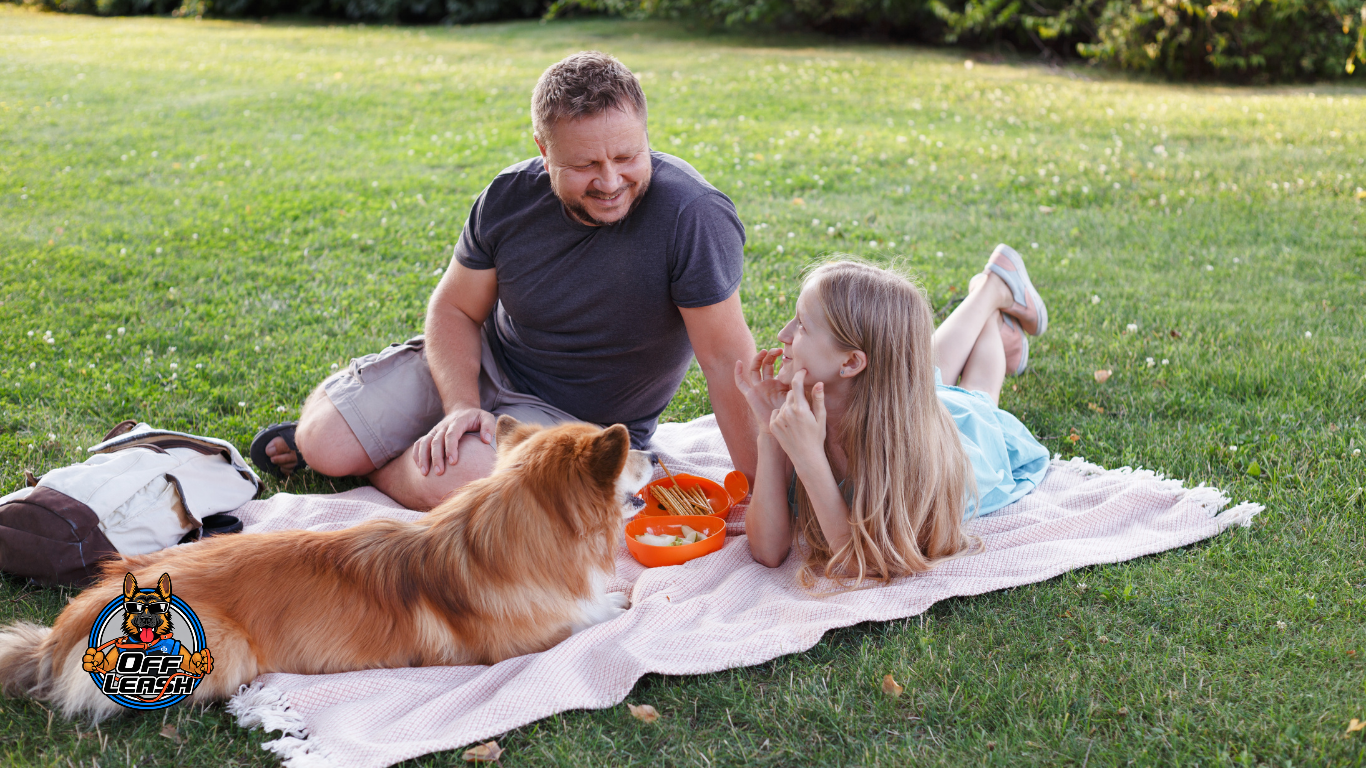
Why Dogs Have Trouble Sharing Space During Family Activities
Family activities bring people together. Whether everyone is watching television, preparing dinner, playing games, talking in the living room, or spending time around the dining table, these moments create a busy and sometimes unpredictable environment for a dog.
Some dogs naturally settle nearby and observe what is happening. Others struggle to remain comfortable when several family members are moving, talking, laughing, or interacting with one another. They may repeatedly walk between people, nudge hands, climb onto furniture, bring toys, bark for attention, or become restless when they are not included.
These behaviors are not necessarily signs of disobedience. Dogs learn through experience, and many discover that moving closer, interrupting an activity, or seeking attention produces a response from someone in the household. Excitement, uncertainty, limited impulse control, and unclear household expectations can also make sharing space challenging.
The goal is not to make a dog avoid the family or remain completely inactive. Instead, it is to help the dog understand how to participate comfortably without constantly interrupting others or feeling overwhelmed.
With patience, clear boundaries, and positive reinforcement, dogs can learn to relax around family activities while respecting everyone’s personal space.
Why Dogs Struggle When Several Family Members Gather Together
When several people gather in one area, a dog may experience more activity than usual. Different people may move in different directions, speak at the same time, handle objects, or interact with one another. For a dog that is still developing self-control, this environment can be difficult to navigate.
Some dogs become excited because everyone is together. They may move from one person to another, hoping to receive attention, affection, or an invitation to participate. Others may feel uncertain because they cannot predict what each person will do next.
A dog that is accustomed to receiving individual attention may also struggle when the family’s attention shifts elsewhere. If someone is sitting on the couch, talking to another person, or helping a child with an activity, the dog may repeatedly attempt to regain their attention.
Previous experiences can influence these reactions. For example, if nudging someone’s hand has frequently resulted in petting, the dog may continue using that behavior whenever attention becomes unavailable.
There are several common reasons dogs have trouble sharing space:
-
Limited experience: The dog has not practiced remaining settled while several people are active nearby.
-
Excitement: Group activity creates stimulation that makes it difficult to relax.
-
Attention seeking: The dog has learned that interrupting people produces interaction.
-
Unclear boundaries: Different family members respond differently to the same behavior.
-
Uncertainty: The dog does not understand where to rest or how to participate appropriately.
Recognizing the reason behind the behavior helps families choose an effective training approach instead of simply correcting the dog whenever it gets too close.
How Excitement and Attention Affect a Dog’s Ability to Share Space
Excitement can make it difficult for dogs to recognize when they should give people room. During family activities, they may become increasingly interested in everything happening around them.
A dog might approach someone holding a snack, move between two people who are talking, or repeatedly bring a toy to someone who is occupied. These behaviors can become more persistent when the dog receives attention each time.
Even negative attention can reinforce certain behaviors. If a dog nudges someone and receives a verbal correction, eye contact, or physical interaction, that response may still be rewarding enough to encourage repetition.
Dogs also need opportunities to practice being near people without actively engaging with them. Sharing space calmly is a skill that involves learning to remain comfortable even when attention is directed elsewhere.
For example, a dog can learn that:
-
People can talk without the dog needing to participate.
-
Family members can move around without being followed constantly.
-
Someone can hold food without the dog approaching or demanding it.
-
Toys can remain available without every family activity becoming playtime.
-
Resting nearby is just as acceptable as actively seeking attention.
Teaching these lessons gradually helps dogs understand that being included in family life does not mean being the center of every activity.
Why Movement, Noise, and Activity Can Make Dogs Uncomfortable
Family environments are rarely completely predictable. Children may run through the room, chairs may move, appliances may make noise, and several conversations may happen simultaneously.
Some dogs become excited by these changes, while others feel uncomfortable or overwhelmed.
A dog that struggles with movement might repeatedly get up whenever someone walks past. Another may bark when children become loud or follow family members from room to room because it cannot settle while people are active.
Noise can also affect a dog’s ability to relax. Sudden laughter, raised voices, dropped objects, or overlapping conversations may increase alertness. Dogs that are sensitive to environmental changes may need additional time and space to become comfortable.
It is important to distinguish between excitement and discomfort. A dog that repeatedly approaches people may be seeking interaction, but a dog that moves away, hides, freezes, or avoids contact may need more distance.
Families can make shared spaces easier by introducing manageable levels of activity.
Start with quieter situations before expecting the dog to remain relaxed during busy gatherings. Allow the dog to observe from a comfortable distance, reward calm behavior, and gradually introduce more movement as the dog becomes confident.
Avoid forcing a dog to remain close to people or activities that make it uncomfortable. Having the freedom to move away can help prevent stress from building.
Understanding Your Dog’s Body Language During Family Activities
A dog’s body language provides valuable information about how it feels when people gather together. Paying attention to these signals helps families recognize when the dog is comfortable, excited, uncertain, or overwhelmed.
A relaxed dog may lie down, breathe normally, keep its body loose, and occasionally look around before returning to rest. It may choose to remain nearby without constantly seeking attention.
An excited dog may move quickly, wag its tail energetically, repeatedly approach people, jump, or bring toys. Although excitement is not automatically a problem, it can make calm behavior more difficult.
Signs of possible stress or discomfort include:
-
Repeated lip licking when no food is present.
-
Yawning outside normal tiredness.
-
Turning the head or body away.
-
Moving away from people.
-
Tucking the tail or lowering the body.
-
Flattening the ears.
-
Freezing or becoming unusually still.
-
Panting when the environment is not warm.
-
Hiding behind furniture or seeking a quieter area.
Some dogs may also show signs of conflict by becoming stiff, staring, growling, or guarding a resting place. These signals should be taken seriously rather than dismissed as stubbornness.
A growl is communication that the dog is uncomfortable. Punishing it can discourage the warning without addressing the underlying feeling.
When a dog shows signs of discomfort, reduce the pressure, provide more distance, and allow it to choose a safer resting location.
Understanding body language allows families to respond before a situation becomes more difficult.
How to Teach Your Dog to Share Space Calmly
Teaching a dog to share space starts with creating situations where calm behavior is achievable. Instead of expecting the dog to behave perfectly during a busy family gathering, begin with short, manageable practice sessions.
Choose a familiar room where the dog feels comfortable. Have one or two family members sit quietly while the dog remains nearby. Reward the dog for relaxed behavior, such as standing calmly, sitting, or lying down without demanding attention.
Keep the first sessions brief. If the dog becomes restless, reduce the difficulty rather than repeatedly asking it to settle.
A useful training progression includes the following steps:
1. Choose a comfortable location
Provide a dog bed, mat, or resting area near the family activity but outside busy walkways. The location should allow the dog to observe without being constantly approached or disturbed.
2. Reward calm behavior
When the dog chooses to remain settled, quietly offer praise or a small reward. Reinforce relaxed behavior before the dog becomes restless or begins interrupting.
3. Practice with limited activity
Begin with one person sitting nearby. Gradually introduce another family member, quiet conversation, and gentle movement.
4. Increase activity gradually
Once the dog can remain comfortable during simple situations, practice while people talk, stand up, walk around, or complete everyday tasks.
5. Encourage independent settling
Give the dog opportunities to relax without continuous interaction. Reward the decision to remain on its bed or rest quietly nearby.
6. Practice consistency
Repeat these exercises during different household activities. The dog should learn that calm behavior is expected even when the specific people or activities change.
The process should remain positive and manageable. If the dog repeatedly gets up, becomes overly excited, or shows signs of stress, return to an easier stage.
The objective is to build a reliable habit, not to force the dog to remain in one place for longer than it can comfortably manage.
Building Comfortable Boundaries Around Family Members
Boundaries should be taught through clear guidance rather than intimidation or constant physical correction.
For example, a dog can learn to remain beside the couch instead of climbing onto it when that is the household expectation. It can also learn to rest away from the dining table, stay out of kitchen walkways, or move to a designated area while family members complete certain activities.
Consistency is especially important. If one person allows the dog to jump onto the couch while another repeatedly pushes it away, the dog receives conflicting information.
Family members should agree on a few simple expectations:
-
Decide which furniture the dog is allowed to use.
-
Establish comfortable resting areas.
-
Prevent the dog from blocking doorways and walkways.
-
Teach the dog to wait instead of pushing between people.
-
Give the dog space when it chooses to rest.
-
Avoid encouraging unwanted attention-seeking behaviors.
Children should also learn to respect the dog’s boundaries. They should not climb onto the dog, disturb it while sleeping, take away its food, or force interaction when it wants to move away.
Young children and dogs should always be supervised together, particularly during busy family activities.
Comfortable boundaries create a more predictable environment. Over time, the dog learns that it can remain part of family life without needing to control everyone’s movements or attention.
Using Positive Reinforcement to Encourage Calm Household Behavior
Instead of focusing only on what the dog should stop doing, reward the actions that make shared spaces more comfortable.
For example, if the family is watching television and the dog lies quietly on its bed, offer a calm reward. If someone is preparing food and the dog remains outside the kitchen area, acknowledge that decision.
The timing of reinforcement matters. Rewarding calm behavior while it is happening helps the dog make a connection between its actions and the positive outcome.
Useful behaviors to reinforce include:
-
Remaining on a designated resting area.
-
Lying down while family members talk.
-
Allowing people to walk past without following them.
-
Moving away when given a familiar cue.
-
Waiting calmly instead of nudging for attention.
-
Choosing to rest independently.
-
Remaining relaxed when someone changes position.
Rewards do not always need to involve food. Depending on the dog, quiet praise, gentle affection, or access to an appropriate activity can also be rewarding.
However, avoid becoming overly enthusiastic when rewarding a dog that is learning to settle. Excited praise may cause the dog to get up and become active again.
A calm voice and thoughtful timing help preserve the relaxed environment.
With consistent reinforcement, dogs begin to understand that sharing space peacefully produces positive experiences.
Common Mistakes That Make Sharing Space More Difficult
Families often have good intentions when trying to manage a dog that constantly interrupts activities. However, some common responses can unintentionally make the behavior more persistent.
Giving attention every time the dog interrupts
If the dog receives petting, conversation, or play whenever it nudges someone, it may learn that interrupting is an effective way to gain attention.
Expecting immediate results
A dog that has spent years moving between family members will not necessarily learn to settle after one or two practice sessions. New habits require repetition.
Using inconsistent rules
When family members have different expectations, the dog may struggle to understand what behavior is appropriate.
Forcing the dog to remain close
A dog that feels uncomfortable around noise, movement, or crowded spaces should not be forced to stay nearby. Providing a quiet retreat is important.
Correcting warning signals
Punishing growling, freezing, or avoidance does not make a dog more comfortable. It can make communication less predictable and increase safety concerns.
Making training sessions too difficult
Expecting a dog to remain calm during a crowded gathering before it has practiced with one or two people can create unnecessary frustration.
Ignoring the importance of rest
Dogs need sufficient opportunities to sleep and relax. An overtired dog may have more difficulty managing excitement and household activity.
Avoiding these mistakes makes training more predictable and helps the dog develop confidence in shared environments.
How Consistent Family Routines Help Dogs Develop Better Habits
Dogs often feel more comfortable when household expectations are predictable. Consistent routines help them understand when interaction is likely, when people are occupied, and where they can relax.
For example, a family might encourage the dog to settle on its mat while everyone eats dinner. Afterward, the dog may have an opportunity for a walk, playtime, or individual attention.
This teaches the dog that attention is available at appropriate times without needing to interrupt every activity.
Families can also establish simple routines for common situations:
-
During meals, the dog rests in its designated area.
-
During television time, the dog can relax nearby.
-
During conversations, the dog is encouraged to settle instead of moving between people.
-
During children’s playtime, the dog has a separate comfortable space.
-
During busy household tasks, the dog can enjoy an appropriate enrichment activity.
Consistency does not mean every day must follow an identical schedule. Instead, it means the dog receives clear and familiar guidance across different situations.
Family members should use the same cues and reinforce the same expectations whenever possible.
It is also important to give dogs enough exercise, mental stimulation, and opportunities for individual interaction. A dog whose needs are consistently addressed may find it easier to relax when the family becomes occupied.
Over time, predictable routines help create a household where people and dogs can comfortably share everyday spaces.
When to Seek Professional Training Support
Some dogs need additional help learning to share space, particularly when their behavior involves intense excitement, persistent attention seeking, fear, or difficulty settling around family members.
Professional support may be useful when a dog:
-
Repeatedly jumps on or pushes family members.
-
Becomes increasingly restless during ordinary household activities.
-
Cannot settle even after gradual training.
-
Shows signs of fear around children or groups of people.
-
Guards furniture, resting areas, toys, or people.
-
Growls, snaps, or displays threatening behavior when someone approaches.
-
Becomes distressed when family members move around or leave the room.
A qualified professional can help identify the underlying cause and develop a practical training plan based on the dog’s individual needs.
For behavior involving aggression, guarding, or significant fear, consult a veterinarian and an appropriately qualified behavior professional. Avoid deliberately testing the dog’s reactions or placing family members in situations that could lead to injury.
At BakersfieldDogTrainer.com, families can explore how consistent guidance, positive reinforcement, and practical everyday training can help dogs develop better household manners.
Professional guidance can also help family members establish consistent expectations so the dog receives the same message from everyone.
The goal is not simply to stop interruptions. It is to help the dog feel secure, understand household boundaries, and participate comfortably in everyday family life.
Conclusion: Helping Your Dog Feel Comfortable During Family Activities
Sharing space during family activities is an important everyday skill. Dogs need to learn that they can remain near people, observe household activity, and relax without constantly seeking attention or moving between family members.
When dogs struggle with this skill, the reasons may include excitement, uncertainty, limited impulse control, inconsistent expectations, or sensitivity to movement and noise.
Families can make meaningful progress by recognizing their dog’s body language, creating comfortable resting areas, establishing clear boundaries, and rewarding calm behavior.
Training should begin with simple situations and gradually progress toward busier family activities. Everyone in the household should follow consistent expectations while respecting the dog’s need for rest and personal space.
Remember that the goal is not to exclude the dog from family life. It is to help the dog become comfortable participating in it appropriately.
With patience, positive reinforcement, and consistent routines, dogs can learn to share space peacefully while allowing family members to enjoy their time together.
Frequently Asked Questions
1. Why does my dog struggle to share space when the family gathers together?
Dogs may struggle because family gatherings involve increased movement, noise, attention, and excitement. Some dogs become overstimulated, while others are unsure where to settle or how to behave when several people are interacting. Gradual practice and consistent household expectations can help them become more comfortable.
2. Why does my dog constantly move between family members during activities?
Your dog may be seeking attention, following interesting movements, or trying to participate in everything happening around it. If moving between people regularly results in petting or interaction, the behavior may become a habit. Rewarding calm behavior in an appropriate resting area can help encourage a different response.
3. Can excitement make it difficult for dogs to respect personal space?
Yes. Excitement can make dogs more impulsive and less aware of their surroundings. They may jump, nudge, push between people, or repeatedly approach family members. Teaching calm behavior through gradual exposure and positive reinforcement can improve their ability to share space appropriately.
4. How can I teach my dog to settle while the family is busy?
Start by choosing a comfortable resting area near the family. Reward your dog for lying down or remaining relaxed while one person completes a quiet activity. Gradually introduce more people, movement, and conversation as the dog becomes comfortable. Keep sessions manageable and reward calm behavior consistently.
5. Should I give my dog a designated place during family activities?
Yes. A comfortable bed or mat can give your dog a predictable place to relax while people are busy. Choose a location away from crowded walkways where the dog can observe without being constantly disturbed. Make the area rewarding so the dog develops a positive association with resting there.
6. Why does my dog become restless when several people are talking?
Multiple voices, changes in tone, laughter, and movement can increase a dog’s alertness or excitement. Some dogs are sensitive to noise, while others become interested in the attention shared among family members. Gradually practicing around quiet conversations before introducing busier situations can help.
7. How can children help a dog learn to share space appropriately?
Children can help by following consistent household rules, giving the dog room to rest, and avoiding unwanted physical interaction. They should not chase, climb on, corner, or disturb the dog while it is sleeping or eating. Adults should always supervise interactions between children and dogs.
8. Is it normal for dogs to seek attention during family activities?
Yes. Dogs are social animals, and many enjoy being involved when their families gather. However, constantly interrupting people can become an unwanted habit. Teaching the dog that calm resting and appropriate interaction are both rewarding helps create healthier household behavior.
9. How long does it take for a dog to become comfortable sharing space?
The timeline depends on the dog’s age, temperament, previous experiences, and how consistently the family practices. Some dogs improve within a few weeks, while others need longer. Short, positive training sessions and gradual increases in activity can help build lasting habits.
10. When should I seek professional help for my dog’s behavior around family members?
Seek professional support if your dog shows persistent distress, intense restlessness, resource guarding, growling, snapping, or difficulty relaxing despite consistent training. A qualified professional can help identify the cause and recommend appropriate strategies. If the behavior involves aggression or significant fear, consult a veterinarian and qualified behavior professional for guidance.
Conclusion: Helping Your Dog Feel Comfortable During Family Activities
Families can help by establishing clear boundaries, providing comfortable resting areas, recognizing their dog’s body language, and rewarding calm behavior. Starting with quiet situations and gradually introducing more activity allows dogs to develop better habits without feeling overwhelmed.
Consistency is essential. When everyone in the household follows the same expectations, dogs have an easier time understanding where to rest, when interaction is appropriate, and how to give people personal space. With patience and positive reinforcement, they can learn that being part of family activities does not require constant attention or involvement.
At BakersfieldDogTrainer.com, we believe everyday training should help dogs develop practical skills that make life at home more peaceful and enjoyable. The goal is not to keep dogs away from family activities, but to help them participate comfortably while respecting everyone’s space.
With steady guidance, positive experiences, and realistic expectations, your dog can learn to share space calmly and become a more relaxed member of the family.
Website Contact Form
"*" indicates required fields