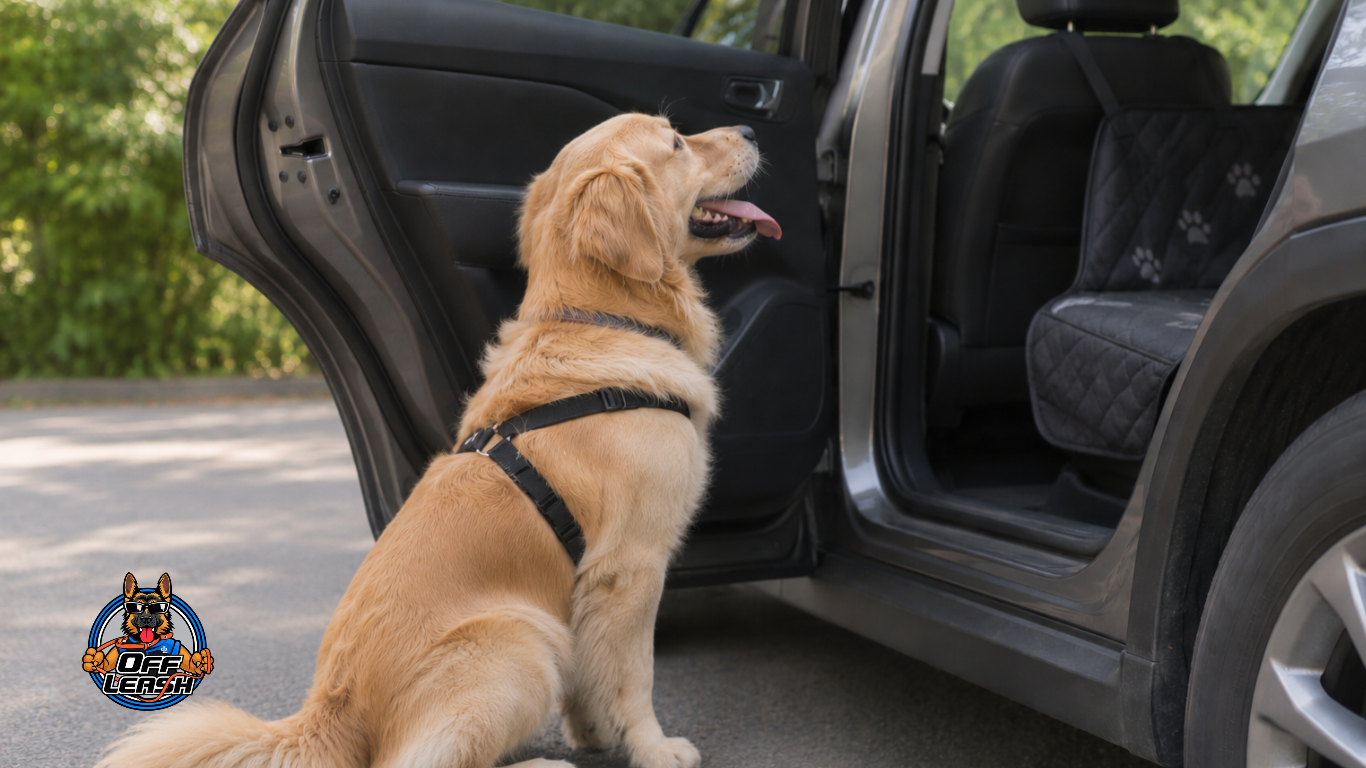
How to Teach Your Dog to Wait Before Jumping Into the Car
Some dogs need additional help learning to wait before entering a vehicle. They may associate the vehicle with walks, trips to the park, visits with family, or other enjoyable experiences. As soon as you approach the car or reach for the door handle, your dog may become excited and try to jump inside before you are ready.
Although this behavior may seem harmless, rushing into a vehicle can create unnecessary risks. Your dog might jump before you have checked the surroundings, become tangled in the leash, or enter the car while you are still arranging their travel equipment.
Teaching your dog to wait before jumping into the car helps establish a safer and more predictable routine. It encourages impulse control, improves communication, and gives you time to prepare the vehicle before your dog enters.
The goal is not to make your dog afraid of the car or remove their excitement about traveling. Instead, you want to teach them that getting inside happens calmly and only after you give a clear signal.
With patience, positive reinforcement, and consistent practice, your dog can learn to approach the vehicle, wait beside it, and enter when invited.
Understanding Why Dogs Rush Toward the Car
Dogs often rush toward vehicles because they have learned to associate cars with enjoyable experiences. The sight of the vehicle, the sound of the door opening, or the appearance of a familiar travel harness may signal that an exciting activity is about to begin.
Once your dog recognizes these signals, their excitement may increase before the journey even starts.
Some dogs move toward the car because they are eager to explore. Others have learned that approaching quickly results in getting inside sooner.
Your dog may also be responding to a familiar routine. If you usually open the door and allow them to jump in immediately, they may begin anticipating that sequence and acting before you give permission.
Common signs include:
-
Pulling toward the vehicle.
-
Jumping against the car door.
-
Moving around excitedly while you prepare the vehicle.
-
Trying to enter as soon as the door opens.
-
Ignoring familiar cues because they are focused on getting inside.
-
Becoming impatient when you pause before opening the door.
Understanding why your dog rushes helps you approach the behavior without unnecessary frustration.
Rather than treating the behavior as disobedience, recognize that your dog needs to learn a different routine.
Common Reasons Dogs Become Overexcited During Car Entry
Several factors may contribute to rushing.
Positive associations: Your dog may connect the vehicle with favorite destinations and become excited before the trip begins.
Learned habits: If your dog has always been allowed to jump inside immediately, rushing may have become part of their routine.
Limited impulse control: Your dog may understand that entering the car is rewarding but struggle to wait for permission.
Anticipation: Familiar actions, such as picking up keys or opening a vehicle door, can trigger excitement.
Inconsistent expectations: If you sometimes encourage waiting and sometimes allow immediate entry, your dog may become confused about what is expected.
Competition for access: Some dogs rush because they are eager to reach the vehicle before another pet or family member.
Recognizing these factors helps you create a training plan that focuses on patience and cooperation.
Why Allowing Your Dog to Jump Into the Car Without Waiting Can Be Risky
A dog that jumps inside before the door is fully open may bump against the vehicle or become caught in an awkward position. They may also enter before their travel equipment is properly arranged.
Other risks include:
-
Leash entanglement: A dog may become tangled in the leash while jumping into the vehicle.
-
Unexpected movement: Your dog may rush toward the open door before you are ready.
-
Poor positioning: They may jump into the vehicle before you have prepared a safe place for them.
-
Vehicle damage: Excited jumping can lead to scratched doors, upholstery, or other surfaces.
-
Difficulty managing multiple pets: Several dogs rushing toward the same entrance can create confusion and accidental collisions.
-
Unsafe surroundings: Your dog may move toward the vehicle while you are still checking for nearby traffic, bicycles, or other hazards.
Waiting gives you an opportunity to check the environment, prepare the vehicle, and make sure your dog can enter safely.
Remember that calm entry is only one part of travel safety. Your dog should also be secured with an appropriate crash-tested harness or properly installed travel restraint, or transported in a secured crate designed for vehicle travel. Never allow your dog to travel unrestrained in a moving vehicle.
The Benefits of Teaching a Calm Car Entry Routine
Teaching your dog to wait before entering the car provides benefits beyond preventing rushing.
Improved impulse control: Your dog learns to pause even when something exciting is available.
Better communication: A consistent cue helps your dog understand when they are allowed to enter.
Safer handling: You have time to prepare the vehicle and manage the leash or travel equipment.
Reduced excitement: Repeated calm practice can help make car entry less chaotic.
Greater cooperation: Your dog learns to work with you instead of immediately acting on their excitement.
Better everyday manners: The same waiting skills can be used around doorways, gates, and other exciting situations.
A calm car entry routine also makes travel more predictable. Your dog knows what happens next, and you have a clearer way to manage each step.
How to Teach Your Dog to Wait Before Jumping Into the Car
The best way to teach calm car entry is to break the process into small steps.
Do not begin by expecting your dog to remain perfectly still while the vehicle door opens and you prepare everything. First teach the waiting behavior in a quiet setting, then gradually introduce the car and its associated excitement.
Keep the vehicle parked, use a secure leash, and practice in a safe location away from moving traffic.
Start With a Parked Car in a Quiet Location
Begin with a parked vehicle in a quiet driveway or another safe area.
Allow your dog to approach the car without immediately opening the door.
Walk toward the vehicle at a comfortable pace and reward your dog for remaining beside you.
If your dog pulls forward, pause and wait for the leash to relax. Encourage them to reconnect with you before continuing.
Repeat this approach several times.
The purpose is to help your dog become comfortable standing near the vehicle without automatically rushing toward the entrance.
Keep the first sessions short. Your dog does not need to enter the car during every repetition.
Reward calm behavior around the vehicle so your dog begins associating the area with patience rather than immediate excitement.
Introduce a Clear Wait Cue Before Opening the Door
Once your dog can approach the parked car calmly, introduce a simple verbal cue such as “wait.”
Choose one word and use it consistently.
Begin with the door closed.
Stand beside the vehicle, ask your dog to wait, and pause for a brief moment. If your dog remains in place, offer a reward.
Release your dog with a separate cue, such as “okay,” before moving away or continuing the exercise.
Repeat until your dog begins understanding that “wait” means to pause until another signal is given.
Keep the initial waiting periods very short.
If your dog moves forward before the release cue, calmly reset the exercise and make the next repetition easier.
The goal is to build understanding, not create a long or frustrating waiting period.
Reward Your Dog for Remaining Calm Beside the Vehicle
Rewarding calm behavior is an important part of teaching your dog to wait.
When your dog stands beside the car without pulling, jumping, or rushing, offer praise or a small treat.
Look for behaviors such as:
-
Keeping all four paws on the ground.
-
Standing comfortably beside you.
-
Maintaining a loose leash.
-
Looking toward you when you speak.
-
Remaining in place briefly.
-
Responding to the wait cue.
Deliver rewards while your dog is still behaving calmly.
You do not need to demand a perfect sit. Some dogs find it easier to stand comfortably while waiting, and that can be an appropriate behavior.
As your dog becomes more consistent, gradually introduce the next part of the routine.
Teach Your Dog to Wait While the Car Door Opens
Opening the vehicle door can create a new level of excitement.
For many dogs, the sound and movement of the door signal that they are about to enter.
Start with your dog beside the parked vehicle and ask them to wait.
Reach toward the door handle. If your dog remains calm, reward them.
Next, open the door just slightly and close it again.
Reward your dog for remaining in position.
Gradually increase the movement until you can open the door fully while your dog continues waiting.
If your dog rushes forward, calmly close the door if safe and reset the exercise. Make the next repetition easier by opening the door less or rewarding sooner.
Avoid using the door to physically block or push your dog into position.
The goal is to teach your dog to remain beside you because they understand the cue and expect a reward for waiting.
Use a Release Cue to Invite Your Dog Into the Car
A release cue tells your dog when the waiting period has ended.
Choose a consistent word such as “okay” or “load up.”
Once your dog can wait calmly while the door is open, use your release cue to invite them into the vehicle.
For example:
-
Approach the parked car together.
-
Ask your dog to wait beside the door.
-
Open the door while maintaining the wait cue.
-
Reward your dog for remaining in place.
-
Say “load up” when you are ready.
-
Allow your dog to enter safely.
-
Reward them once they are positioned appropriately.
Keep the process predictable.
Do not use the release cue while your dog is already rushing forward. Wait until they are calm enough to understand the signal.
With repetition, your dog can learn that entering the vehicle is something they do after receiving permission.
Practice With Different Doors and Entry Positions
Once your dog understands the routine at one entrance, gradually practice with other vehicle doors.
For example, you might begin with the rear passenger door and later practice with another suitable entry point.
Different doors may create new distractions because your dog may not immediately recognize the same waiting expectations.
Repeat the same basic sequence:
-
Approach calmly.
-
Stop beside the vehicle.
-
Give the wait cue.
-
Open the door.
-
Reward calm behavior.
-
Release your dog when ready.
If your dog becomes confused, return to the door they already understand.
Make sure the vehicle remains parked and secure during training. Never practice with a dog entering or exiting while the engine is running or the vehicle is moving.
Gradually Build Patience Around Car-Related Excitement
Your dog may become excited before you even reach the vehicle.
For example, they might react when they see your keys, harness, travel bag, or walking shoes.
These familiar signals can become opportunities to practice patience.
Pick up the keys and reward your dog for remaining calm.
Put on the travel harness and reward them for standing comfortably.
Walk toward the vehicle and practice the same waiting routine.
Gradually include these steps in your normal preparation process.
Do not deliberately make your dog wait for long periods just to test their patience. Instead, create short opportunities for success.
As your dog becomes more reliable, they can learn that excitement about a car journey does not mean they need to rush.
How to Handle Pulling, Jumping, or Rushing Toward the Vehicle
Some dogs become so excited about car travel that they struggle to remain beside their owners.
If your dog pulls toward the vehicle, avoid pulling sharply in the opposite direction.
Instead, stop when it is safe and wait for the leash to relax. Encourage your dog to reconnect with you before continuing.
If your dog jumps against the door, pause the activity and create enough space for them to settle.
Reward a moment when all four paws are on the ground.
If your dog repeatedly rushes when the door opens, return to an easier step. You may need to practice reaching for the handle without opening the door.
For particularly excited dogs, consider practicing around the parked vehicle without entering it. This helps separate the excitement of approaching the car from the expectation of immediately getting inside.
If your dog shows fear or hesitation rather than excitement, do not force them toward the vehicle. Their response may be related to car anxiety, motion sickness, or a previous unpleasant experience.
In that situation, focus on comfortable, gradual exposure and seek veterinary advice if you suspect physical discomfort.
Common Mistakes to Avoid When Teaching Calm Car Entry
Even when owners have good intentions, certain habits can make car entry training more difficult.
Avoid these common mistakes:
Opening the door before your dog is ready: If your dog is already pulling and jumping, opening the door may reinforce rushing.
Expecting too much too quickly: A dog that can wait beside a closed door may not immediately succeed when the door opens.
Using the wait cue inconsistently: Changing words or expectations can confuse your dog.
Repeating commands constantly: Give your dog time to respond rather than saying “wait” repeatedly.
Allowing rushing sometimes: If your dog is sometimes permitted to jump in without waiting, the behavior may continue.
Using physical force: Dragging, pushing, or sharply pulling your dog can create discomfort and reduce cooperation.
Making practice too long: Extended waiting periods can create frustration. Keep early sessions short.
Ignoring calm behavior: Rewarding only after your dog enters the car misses opportunities to reinforce the patience needed before entry.
Consistent expectations and manageable training steps make the process easier for both you and your dog.
How to Make Waiting Part of Every Car Travel Routine
Once your dog understands the basic exercise, incorporate it into every appropriate car entry.
Use the same cue, reward calm behavior, and provide a clear release signal.
A consistent routine might look like this:
-
Approach the parked vehicle together.
-
Stop beside the appropriate door.
-
Ask your dog to wait.
-
Prepare the door and travel equipment.
-
Reward calm behavior.
-
Give the release cue.
-
Help your dog enter safely.
-
Secure your dog using an appropriate vehicle restraint or crate.
You can also use the same waiting principles when your dog exits the vehicle.
Before opening the door fully, make sure your dog is safely restrained and ask them to wait. Give the release cue only when you have checked the surroundings and it is safe to exit.
Be consistent with every journey, even short trips.
The more predictable the routine becomes, the easier it is for your dog to understand what is expected.
Remember that waiting before entering the car does not replace proper travel safety. Your dog should remain appropriately secured throughout the journey, and you should never allow them to ride with their head outside an open window.
When Professional Training Support May Help
Some dogs need additional help learning to wait before entering a vehicle.
Professional training support may be useful if your dog consistently pulls toward the car, jumps against the doors, ignores familiar cues, or becomes difficult to manage during travel preparation.
It may also help if your dog has difficulty settling once inside the vehicle or becomes overly excited whenever they recognize travel-related signals.
A qualified trainer can observe your dog’s behavior and help develop a practical routine that supports calm approaches, waiting, and safe entry.
If your dog appears frightened of the vehicle, refuses to approach it, drools excessively, vomits, or shows signs of travel-related distress, consult your veterinarian. These behaviors may be associated with anxiety or motion sickness rather than a training problem.
At BakersfieldDogTrainer.com, owners can explore practical approaches to improving impulse control, everyday manners, and cooperation during common activities.
The goal is to help your dog understand when to wait, when to move, and how to participate in car travel more comfortably.
FAQs
1. Why does my dog jump into the car as soon as the door opens?
Your dog may have learned to associate an open vehicle door with an exciting opportunity to enter.
If they have always been allowed to jump inside immediately, they may anticipate that the door opening is their signal to move.
Teaching a consistent wait cue and using a separate release cue can help establish a calmer routine.
2. How do I teach my dog to wait before getting into the car?
Start with a parked vehicle in a quiet location.
Ask your dog to wait beside the closed door, reward them for remaining calm, and gradually introduce opening the door.
Once they can wait comfortably, use a release cue to invite them inside.
Practice in short sessions and increase difficulty gradually.
3. Should I make my dog sit before opening the car door?
Your dog does not necessarily need to sit. The most important thing is that they can remain calm and wait safely.
Some dogs find it easier to stand comfortably beside the vehicle.
You can use a sit cue if your dog already understands it, but avoid making the exercise more difficult than necessary.
4. What should I do if my dog keeps rushing toward the vehicle?
Avoid opening the door while your dog is pulling or jumping.
Pause when it is safe, wait for the leash to relax, and reward your dog for returning to a calmer position.
If necessary, practice farther away from the vehicle before approaching again.
5. Can treats help teach my dog to wait before entering the car?
Yes. Treats are useful for reinforcing calm behavior during each step of car entry.
Reward your dog for approaching the vehicle calmly, waiting beside the door, and remaining in place while it opens.
You can gradually use praise and the opportunity to enter the car as additional rewards.
6. How long should my dog wait before receiving the release cue?
Begin with only a few seconds.
Your dog does not need to wait for a long time to learn the skill. Start with a manageable pause and gradually increase the duration as they become more consistent.
The goal is a calm, reliable response rather than an unnecessarily long waiting period.
7. Can puppies learn to wait before jumping into the car?
Yes. Puppies can begin learning calm car entry through short, positive experiences.
Use simple cues, gentle practice, and appropriate rewards.
Make sure the vehicle entry is physically safe for your puppy. Small puppies and dogs with mobility limitations may need a suitable ramp or assistance instead of jumping.
8. Should I practice car entry training without driving anywhere?
Yes. Practicing with a parked vehicle is an excellent way to teach the routine without adding the excitement of an actual journey.
Your dog can learn to approach, wait, and enter calmly before you introduce normal travel activities.
These short practice sessions help separate the waiting skill from the excitement of reaching a destination.
9. How can I stop my dog from getting overly excited when they see the car?
Begin rewarding calm behavior as soon as your dog notices the vehicle.
Practice approaching it slowly, pausing beside it, and responding to familiar cues.
If your dog becomes too excited, increase the distance and make the exercise easier.
Gradually build tolerance for the sights and sounds associated with car travel.
10. How long does it take to teach a dog to enter the car calmly?
The time varies depending on your dog’s age, temperament, previous habits, and excitement level.
Some dogs understand the basic waiting routine quickly, while others need more repetition.
Practice consistently, reward small improvements, and maintain the same expectations during everyday car travel.
Conclusion: Building a Safer and Calmer Car Entry Routine
Teaching your dog to wait before jumping into the car is a valuable way to improve impulse control, communication, and travel safety.
Instead of rushing toward an open door, your dog can learn to approach the vehicle calmly, remain beside you, and wait for permission to enter.
Start with a parked car in a quiet location. Introduce a consistent wait cue, reward calm behavior, and gradually teach your dog to remain in position while the door opens. Once they understand the routine, use a clear release cue to invite them inside.
Remember that patience develops through repetition. Your dog may become excited when they recognize that a journey is coming, but excitement does not have to result in rushing or jumping.
With consistent practice and positive reinforcement, car entry can become a predictable part of your daily routine.
The result is a dog who understands when to wait, responds more reliably to your guidance, and enters the vehicle in a calmer and safer manner.
Website Contact Form
"*" indicates required fields