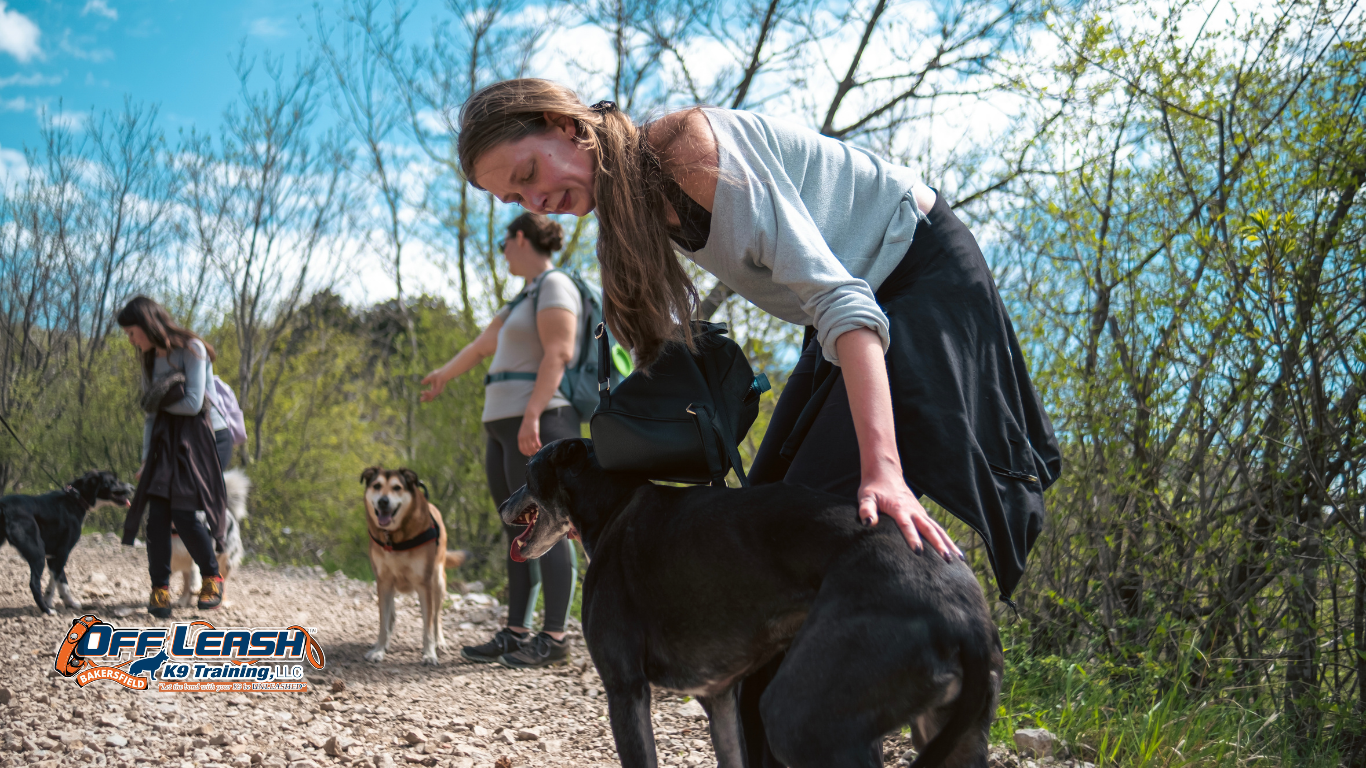
How to Train Your Dog to Stay Calm When Another Person Approaches
Have you ever been walking your dog when another person comes toward you, only to watch your dog suddenly pull on the leash, bark, jump, or become overly excited? Perhaps your dog is friendly but struggles to contain their enthusiasm. Or maybe your dog becomes nervous when unfamiliar people get too close.
These reactions can make everyday walks challenging. Even a dog who behaves beautifully at home may struggle when someone approaches unexpectedly. The good news is that you can teach your dog to respond more calmly through consistent training, positive reinforcement, and carefully managed practice.
Learning to stay calm when a person approaches is about more than preventing barking or pulling. It helps your dog develop better impulse control, build confidence, and learn how to handle social situations without reacting automatically.
Some dogs need help managing excitement, while others need additional space to feel safe. Understanding the reason behind your dog’s behavior will help you choose the right approach.
With patience and a gradual training plan, you can help your dog learn to notice approaching people, remain comfortable, and respond to your guidance. The goal is not to make your dog ignore everyone, but to help them navigate everyday encounters safely and confidently.
Why Dogs React When Someone Approaches
Dogs react to approaching people for different reasons. Their behavior may be influenced by excitement, curiosity, fear, frustration, previous experiences, or a desire to interact.
For example, a friendly dog may pull toward a person because they expect attention or petting. Another dog may bark because an unfamiliar person is approaching too quickly. Some dogs react when they feel restricted by a leash and cannot move away or approach naturally.
Understanding the motivation behind the reaction is essential. The same behavior can have different causes, and the most effective training strategy depends on what your dog is experiencing.
Common reasons dogs react when someone approaches include:
-
Excitement: Your dog wants to greet the person and struggles to manage their enthusiasm.
-
Fear or uncertainty: Your dog feels uncomfortable with the person’s proximity or movement.
-
Frustration: The leash prevents your dog from reaching someone they want to investigate.
-
Learned behavior: Barking, pulling, or jumping has previously resulted in attention or movement toward the person.
-
Limited experience: Your dog has not practiced remaining comfortable around different people in different settings.
-
Sensitivity to movement: Fast approaches, direct eye contact, or sudden gestures may make your dog uneasy.
Avoid assuming that every dog who barks or pulls wants to greet someone. Observe your dog’s body language, the surrounding circumstances, and how quickly they recover after the person passes.
Once you understand what triggers the behavior, you can begin teaching an alternative response that supports both safety and calmness.
How Excitement, Fear, and Uncertainty Affect a Dog’s Behavior
Excitement and fear can produce some similar outward behaviors, but they often require different training approaches.
An excited dog may pull forward, wag energetically, whine, jump, or struggle to stay focused because they want to interact. A fearful dog may retreat, lower their body, tuck their tail, avoid eye contact, bark defensively, or attempt to create distance.
Some dogs display mixed signals. A dog might approach while barking, then retreat when the person moves closer. Others may appear quiet but show significant tension in their posture.
These differences matter because the goal is not simply to suppress the visible reaction. You want to help your dog feel more comfortable and make better choices.
For an excited dog, training may focus on impulse control, checking in with the owner, and learning that calm behavior can lead to appropriate greetings.
For a worried dog, the priority is usually to create distance, avoid forced interactions, and build positive associations with people at a comfortable range.
In both cases, pushing a dog too close to a person before they are ready can make the problem worse.
Watch for changes in posture, facial tension, movement, and the ability to respond to familiar cues. If your dog cannot disengage from the approaching person, increase the distance and make the exercise easier.
The Importance of Distance and Personal Space
When a person gets too close, your dog may become so excited, worried, or frustrated that listening becomes difficult. Moving farther away can reduce the pressure and make learning possible again.
Every dog has a different comfort distance. One dog may remain relaxed with people passing several feet away, while another needs significantly more space.
Your goal is to find a distance where your dog can notice the person without immediately barking, lunging, pulling intensely, or becoming unable to respond.
At that distance, you can reward calm observation, voluntary check-ins, and turning back toward you.
Do not treat distance as a setback. Giving your dog space is a practical way to prevent overwhelming experiences while building new skills.
During walks, you can cross the street when appropriate, step aside on a wide path, turn down a quieter route, or pause behind a visual barrier.
If someone asks to pet your dog, remember that you do not have to agree. It is perfectly acceptable to say that your dog is training or needs space.
Respecting your dog’s personal space helps establish safer encounters and gives you greater control over the learning process.
How to Prepare Your Dog for Calm Approaches
Your dog should have opportunities to learn how to respond to their name, check in with you, follow you for a few steps, and move away when needed.
You can also identify rewards your dog finds valuable. Small treats, praise, or a brief opportunity to sniff can all be useful, depending on the dog and the situation.
Choose a safe location where you can control the distance from other people. A quiet outdoor area with plenty of room is often easier than a narrow sidewalk or busy entrance.
If you are working with a fearful or reactive dog, use a secure leash and well-fitted harness or other suitable equipment. Avoid putting yourself in situations where you cannot create distance if your dog becomes uncomfortable.
Plan sessions that are short and achievable. You do not need a stranger to approach closely for the exercise to be successful. In many cases, simply noticing a person at a comfortable distance and remaining relaxed is an excellent starting point.
Preparation allows you to focus on teaching your dog rather than reacting to every unexpected encounter.
Step 1: Start at a Comfortable Distance
Allow your dog to notice a person without asking for an immediate greeting or demanding a complicated command. Watch for signs that your dog can remain relaxed and process what is happening.
If your dog looks at the person and then turns back toward you, reward that response. If your dog simply observes calmly, you can also reinforce that behavior.
If your dog starts barking, lunging, pulling intensely, or showing signs of distress, increase the distance. The exercise may be too difficult at the current range.
At first, you might practice while people walk past at a distance rather than having anyone approach directly. This can reduce pressure and allow your dog to build confidence gradually.
Repeat a few successful observations, then finish the session or move to another quiet area.
The purpose of this step is to help your dog learn that seeing another person does not require an immediate reaction. Calm observation is a useful behavior in its own right.
Step 2: Reward Your Dog for Staying Calm
Once you have identified a comfortable distance, begin rewarding the behavior you want to encourage.
When your dog notices an approaching person and remains relaxed, mark the moment with a consistent word such as “yes” and offer a small treat.
You can also reward your dog for looking back at you, maintaining a loose leash, or turning away from the person when asked.
The timing of the reward matters. Deliver it while your dog is displaying the desired behavior so the connection is clear.
For example, if your dog sees someone walking toward you, calmly looks at them, and then checks in with you, reward the check-in. This helps your dog learn that reconnecting with you is worthwhile even when other people are nearby.
Do not wait until your dog has been struggling for several seconds before offering reinforcement. Aim to reward calm behavior early, before excitement or worry escalates.
If your dog cannot take food or respond to you, do not keep offering treats while holding them in an overwhelming situation. Create more distance and try again when they can engage comfortably.
Step 3: Teach Your Dog to Check In With You
A check-in occurs when your dog voluntarily shifts attention toward you. It might be a brief glance, turning their head, or moving closer to your side.
This simple behavior can be extremely useful when another person approaches because it gives your dog a familiar way to reconnect with you instead of reacting automatically.
Start at home. Say your dog’s name once when they are not distracted, and reward them when they turn toward you. You can also reward spontaneous eye contact or moments when your dog chooses to pay attention.
Gradually practice in quiet outdoor areas. When your dog notices a person at a comfortable distance, wait briefly to see whether they look back at you. Reward that choice.
If your dog does not check in, you can use a familiar cue or move away from the distraction to help them succeed. Avoid repeatedly calling their name while they are too overwhelmed to respond.
Do not demand prolonged eye contact. A quick, relaxed check-in is enough.
Over time, your dog can learn that noticing a person and reconnecting with you are compatible behaviors. This makes it easier to guide them through encounters without constant pulling or verbal corrections.
Step 4: Practice With a Calm, Familiar Person
Choose someone who can follow your instructions and avoid sudden movements. Begin far enough away that your dog can notice them without becoming overly excited or worried.
Ask the person to stand still or walk across the area rather than approaching directly. Reward your dog for calm observation and checking in with you.
If your dog remains comfortable, the person can gradually move a little closer during future repetitions. Change only one factor at a time, and increase distance again if your dog shows signs of stress or loses the ability to respond.
For a dog who becomes excited about greetings, you may eventually practice a brief, controlled greeting. Only allow it when the dog is comfortable and the person agrees. Reward four paws on the ground and calm movement, and end the greeting if jumping or intense pulling begins.
For a fearful dog, greeting may not be an appropriate goal at all. Calmly observing a person from a distance can be a successful outcome.
The focus should always be your dog’s comfort and ability to respond, not how close the person can get.
Step 5: Gradually Introduce Different People and Situations
After your dog succeeds with one familiar person, begin practicing around a wider variety of people and environments.
People differ in height, clothing, movement, voice, and walking speed. Some carry bags, use umbrellas, push strollers, or move with mobility aids. A dog who is comfortable around one person may need additional practice with unfamiliar appearances or movements.
Introduce these differences gradually. Start with people at a comfortable distance and reward calm observation. Keep sessions short and avoid placing your dog in crowded situations before they are ready.
You can vary one feature at a time, such as the person’s distance, movement, or location. This makes it easier to recognize what your dog can handle.
Do not ask strangers to approach closely just to test your dog’s progress. A controlled setup is generally safer and more productive than unexpected interactions.
If your dog becomes tense or reactive, increase the distance and return to an easier stage.
Gradual exposure paired with positive experiences can help dogs develop confidence and improve their responses to people in a variety of everyday settings.
Step 6: Teach Your Dog to Move With You When Needed
Teaching your dog to follow you in another direction gives you a practical way to manage narrow sidewalks, unexpected encounters, or situations where your dog needs more space.
Start in a quiet environment. Say a cue such as “this way,” turn gently, and encourage your dog to follow. Reward them for moving with you.
Practice until your dog understands the cue without needing to see a person nearby.
Then use the skill during easy outdoor encounters. When someone approaches and you want to create more distance, give the cue and move away on a loose leash when possible.
Avoid jerking the leash or dragging your dog toward a distraction. Calm movement and timely rewards help your dog learn that following your direction is worthwhile.
This skill is particularly helpful for dogs who become uncomfortable when people approach directly. It allows you to protect their personal space without forcing them to remain in an unpleasant situation.
Step 7: Practice Calm Responses During Everyday Walks
Everyday walks provide many opportunities to reinforce calm behavior around people, but they should not become a series of difficult tests.
Choose routes that offer enough space to move aside or change direction. Pay attention to approaching people early so you can make a plan before your dog becomes highly excited or worried.
When your dog notices someone, reward a calm glance, a loose leash, or a check-in. If the person is approaching too closely, create distance rather than waiting for a reaction.
You can also practice passing people from a comfortable distance. Begin with plenty of room, reward your dog for walking with you, and gradually work toward more challenging situations as your dog improves.
Not every encounter needs to involve a greeting. In fact, teaching your dog that people can pass without interacting is often an important part of developing calm behavior.
Allow appropriate sniffing and exploration during walks, too. A balanced walk gives your dog opportunities to engage with the environment while practicing responsiveness.
Over time, these repeated experiences can help your dog become more comfortable and predictable when people approach.
Common Mistakes to Avoid When Someone Approaches
Even well-meaning owners can unintentionally make encounters more difficult for their dogs. Recognizing common mistakes can help you avoid unnecessary stress and improve your training results.
Moving too close too quickly: Reducing distance before your dog is ready can trigger barking, lunging, or avoidance. Progress gradually and prioritize comfort.
Forcing greetings: Allowing strangers to pet a dog who is uncomfortable can increase fear and reduce trust. Your dog does not need to greet everyone.
Repeating commands constantly: Calling your dog repeatedly while they are overwhelmed is unlikely to improve responsiveness. Increase distance and make the exercise easier instead.
Punishing barking or growling: These behaviors may communicate distress. Punishment can increase negative associations with approaching people and may suppress warning signals without addressing the underlying emotion.
Tightening the leash unnecessarily: Constant tension can make movement more difficult and may add frustration. Maintain safe control while allowing enough slack when conditions permit.
Ignoring early signs of discomfort: Looking away, stiffening, attempting to retreat, or repeatedly scanning may indicate that your dog needs more space.
Practicing only in easy environments: Skills need gradual practice in different settings, but the difficulty should increase only when your dog is succeeding.
Expecting every dog to enjoy greetings: Some dogs prefer not to interact with unfamiliar people. Calmly passing by can be a perfectly acceptable goal.
Effective training focuses on teaching useful alternative behaviors while keeping encounters safe and manageable.
How to Recognize Stress and Overexcitement in Your Dog
Understanding your dog’s body language helps you decide when to continue training, reward a response, or create more distance.
An overexcited dog may pull forward, jump, whine, bark, move rapidly, or struggle to redirect attention. A fearful or uncertain dog may tuck their tail, lower their body, pin their ears, turn away, freeze, or try to retreat.
Some signs can overlap. For example, barking and a stiff body may occur with fear, frustration, or intense excitement. Consider the full context rather than interpreting one signal in isolation.
Watch for changes such as:
-
A sudden increase in leash tension.
-
A rigid body or fixed stare.
-
Repeated lip licking or yawning in a stressful context.
-
Turning away or attempting to hide.
-
Barking, growling, or lunging.
-
Difficulty responding to familiar cues.
-
Refusing food they normally enjoy.
-
Taking a long time to settle after the person passes.
These signs do not all mean the same thing, but they can indicate that your dog is struggling with the current situation.
If your dog remains relaxed and can respond to you, the training distance may be appropriate. If their behavior becomes more intense or they cannot disengage, create more space.
Recognizing these signals early helps you prevent difficult encounters and build a more effective training plan.
What to Do if Your Dog Barks, Pulls, or Lunges
If your dog reacts when someone approaches, your first priority is to manage the situation safely.
Avoid forcing your dog to remain close to the person. Calmly increase distance, turn away if there is room, or use a suitable barrier. Keep a secure hold on the leash without jerking or punishing your dog.
Once you are far enough away for your dog to recover, give them time to settle. If they can engage comfortably, you may reward a check-in or another calm behavior. If they remain distressed, focus on leaving the situation rather than continuing the exercise.
Later, review what happened. Was the person too close? Did they approach quickly? Was the area crowded? Did your dog show signs of tension before barking or lunging?
These details can help you adjust future sessions.
For dogs who repeatedly lunge, show intense fear, or are difficult to manage safely, work with a qualified professional experienced in reactivity and reward-based behavior modification. Avoid testing the dog with close encounters before you have a safe plan.
Do not punish growling or other warning behaviors. Instead, address the underlying discomfort and prevent situations from becoming overwhelming.
With appropriate management and gradual training, many dogs can improve their ability to handle approaching people.
Building Reliable Calm Behavior Around People
Reliable calm behavior develops through many successful experiences, not a single training session.
Your dog needs to learn that people can approach, pass by, or move nearby without requiring an immediate reaction. They also need to understand that you can help them manage uncomfortable situations and that they do not have to greet everyone.
Build reliability by practicing at different distances, rewarding check-ins, and teaching your dog to follow you away when necessary. Keep sessions short and finish before your dog becomes overwhelmed.
Consistency is important across family members. Everyone who walks or handles the dog should understand the cues, rewards, and management strategies being used.
It is also useful to measure progress realistically. A dog who previously barked at every passerby may begin watching quietly from a distance, recovering more quickly, or checking in with the owner. These are meaningful improvements even if the dog is not yet comfortable with close approaches.
Avoid comparing your dog with other dogs. Temperament, previous experiences, health, and individual preferences all influence how quickly behavior changes.
The goal is to help your dog feel safer, respond more reliably, and navigate everyday encounters in a way that works for both the dog and the people around them.
How BakersfieldDogTrainer.com Can Help Your Dog Stay Calm Around People
If your dog struggles when another person approaches, it can be difficult to know whether to practice obedience, create more distance, encourage a greeting, or move away from the situation.
BakersfieldDogTrainer.com focuses on practical skills that help dogs and owners navigate everyday situations more successfully. A structured training plan can help identify what triggers your dog’s reactions and determine how to progress at a manageable pace.
Depending on the dog’s needs, training may focus on attention, leash manners, impulse control, calm observation, voluntary check-ins, and moving away from distractions when necessary.
The approach should reflect the individual dog. An outgoing dog who pulls toward people may need help managing excitement, while a fearful dog may need more distance, careful exposure, and confidence-building exercises.
Owner participation is essential. Learning how to recognize body language, reward appropriate behavior, and prevent overwhelming encounters helps training carry over into daily walks and other real-world situations.
With consistent practice and appropriate support, dogs can learn to respond more calmly and confidently when people approach. The goal is not to force friendliness but to build safer, more manageable encounters.
Frequently Asked Questions
1. Why does my dog get excited when another person approaches?
Your dog may associate approaching people with attention, play, or social interaction. Some dogs also become frustrated when the leash prevents them from reaching someone. Rewarding calm observation, teaching check-ins, and practicing at a comfortable distance can help your dog learn to manage excitement.
2. How can I stop my dog from barking at approaching people?
First, determine whether the barking is associated with fear, frustration, excitement, or another trigger. Increase distance until your dog can remain comfortable, then reward calm observation and turning toward you. Avoid punishing the barking or forcing close interactions. If the behavior is intense or persistent, seek qualified professional help.
3. Should I let strangers pet my dog during training?
Not necessarily. Your dog does not need to greet strangers to learn calm behavior. If your dog appears worried or overexcited, keep the interaction at a distance. Only consider greetings when your dog is comfortable, the person agrees, and you can manage the situation safely.
4. How far away should a person stand when training my dog?
There is no universal distance. Start far enough away that your dog can notice the person while remaining relatively relaxed and able to respond to familiar cues. Increase distance if your dog becomes tense, fixated, or reactive. The appropriate range may vary depending on the person, setting, and your dog’s emotional state.
5. Can treats help my dog stay calm around strangers?
Yes. Treats can help build positive associations with approaching people and reinforce calm observation, check-ins, and other desired responses. Deliver rewards promptly while your dog is comfortable. If your dog refuses treats they normally enjoy, the situation may be too difficult or stressful, so increase the distance.
6. What should I do if my dog pulls toward people?
Maintain safe leash control and avoid allowing pulling to carry your dog directly into a greeting. Create distance if necessary, then reward your dog for checking in and walking with a loose leash. Practice these skills in easier settings before expecting them to work reliably around highly exciting people.
7. How can I tell if my dog is afraid of approaching people?
Possible signs include retreating, a tucked tail, lowered posture, pinned ears, freezing, a stiff body, or attempts to hide. Barking and lunging can also occur when a dog feels threatened, though these behaviors have other possible causes. Observe the full context and give your dog more space if they appear uncomfortable.
8. How long does it take to teach a dog to stay calm around people?
The timeline varies with the dog’s temperament, previous experiences, trigger intensity, and consistency of practice. Some dogs improve relatively quickly in simple settings, while others need longer-term behavior modification. Focus on gradual progress, safe distances, and repeated successful experiences rather than a fixed deadline.
9. Should I make my dog sit when someone approaches?
A sit can be useful if your dog is comfortable and can respond easily, but it is not always the best choice. A worried dog may need to move away, while an excited dog may struggle to remain seated. Prioritize emotional comfort and teach a response that fits the situation rather than requiring a sit every time.
10. When should I seek professional dog training help?
Seek professional assistance if your dog repeatedly barks, lunges, snaps, or shows significant fear around approaching people, or if you cannot safely manage encounters. Choose a qualified professional experienced in reward-based methods and behavior modification. If the behavior changes suddenly, consult a veterinarian to rule out pain or other health concerns.
Conclusion: Helping Your Dog Stay Calm and Confident When People Approach
Teaching your dog to stay calm when another person approaches takes patience, observation, and consistent practice. The most effective approach begins by understanding why your dog reacts and adjusting the situation so learning can happen without overwhelming them.
Start at a comfortable distance, reward calm observation, teach your dog to check in with you, and practice with carefully managed distractions. Build on successful experiences gradually, and remember that moving away is sometimes the best response.
Most importantly, do not measure success by whether your dog greets every person or remains perfectly still. Success means your dog can handle approaching people more comfortably, respond to your guidance, and recover from distractions without becoming overwhelmed.
With positive reinforcement, appropriate management, and realistic expectations, you can help your dog develop greater confidence and more reliable behavior. Every calm glance, voluntary check-in, and successful pass-by is a step toward safer and more enjoyable everyday walks.
Website Contact Form
"*" indicates required fields