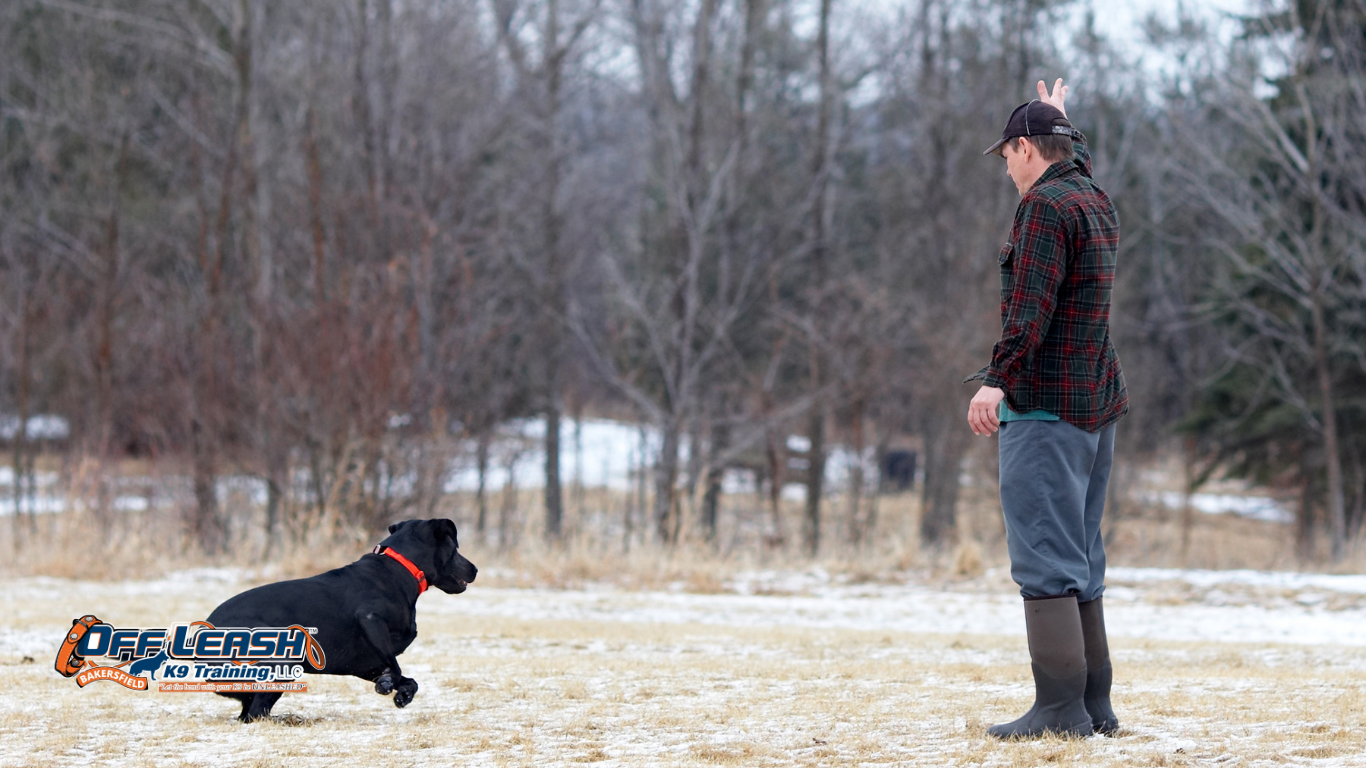
How to Teach Your Dog to Follow Directions Without Being Physically Guided
Why Dogs Should Learn to Follow Directions Without Being Physically Guided
Teaching a dog to follow directions without constantly being physically guided is an important part of building reliable communication and obedience.
Physical guidance can sometimes help introduce a behavior, especially when a dog is first learning what an owner wants. However, if a dog always needs to be physically moved, positioned, or redirected, they may have fewer opportunities to learn how to respond independently to verbal or visual cues.
The goal of training is not simply to make a dog perform a behavior while the owner physically controls every movement. Instead, the dog should gradually learn to recognize a cue, understand what it means, make the appropriate choice, and perform the behavior without needing to be physically positioned.
This can make everyday communication much easier.
Whether you are asking your dog to sit, come, wait, move away from something, return their attention, or change direction during a walk, teaching your dog to respond to clear cues can create better cooperation.
The process requires patience, consistency, appropriate reinforcement, and gradual increases in difficulty.
What Does “Follow Directions” Mean in Dog Training?
Follow directions means that a dog can recognize a clear cue and respond with the appropriate behavior.
The cue might be:
- A verbal command
- A hand signal
- A body movement
- A visual signal
- A learned environmental cue
For example, when an owner says “sit,” the dog learns that the word predicts a particular behavior.
Following directions does not mean that a dog should blindly respond to every command in every situation. Dogs are living animals with different emotional states, levels of attention, and learning histories.
Instead, the objective is to develop reliable responses through training.
A dog that understands a cue can begin to make the correct choice without the owner physically moving their body into position.
This creates a more functional form of communication.
Why Some Dogs Depend on Physical Guidance
For example, a treat can be used to guide a dog into a sitting position. A hand movement can help the dog follow a particular direction.
The problem can occur when the physical prompt never fades.
If the dog only responds when the owner physically guides them, the dog may not fully understand the verbal or visual cue.
Several factors can contribute to this dependence:
The Dog Has Not Learned the Cue
The dog may simply associate the physical movement with the behavior rather than understanding the spoken command.
The Prompt Is Always Present
If the same physical assistance happens every time, the dog may wait for the assistance instead of attempting the behavior independently.
Rewards Are Not Clear
If the dog does not understand which behavior earns reinforcement, learning can become slower.
The Environment Is Too Difficult
A dog may understand a behavior in a quiet room but need additional support when distractions are present.
Training Progressed Too Quickly
Dogs need enough successful repetitions before prompts are gradually removed.
The answer is not to suddenly eliminate every form of guidance. Instead, gradually transition from physical prompts toward clear cues and independent responses.
How Dogs Learn to Respond to Verbal and Visual Cues
Dogs learn through association.
A cue becomes meaningful when it consistently predicts a particular behavior and outcome.
For example, you might say “sit,” wait for the dog to sit, and then provide a reward.
Repeated successful experiences help the dog connect the cue with the behavior.
Visual cues can work in a similar way.
A hand signal may eventually tell the dog what behavior is expected without requiring physical contact.
It is important to keep cues clear.
If you use different words every time or constantly change your hand signals, your dog may have a harder time developing a reliable association.
Good training often follows a simple pattern:
Cue → Response → Reinforcement
Over time, the dog’s response can become increasingly independent.
The physical prompt that may have been useful at the beginning can then be reduced and eventually removed.
Building Focus Before Asking Your Dog to Follow Directions
A dog cannot reliably follow directions if they are unable to pay attention to the person giving them.
This does not mean a dog needs to stare continuously at their owner.
Instead, the dog should learn to notice when the owner is communicating with them.
Attention can be developed through simple exercises.
Reward your dog when they:
- Look toward you
- Respond to their name
- Turn toward you after hearing a sound
- Follow a hand signal
- Check in during a walk
- Return their attention after investigating something
- Wait for the next cue
These behaviors build a foundation for obedience.
Start somewhere quiet with minimal distractions.
Once your dog understands that paying attention to you is valuable, gradually introduce more challenging environments.
A dog that has strong attention skills is generally easier to communicate with because they are more prepared to notice and respond to your cues.
How Rewards Encourage Dogs to Respond Independently
Rewards can help dogs understand that responding to a cue produces a desirable outcome.
Food is a common training reward, but it is not the only option.
Depending on the dog, rewards can include:
- Treats
- Praise
- Toys
- Play
- Petting
- Access to something interesting
- Permission to continue walking
- Opportunities to explore
The key is timing.
If you give the reward immediately after the desired response, your dog has a better opportunity to understand what earned it.
For example, if you ask your dog to sit and they sit without physical assistance, reward that response.
Over time, the dog learns:
“When I listen to this cue and perform the behavior, something good happens.”
This creates motivation for independent responding.
Eventually, reinforcement can become more varied rather than relying on a reward after every single response.
However, continuing to reinforce good behavior throughout training helps maintain reliability.
Teaching Simple Directions Without Physical Guidance
Begin with behaviors your dog already understands or can learn easily.
Choose a quiet environment and keep distractions low.
Start With a Familiar Behavior
If your dog already knows how to sit, begin there.
Give the verbal cue and allow your dog an opportunity to respond.
Wait Before Helping
Give your dog a moment to process the cue.
Avoid immediately repeating the command or physically moving the dog.
Reinforce the Correct Response
When the dog performs the desired behavior independently, reward them promptly.
Reduce Physical Prompts Gradually
If you previously used a hand motion or lure, gradually make that movement smaller and less obvious.
Eventually, the dog should respond to the cue without needing the physical prompt.
Practice Frequently
Short repetitions throughout the day can be more useful than one long training session.
The same process can be applied to behaviors such as:
- Coming when called
- Waiting
- Moving away
- Changing direction
- Going to a designated location
- Sitting for attention
- Returning focus to the owner
The objective is to create understanding rather than dependence on physical assistance.
How to Gradually Increase Distance, Duration, and Distractions
Once your dog can follow a direction in a quiet environment, training can become more challenging.
However, increase difficulty gradually.
Three useful variables are distance, duration, and distraction.
Distance
Ask your dog to respond while you are farther away.
Duration
Ask the dog to maintain a behavior for gradually longer periods.
Distractions
Practice around increasingly interesting environmental stimuli.
Avoid increasing all three at the same time.
For example, if your dog is learning to stay in place, start with a short duration while you remain nearby. Then increase your distance. Later, introduce mild distractions.
If your dog suddenly stops responding, the environment may have become too difficult.
Instead of repeatedly demanding the behavior, make the exercise easier and rebuild success.
Training should challenge the dog without overwhelming them.
Common Owner Mistakes When Physically Guiding a Dog Too Often
Physical guidance can become a habit for owners as well as dogs.
Several common mistakes can interfere with independent responding.
Guiding Every Repetition
If the dog receives physical assistance every time, they may wait for the prompt instead of responding to the cue.
Removing Prompts Too Quickly
The opposite problem can also occur. A dog may need gradual fading rather than having all guidance suddenly removed.
Repeating Commands
Repeated commands can teach the dog that the first cue is not important.
Moving the Dog Into Position
Physically placing a dog into a position may not teach them how to recognize the cue that should produce the behavior.
Practicing Only at Home
Dogs need to learn that cues apply in different environments.
Increasing Difficulty Too Quickly
A dog that understands a behavior indoors may struggle in a busy outdoor environment.
Rewarding Too Late
Delayed reinforcement can make it harder for the dog to understand which response earned the reward.
Good training focuses on gradually transferring responsibility from the physical prompt to the dog’s own understanding.
How to Teach Your Dog to Follow Directions Without Being Physically Guided
A practical training process can look like this:
Step 1: Choose One Clear Behavior
Start with something simple and specific.
Step 2: Choose a Consistent Cue
Use one verbal cue or visual signal.
Step 3: Give the Cue Once
Allow your dog an opportunity to process it.
Step 4: Wait for the Response
Give your dog enough time to make the correct choice.
Step 5: Reinforce Independence
Reward the dog when they complete the behavior without physical assistance.
Step 6: Gradually Fade Prompts
If you use a lure or hand movement, make the prompt smaller until the dog responds primarily to the actual cue.
Step 7: Practice in Different Locations
Move from quiet environments to gradually more distracting ones.
Step 8: Reinforce Reliability
Continue rewarding appropriate responses, especially when the environment becomes more challenging.
Step 9: Avoid Unnecessary Physical Assistance
Use guidance when appropriate for safety or learning, but do not make physical prompting the only way the dog succeeds.
Step 10: Build Real-World Skills
Practice directions during walks, around household activity, near distractions, and in other everyday situations.
The goal is for your dog to understand the communication rather than simply follow your physical movements.
Helping Dogs Build Better Responsiveness With BakersfieldDogTrainer.com
Some dogs have difficulty responding to cues without physical assistance because they have not yet developed reliable attention, impulse control, or understanding of the behavior being requested.
BakersfieldDogTrainer.com can help owners develop practical training strategies designed to improve responsiveness and communication.
Professional training can help identify whether the problem involves unclear cues, insufficient reinforcement, distractions, inconsistent expectations, or a behavior that has not yet been fully learned.
Training may focus on:
- Obedience
- Attention
- Responsiveness
- Impulse control
- Leash skills
- Recall
- Calm behavior
- Real-world distractions
- Communication
- Independent responses
The goal is not simply to remove physical guidance.
The goal is to replace unnecessary physical assistance with clearer communication and stronger learned responses.
Long-Term Benefits of Teaching Dogs to Follow Directions Independently
Teaching your dog to respond without constant physical guidance can have valuable long-term benefits.
Stronger Communication
Your dog becomes more familiar with verbal and visual cues.
Better Obedience
The dog learns to respond based on learned signals rather than physical positioning.
Greater Responsiveness
The dog becomes more prepared to listen during everyday situations.
Improved Confidence
Successfully making choices independently can help dogs become more comfortable with training.
Better Impulse Control
Following directions requires the dog to pause, process information, and choose an appropriate response.
Easier Everyday Handling
Owners can communicate what they want without constantly repositioning the dog.
Better Real-World Behavior
Independent responses can be particularly valuable when owners need their dogs to respond from a distance or around distractions.
Stronger Owner-Dog Relationship
Training becomes a cooperative process based on understanding rather than constant physical control.
The ultimate goal is a dog that understands what you are asking and can make the appropriate choice.
10 Frequently Asked Questions
1. Is physical guidance bad for dogs?
Not necessarily. Physical or lure-based guidance can sometimes help introduce a behavior. The important part is gradually teaching the dog to respond to the actual cue rather than becoming dependent on the physical prompt.
2. How can I stop my dog from waiting for a hand signal?
Gradually fade the hand signal while maintaining the verbal cue or desired communication signal. Reward the dog when they respond without needing the larger movement.
3. Should I repeat a command if my dog does not respond?
Avoid repeatedly saying the same command. Instead, consider whether the dog understands the cue and whether the environment is too distracting or difficult.
4. Can treats teach dogs to follow directions independently?
Yes. Properly timed rewards can help dogs understand that responding to a cue produces a desirable outcome.
5. How long does it take to stop using physical guidance?
It depends on the dog, the behavior, and how established the physical prompt has become. Some dogs transition quickly, while others need gradual practice.
6. Should I train without touching my dog at all?
No. Physical contact can be appropriate for many normal handling situations. The goal is specifically to teach learned behaviors without unnecessary physical prompting.
7. Why does my dog listen inside but not outside?
Outside environments often contain significantly more distractions. Your dog may need gradual practice before the behavior becomes reliable in more stimulating settings.
8. What should I do if my dog ignores a direction?
Avoid turning the situation into a battle. Make the environment easier, reassess whether the dog understands the cue, and reinforce successful responses.
9. Can professional training help my dog become more responsive?
Yes. Professional guidance can help identify why a dog is relying on physical assistance and develop a structured plan for building independent responses.
10. Is independent responding important for everyday life?
Yes. A dog that can respond to clear directions without constant physical assistance is generally easier to communicate with during walks, household activities, training sessions, and other everyday situations.
Comprehensive Conclusion
Teaching your dog to follow directions without being constantly physically guided is an important step toward clearer communication and reliable obedience.
Physical prompts can have a useful place in early learning, but they should not become the only way a dog understands what to do. Through gradual training, owners can help dogs transition from following physical movements to responding to verbal cues, hand signals, and other forms of communication.
Start with simple behaviors in quiet environments. Give clear cues, allow your dog time to respond, and reward successful independent choices. As your dog’s understanding improves, gradually introduce more distance, duration, and distractions.
Avoid rushing the process.
If your dog struggles, make the exercise easier and build success again. Training works best when the dog understands the behavior rather than simply being moved into position.
Over time, this approach can lead to better responsiveness, stronger communication, improved confidence, and more reliable behavior in everyday situations.
The goal is simple: teach your dog what your cues mean, give them an opportunity to make the right choice, and reward them when they do.
That is how physical guidance can gradually become clear, confident communication.
Website Contact Form
"*" indicates required fields