
How to Build Stronger Communication Between You and Your Dog
Why Stronger Communication Matters Between You and Your Dog
A strong relationship with your dog depends on more than affection, food, and play. Stronger communication helps your dog understand what you expect while helping you recognize what your dog is trying to communicate through body language and behavior.
Dogs do not communicate with words the way people do. They rely heavily on posture, movement, facial expressions, vocalizations, environmental cues, and learned associations. At the same time, they learn to understand human words, gestures, routines, and patterns through training and repeated experiences.
When communication is unclear, everyday situations can become frustrating. A dog may appear to ignore a command, become distracted during a walk, respond differently depending on the person giving the cue, or struggle to understand what behavior is expected.
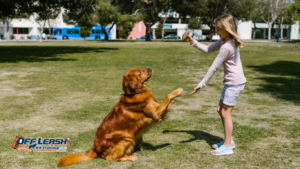
The good news is that communication can be improved.
Through consistent cues, appropriate timing, positive reinforcement, attention exercises, and regular practice, owners can help their dogs become more responsive and easier to understand. Better communication can make training more productive while strengthening the relationship between the dog and owner.
What Does “Stronger Communication” Mean in Dog Training?
Stronger communication means creating a reliable way for you and your dog to understand one another.
For the owner, this means learning to recognize the dog’s signals and understanding what may be influencing the dog’s behavior.
For the dog, it means learning what specific cues mean and understanding which behaviors produce desirable outcomes.
Communication can involve:
- Verbal commands
- Hand signals
- Body language
- Eye contact
- Leash guidance
- Training routines
- Rewards
- Timing
- Environmental cues
- Consistent household rules
For example, when an owner says “sit,” the dog should eventually understand that the word is a cue to place their rear on the ground. When the dog performs the behavior and receives reinforcement, the connection becomes stronger.
However, communication is not limited to obedience commands.
A dog that turns away, lowers its body, freezes, moves behind its owner, becomes increasingly restless, or repeatedly licks its lips may be communicating discomfort or uncertainty.
Why Clear Communication Can Be Difficult for Dogs
Dogs live in a human world filled with unfamiliar language, expectations, sounds, objects, and routines.
An owner may say a command once and assume the dog understands it immediately. But dogs have to learn what words mean through repeated experiences.
Several factors can make communication difficult.
Different Cues
If one person says “down,” another says “off,” and someone else physically moves the dog away from the furniture, the dog may receive several different messages about the same behavior.
Repeated Commands
If an owner says “come” five times before expecting the dog to respond, the dog may learn that the first command does not require an immediate response.
Environmental Distractions
A dog may understand a command inside the home but struggle to respond when surrounded by unfamiliar people, smells, noises, animals, or movement.
Emotional Arousal
Excitement, fear, frustration, or overstimulation can make it harder for a dog to process information and respond appropriately.
Inconsistent Reinforcement
If a behavior is rewarded sometimes but ignored at other times, the dog may have difficulty determining which response is most valuable.
Good communication takes practice. Dogs need opportunities to learn what cues mean and how those cues apply in different situations.
How Dogs Communicate Through Body Language and Behavior
Communication works both ways.
While owners teach dogs through words and training, dogs constantly communicate through their bodies and behavior.
Paying attention to these signals can help owners understand what is happening before a situation escalates.
Posture
A relaxed body may indicate that the dog is comfortable. A stiff or tense body can suggest increased arousal, uncertainty, or discomfort.
Ears
Ear position can change depending on what the dog is experiencing. The ears may move forward when the dog is interested or change position when the dog becomes uncertain or concerned.
Tail
Tail movement should always be considered alongside the rest of the dog’s body. A moving tail does not automatically mean a dog is happy.
Facial Expressions
Changes in facial tension, mouth position, eye contact, and overall expression can provide useful information about the dog’s emotional state.
Movement
A dog that suddenly stops, moves away, hides, circles, freezes, or repeatedly approaches and retreats may be communicating something important.
Vocalization
Barking, whining, growling, and other sounds can occur for many reasons. The surrounding context is important when interpreting them.
Owners should avoid relying on a single body-language signal. Looking at the entire picture provides a much better understanding of what the dog is experiencing.
The Importance of Clear Cues and Consistent Expectations
Clear communication begins with consistency.
When owners use the same cues and maintain predictable expectations, dogs have an easier time learning.
For example, if you want your dog to sit before receiving a meal, practice the same expectation regularly. If jumping is not allowed during greetings, everyone should understand that calm behavior earns attention instead.
Consistency can involve:
- Using the same verbal cue
- Giving commands clearly
- Avoiding unnecessary repetition
- Rewarding the desired behavior
- Maintaining predictable household rules
- Practicing regularly
- Increasing difficulty gradually
This does not mean owners must respond perfectly every time.
Training is a learning process for humans as well as dogs. The goal is to create enough predictable experiences that the dog develops a reliable understanding of what is expected.
Clear communication also means avoiding unnecessary complexity.
A simple cue followed by a clear opportunity to respond is often more useful than a long series of commands.
Building Better Communication Through Focus and Attention
Attention is one of the foundations of effective communication.
Before a dog can respond reliably to an owner, the dog needs to learn how to notice the owner and shift attention when appropriate.
Simple attention exercises can help build this skill.
For example, an owner can reward a dog for voluntarily looking toward them. The owner can then gradually practice the behavior in different locations.
The goal is not to demand constant eye contact.
Instead, the goal is to teach the dog that checking in with the owner is valuable.
You can reinforce moments when your dog:
- Looks toward you
- Responds to their name
- Turns away from a distraction
- Follows a hand signal
- Reconnects after exploring
- Waits for direction
- Chooses to stay near you
These small moments can become the foundation for stronger communication.
As the dog’s attention improves, owners can gradually introduce more distractions.
How Timing and Rewards Strengthen Communication
Timing is one of the most important parts of dog training.
Dogs learn from consequences, but they need to understand which behavior produced the consequence.
If a dog sits and receives a reward immediately, the connection is relatively clear.
If the dog sits, stands up, walks across the room, and then receives a reward, the dog may not associate the reward with sitting.
This is why timely reinforcement matters.
Rewards can include:
- Small food treats
- Praise
- Petting when the dog enjoys it
- Toys
- Play
- Access to something the dog wants
- Permission to continue an enjoyable activity
The reward itself is only part of the process. When the reward happens is equally important.
Good timing helps communicate:
“That behavior right there is what I want.“
Over many repetitions, this makes learning clearer.
Teaching Your Dog to Respond to You Around Distractions
A dog that responds beautifully inside the house may struggle outdoors.
That does not necessarily mean the dog forgot everything.
The environment may simply be much more difficult.
Dogs encounter countless distractions, including:
- Other dogs
- People
- Cars
- Wildlife
- Smells
- Loud sounds
- Toys
- Food
- Moving objects
- New locations
Instead of expecting immediate obedience around extremely difficult distractions, increase difficulty gradually.
Start in a manageable environment where your dog can still think and respond.
Reward successful responses.
Then gradually introduce more challenging distractions while maintaining enough distance and control for the dog to succeed.
One important skill is teaching the dog to notice something and then reconnect with you.
The goal is not necessarily for the dog to ignore the world.
A well-trained dog can notice interesting things while still being capable of listening and making appropriate choices.
Common Owner Mistakes That Weaken Communication
Even well-intentioned owners can accidentally make communication more difficult.
Repeating Commands
Repeatedly saying a command can teach the dog that responding immediately is unnecessary.
Changing Cues
Using several different words for the same behavior can slow learning.
Giving Commands Without Following Through
If a cue is frequently ignored without consequence or guidance, its reliability may decrease.
Training Only in Easy Environments
Dogs need opportunities to practice skills in increasingly realistic situations.
Rewarding Too Late
Delayed rewards can make it harder for the dog to understand which behavior was successful.
Expecting Too Much Too Quickly
A dog may need many repetitions before a behavior becomes reliable.
Ignoring Body Language
If owners focus only on commands and fail to notice stress, fear, frustration, or overstimulation, communication becomes one-sided.
Using Too Much Pressure
When a dog is overwhelmed, increasing pressure may make the situation more difficult rather than improving responsiveness.
Effective training should help the dog understand what behavior is desired while keeping the learning process manageable.
How to Build Stronger Communication Between You and Your Dog
Building stronger communication does not require complicated exercises.
Start with the basics.
Choose Clear Cues
Decide which words or signals you will use and use them consistently.
Reward Good Responses
Notice when your dog makes an appropriate choice and reinforce it.
Practice Attention
Reward your dog for checking in with you naturally.
Keep Training Manageable
Short, successful training opportunities can be more productive than sessions that continue after the dog becomes frustrated or distracted.
Practice in Different Places
Once your dog understands a behavior in a quiet environment, gradually practice it in new locations.
Learn Your Dog’s Body Language
Pay attention to changes in posture, movement, facial expression, vocalization, and overall behavior.
Increase Difficulty Gradually
Do not move directly from a quiet living room to an extremely distracting environment and expect identical performance.
Give Your Dog Time to Process
After giving a cue, allow the dog an opportunity to respond rather than immediately repeating the command.
Make Good Choices Worth Repeating
Use rewards that are meaningful to your individual dog.
Practice During Everyday Life
Communication does not have to happen only during formal training sessions.
You can practice attention during walks, calm behavior before meals, waiting at doors, responding to their name, and reconnecting after distractions.
These everyday interactions provide valuable learning opportunities.
Helping Dogs Build Better Communication With BakersfieldDogTrainer.com
Some dogs need additional help developing focus, responsiveness, impulse control, and reliable communication.
BakersfieldDogTrainer.com can help owners create practical training strategies based on their dog’s individual needs and everyday environment.
Professional guidance can be especially helpful when owners are unsure why their dog is not responding consistently.
A dog may know a command but struggle to perform it around distractions. Another dog may need help developing attention before more advanced obedience can be successful.
Training can focus on skills such as:
- Attention and engagement
- Basic obedience
- Leash manners
- Impulse control
- Calm behavior
- Responsiveness
- Real-world distractions
- Household manners
- Better owner-dog communication
The objective is not simply to teach a collection of commands.
It is to help the dog and owner develop a more reliable system of communication that works beyond structured training sessions.
Long-Term Benefits of Stronger Dog-Owner Communication
Stronger communication can have benefits throughout a dog’s life.
Better Responsiveness
Dogs become more familiar with their owners’ cues and expectations.
Improved Focus
Regular attention training can make it easier for dogs to reconnect with their owners.
Better Obedience
Clear communication makes it easier for dogs to understand what is being requested.
Improved Leash Skills
Communication can help dogs understand when to slow down, check in, change direction, or follow guidance.
Better Impulse Control
Dogs can learn that pausing and listening can lead to valuable rewards.
Reduced Frustration
Clear expectations can make everyday interactions easier for both dogs and owners.
Stronger Trust
Training creates opportunities for dogs and owners to work together successfully.
Better Real-World Behavior
Ultimately, stronger communication creates cooperation.
The dog does not simply respond because a command was given. The dog learns to pay attention, understand the cue, evaluate the situation, and make an appropriate choice.
10 Frequently Asked Questions
1. How can I communicate better with my dog?
Start by using clear cues, consistent expectations, appropriate rewards, and good timing. Also learn to recognize your dog’s body language and emotional signals.
2. Do dogs understand human words?
Dogs can learn the meaning of specific words and cues through repetition and association. However, they do not naturally understand human language the same way people do.
3. Why does my dog listen at home but not outside?
Outdoor environments usually contain more distractions. Your dog may need gradual practice in increasingly difficult environments before responding reliably outside.
4. Should I repeat a command if my dog does not respond?
Repeatedly saying the same command is generally not ideal. Give your dog an opportunity to process the cue and consider whether the environment is too difficult for the current skill level.
5. Is eye contact necessary for good communication?
Not necessarily. Eye contact can be useful in some training exercises, but communication includes much more than looking at your dog.
6. How important is body language?
Very important. Dogs communicate extensively through posture, movement, facial expressions, and other physical signals.
7. Can treats improve communication?
Yes. Properly timed rewards can clearly communicate which behaviors you want your dog to repeat.
8. How long does it take to improve communication?
There is no universal timeline. Progress depends on the dog’s history, temperament, environment, training consistency, and the difficulty of the behaviors being taught.
9. Can professional dog training improve communication?
Yes. Professional guidance can help identify communication problems and create a structured approach for improving focus, responsiveness, obedience, and everyday behavior.
10. Does stronger communication improve the relationship with my dog?
It can. When dogs and owners understand each other better, everyday interactions can become more predictable, cooperative, and enjoyable.
Comprehensive Conclusion
Building stronger communication with your dog is not about expecting your dog to understand every word or respond perfectly in every situation.
It is about creating a clear, predictable system that allows both of you to understand one another better.
Your dog learns what your cues mean through repetition, timing, consistency, and reinforcement. At the same time, you learn to recognize your dog’s body language, emotional state, and behavioral signals.
This two-way communication can make training much more effective.
Start with simple cues. Reward good responses. Practice attention. Pay attention to body language. Avoid constantly changing expectations. Gradually introduce distractions instead of expecting immediate obedience in difficult environments.
Most importantly, remember that communication is a skill that develops over time.
Every successful interaction gives your dog another opportunity to understand what you are asking and gives you another opportunity to understand what your dog is telling you.
With patience, consistency, and purposeful training, you can build a relationship based on clearer communication, better cooperation, and greater trust.
And that is the foundation of a well-trained dog.
Website Contact Form
"*" indicates required fields