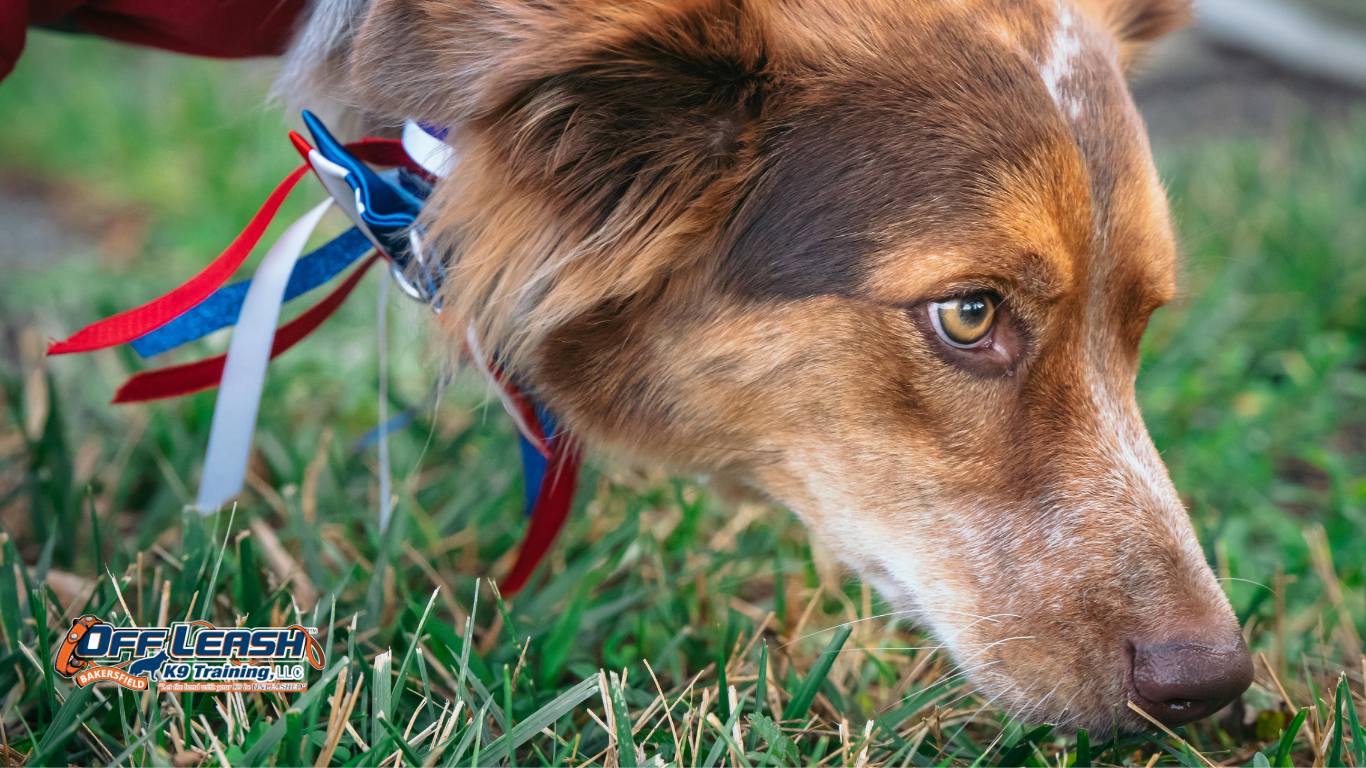
Why Dogs Pull Toward Grass, Smells, and Other Distractions
Walking your dog can be one of the best ways to provide exercise, enrichment, and quality time together. However, many dogs seem to have their own agenda once they step outside. A patch of grass, an interesting scent, or something moving nearby can suddenly become more important than continuing the walk.
Dogs pulling toward grass and smells is extremely common. Their sense of smell is a major way they gather information about the world, and sniffing allows them to investigate what other animals and people have left behind. The challenge begins when normal exploration turns into constant pulling, stopping, zigzagging, or refusing to continue.
The goal of leash training is not to prevent dogs from sniffing or exploring. Instead, dogs can learn that they are allowed to investigate appropriate areas while also learning when to walk with their owner. With patience, clear communication, positive reinforcement, and consistent practice, walks can become much more balanced.
1. What Does “Grass, Smells” Mean in Dog Training?
A dog may suddenly pull toward:
- A patch of grass
- A bush or tree
- Another dog’s scent
- Food smells
- Wildlife scents
- Interesting objects
- Areas where another animal has stopped
- Freshly disturbed soil
- Something their owner cannot even detect
For dogs, these distractions are not meaningless. Their sense of smell provides important information about their environment.
The issue is not necessarily that a dog wants to sniff. Sniffing is a normal behavior. The issue is when the dog becomes so focused on the distraction that they can no longer respond to their owner or walk safely.
Good training creates a balance between exploration and cooperation.
2. Why Dogs Are So Interested in Grass and Scents
Dogs experience their surroundings largely through their noses.
A simple patch of grass may contain scents from other dogs, wildlife, people, food, moisture, and countless environmental sources. What looks ordinary to an owner can be highly informative to a dog.
Sniffing can help dogs investigate their surroundings and gather information. This is one reason completely preventing sniffing during walks may not be realistic or beneficial.
Dogs may also become particularly interested in certain areas because something new has happened there.
For example, a dog might stop repeatedly at the same tree because another animal has recently passed through the area.
This natural curiosity can make walks enriching, but it can also make leash manners challenging.
Training teaches the dog that they can investigate appropriate smells without dragging their owner toward every interesting scent.
3. Natural Exploration vs. Pulling on the Leash
There is an important difference between allowing a dog to explore and allowing the dog to control the walk.
A dog can be given opportunities to sniff while still learning appropriate leash behavior.
For example, an owner might allow the dog to sniff a safe patch of grass after the dog has walked calmly for a period of time. This creates a predictable pattern:
Walk calmly → receive permission to explore → return to walking.
This approach can make sniffing part of the training process rather than treating it as a problem that must always be stopped.
Pulling becomes problematic when the dog repeatedly reaches the end of the leash, drags the owner toward grass, refuses to move, or changes direction whenever a new scent appears.
The goal is not to eliminate exploration. The goal is to teach the dog that exploration happens within reasonable boundaries.
4. How Smells and Environmental Distractions Affect Walking
Smells are only one type of distraction dogs encounter outdoors.
Dogs may also become interested in:
- Other dogs
- Birds
- Squirrels
- People
- Bicycles
- Vehicles
- Children
- Noises
- Food
- Moving objects
- Other animals
A strong scent can be especially difficult because the owner may not know exactly what the dog has detected.
When the dog becomes highly focused on a scent, their attention may shift completely away from the owner. This can lead to pulling, stopping, changing direction, or attempting to investigate an area.
The intensity of the distraction matters.
A dog may walk calmly past a mildly interesting smell but pull strongly toward a scent that is particularly rewarding.
This is why training should gradually increase distractions rather than expecting the dog to immediately demonstrate perfect leash manners in every environment.
5. Reading Your Dog’s Body Language Before They Pull
Learning to recognize your dog’s early signals can make leash training much easier.
Before pulling toward grass or a smell, a dog may:
- Turn their head
- Slow down
- Start sniffing intensely
- Focus on one particular area
- Change their walking position
- Lean toward the distraction
- Tighten the leash
- Stop responding to their owner’s movement
These small changes can happen before a full pulling episode.
If you notice your dog beginning to focus intensely on a distraction, you can redirect their attention while they are still able to respond.
This may involve moving slightly farther away, using an established attention cue, rewarding a check-in, or calmly continuing the walk.
The earlier you recognize the behavior, the easier it can be to guide your dog toward a better choice.
6. The Role of Focus, Impulse Control, and Leash Skills
Better leash walking is built from several connected skills.
Focus
Your dog learns to periodically check in with you instead of remaining completely absorbed in the environment.
Impulse Control
Your dog learns that seeing or smelling something interesting does not automatically mean they should pull toward it.
Leash Skills
Your dog learns how to move comfortably with you without constantly reaching the end of the leash.
Disengagement
Your dog learns to notice something interesting and then shift attention away when appropriate.
These skills should be practiced gradually.
Begin with simple distractions and reward success. As your dog improves, practice around stronger smells and more stimulating environments.
If your dog is consistently unable to respond, the environment may simply be too difficult at that stage of training.
7. Common Owner Mistakes When Dogs Pull Toward Distractions
One common mistake is trying to eliminate all sniffing.
Because sniffing is a normal part of canine exploration, completely preventing it can make walks unnecessarily restrictive.
Another mistake is allowing the dog to pull all the way to every interesting smell. If pulling consistently gets the dog where they want to go, pulling can become a successful strategy.
Other common mistakes include:
- Constantly keeping tension on the leash
- Repeating commands without changing the situation
- Waiting until the dog is already highly distracted
- Increasing walking difficulty too quickly
- Never allowing appropriate sniffing
- Expecting perfect focus immediately
- Using inconsistent rules
- Training only when the dog is pulling
Instead, owners can teach a predictable system where calm walking, attention, and appropriate exploration are all part of the routine.
8. How to Teach a Dog to Walk Calmly Around Grass and Smells
Start training in an environment where your dog can pay attention.
Reward your dog for walking calmly beside you and voluntarily checking in.
When you encounter grass or an interesting smell, do not automatically assume your dog must ignore it.
Instead, teach your dog that they can explore when given an appropriate opportunity.
For example:
Walk calmly → pause → allow sniffing → give a walking cue → continue.
You can also practice changing direction before your dog reaches the end of the leash. Reward your dog for following you rather than pulling toward the distraction.
Useful behaviors to reinforce include:
- Loose-leash walking
- Checking in
- Following your direction
- Pausing calmly
- Responding to a familiar cue
- Disengaging from a scent
- Walking past mild distractions
Keep expectations realistic. A dog that has spent years pulling toward every interesting smell may need time to develop a different habit.
Consistency is more important than trying to achieve perfection during one walk.
9. Grass and Smell Distractions During Walks in Bakersfield
Bakersfield dog owners encounter many of the same outdoor distractions that make leash training challenging anywhere: interesting scents, neighborhood activity, other dogs, people, wildlife, and changing outdoor environments.
Grass and scent-based distractions can be particularly tempting during neighborhood walks because dogs have opportunities to investigate areas where other animals have passed.
This makes everyday walks useful training opportunities.
Bakersfield dog training can incorporate:
- Loose-leash walking
- Focus training
- Impulse control
- Distraction training
- Calm walking
- Attention cues
- Appropriate sniffing
- Direction changes
- Real-world obedience
The objective is not to prevent dogs from enjoying outdoor smells. Instead, owners can teach dogs how to explore while still remaining responsive and manageable.
10. Long-Term Benefits of Better Leash and Focus Skills
Better leash and focus skills can lead to:
- More enjoyable walks
- Improved communication
- Better impulse control
- Greater responsiveness
- Reduced pulling
- Safer outdoor experiences
- Improved focus around distractions
- More predictable behavior
- Greater confidence in new environments
- Stronger owner-dog cooperation
A dog that learns how to disengage from one distraction may also become better prepared to disengage from other distractions.
Over time, these skills can make neighborhood walks, outdoor activities, and everyday adventures much easier to manage.
11. 10 Frequently Asked Questions
1. Why does my dog pull toward grass?
Dogs may pull toward grass because they want to sniff, investigate scents, explore, or find information about other animals.
2. Should I let my dog sniff during walks?
Yes, appropriate sniffing can be a valuable part of a dog’s walk. The goal is to teach when and where exploration is appropriate.
3. Why does my dog suddenly stop to smell something?
Your dog may have detected a scent that is highly interesting or informative to them, even if you cannot detect anything unusual.
4. Can I teach my dog to ignore smells?
You can teach your dog to disengage from certain smells and respond to you, but completely eliminating their interest in scents is neither necessary nor realistic.
5. How can I stop my dog from pulling toward grass?
6. Should I pull my dog away from every smell?
Constantly pulling your dog away may create unnecessary leash tension. Whenever appropriate, teach your dog when they can investigate and when they should continue walking.
7. Why does my dog listen at home but not outside?
Outdoor environments contain far more distractions. Your dog may need gradual practice before they can reliably respond in stimulating environments.
8. Can treats help with leash training?
Yes. Treats or other appropriate rewards can reinforce calm walking, attention, following your direction, and disengagement from distractions.
9. How long does it take to improve leash pulling?
The timeline varies by dog. Training history, consistency, temperament, motivation, and the intensity of distractions can all affect progress.
10. When should I consider professional dog training?
Professional training can be helpful when pulling is persistent, difficult to manage, creates safety concerns, or occurs alongside intense reactions to people, animals, or other environmental triggers.
12. Comprehensive Conclusion
Dogs pull toward grass, smells, and other distractions because the outdoor environment is full of information and opportunities to explore. Sniffing and investigating are natural parts of being a dog, so the goal should not be to eliminate these behaviors.
Instead, effective dog training teaches balance.
Your dog can learn that walks include both structured movement and appropriate opportunities to explore. Through loose-leash training, focus, impulse control, positive reinforcement, and consistent expectations, dogs can become better at disengaging from distractions and following their owners.
Pay attention to your dog’s body language, begin training at a manageable level, and gradually increase distractions as your dog becomes more reliable.
With patience and regular practice, grass and interesting smells do not have to turn every walk into a tug-of-war. Your dog can enjoy the world through their nose while still learning to walk calmly, stay connected with you, and make better choices during everyday adventures.
Website Contact Form
"*" indicates required fields