Does My Dog’s Excitement Mean They Are Aggressive?
However, intense behavior does not automatically mean aggression.
A dog can become extremely excited because they want to greet another dog, chase something moving, interact with a person, or access something they find rewarding. Another dog may react intensely because they are frightened or frustrated.
Understanding the emotion behind the behavior is important.
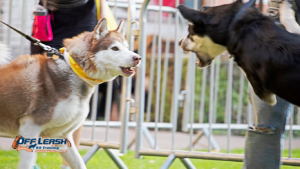
For example, a dog that pulls toward another dog with a loose, wiggly body may be displaying social excitement. A dog that becomes stiff, stares intensely, growls, and attempts to make another dog move away may be displaying more concerning behavior.
The same outward behavior—such as barking—can have very different causes.
2. Why Dogs Become Extremely Excited
Dogs can become highly excited when something captures their attention or creates strong anticipation.
Common reasons include:
Wanting to greet another dog
Seeing a familiar person
Anticipating a walk
Hearing the doorbell
Seeing wildlife
Watching moving vehicles
Expecting food
Preparing to play
Encountering an unfamiliar environment
Being released from a crate or room
Anticipation
Dogs are excellent at recognizing patterns.
If grabbing the leash always means a walk, your dog may become excited as soon as they see it.
Likewise, if another dog usually means playtime, your dog may become highly aroused before the interaction even begins.
Frustration
Sometimes excitement becomes stronger because the dog cannot access what they want.
A dog that wants to greet another dog but is restrained by a leash may bark, pull, or jump.
This can look aggressive even when frustration is a major part of the reaction.
Excess Energy
Dogs with limited opportunities for appropriate physical and mental activity may have a harder time settling when something exciting happens.
However, simply exercising a dog more is not always enough. Dogs also need skills for regulating excitement.
3. Excitement vs. Aggression: What’s the Difference?
The difference between excitement and aggression is not always obvious from one behavior.
Signs That May Suggest Excitement
An excited dog may display:
Loose, wiggly movement
Rapid tail movement
Whining
Jumping
Play bows
Pulling toward a person or dog
Bouncing
Repeated attempts to interact
The dog may appear unable to contain their enthusiasm.
Signs That May Indicate Fear or Aggression
More concerning body language can include:
Stiff posture
Hard staring
Growling
Lip lifting
Snapping
Lunging
Showing teeth
Repeated attempts to drive another dog or person away
Freezing before reacting
Context matters.
A dog can also move from excitement into frustration or conflict when arousal becomes too high.
That is why owners should avoid labeling behavior based on one action alone.
If a dog repeatedly displays aggressive behavior, particularly if there is a risk of injury, professional evaluation is recommended.
4. Common Situations That Trigger Intense Excitement
Some situations naturally create more stimulation than others.
Other Dogs
Dogs may become highly excited when they see another dog during walks, at parks, or when a dog visits the home.
Visitors
The arrival of a person can create excitement before the guest has even entered the house.
Walks
Some dogs become excited when they see their leash, harness, or walking equipment.
Wildlife
Squirrels, rabbits, birds, and other animals can trigger chasing behavior.
Moving Objects
Bicycles, skateboards, runners, vehicles, and other fast-moving objects can be particularly stimulating.
Food
Food can create intense anticipation, especially in dogs that have learned that certain household routines predict meals or treats.
Play
Fast movement and physical interaction can quickly increase arousal.
Recognizing individual triggers allows owners to begin training before the dog reaches an overwhelming level of excitement.
5. Reading Body Language Before Excitement Escalates
Before a dog begins barking or lunging, they may:
Become more alert
Stare at the trigger
Close their mouth
Stop responding normally
Increase their movement
Whine
Pull toward the trigger
Ignore familiar cues
These early signals provide an opportunity to intervene.
For example, if your dog notices another dog from a distance but can still respond to their name, that may be a better training opportunity than waiting until your dog is already barking and pulling.
Watch for Changes in the Whole Body
Do not focus only on the tail.
Look at:
Ears
Eyes
Mouth
Posture
Weight distribution
Movement
Vocalizations
Ability to disengage
A dog’s entire body provides information about their emotional state.
6. The Role of Impulse Control and Emotional Regulation
Teaching a dog to control their impulses is one of the most valuable ways to address intense excitement.
The goal is not to prevent dogs from becoming excited.
Instead, dogs can learn:
“I can notice something exciting without immediately reacting.”
Useful skills include:
Waiting
The dog learns that they do not need to rush toward everything they want.
Checking In
The dog learns to look back toward the owner after noticing a distraction.
Leave It
The dog learns to disengage from something when appropriate.
Recall
The dog learns to return to the owner even when something interesting is nearby.
Settling
The dog learns how to relax after excitement rather than remaining highly stimulated.
These skills should be developed gradually.
A dog that cannot respond in a quiet room is unlikely to suddenly perform perfectly around a highly exciting trigger.
7. Common Owner Mistakes
Owners can unintentionally reinforce intense behavior.
Waiting Until the Dog Explodes
Training is often much easier before the dog reaches maximum arousal.
Create distance or reduce stimulation when necessary.
Repeating Commands
The environment may simply be too difficult.
Punishing Every Excited Reaction
Harsh responses can increase frustration or fear in some dogs.
Instead, focus on teaching an appropriate alternative behavior.
Allowing Inconsistent Greetings
If jumping is sometimes rewarded with attention and other times discouraged, the dog may struggle to understand the expectation.
Moving Too Quickly
Owners sometimes increase distractions before the dog has mastered the behavior at an easier level.
Progress should be gradual.
Ignoring the Dog’s Emotional State
A dog that is frightened or overwhelmed needs a different approach from a dog that is simply eager to play.
Training should consider why the behavior is occurring, not just what the behavior looks like.
8. Teaching Dogs to Stay Calm Around Exciting Triggers
Training should begin in situations where the dog can still think and respond.
Start with a manageable level of distraction.
For example:
Notice trigger → remain calm → look toward owner → receive reinforcement → disengage.
Over time, the owner can gradually increase the difficulty.
Reward Calm Choices
Reinforce behaviors such as:
Looking at the owner
Sitting
Walking calmly
Turning away from the trigger
Responding to their name
Remaining on a mat
Returning when called
Increase Distance When Necessary
Distance can be an extremely useful training tool.
Practice Disengagement
Dogs should learn that they can stop watching something exciting.
A successful training session does not always involve getting closer to the trigger.
Sometimes the best progress comes from teaching the dog how to calmly move away.
Build Calmness Into Everyday Life
Practice settling when nothing exciting is happening.
A dog that regularly learns how to relax at home may have an easier foundation for learning emotional regulation around distractions.
The ultimate goal is not simply a dog that obeys commands.
It is a dog that can notice excitement, remain responsive, make an appropriate choice, and recover afterward.
9. Excitement and Aggressive Behavior in Bakersfield
For Bakersfield dog owners, managing a dog’s excitement around everyday distractions can be an important part of building reliable behavior.
Dogs may encounter triggers such as other dogs, visitors, neighborhood activity, bicycles, runners, vehicles, wildlife, and unfamiliar environments. Some dogs respond with manageable excitement, while others become so overwhelmed that barking, lunging, pulling, or other intense behaviors occur.
Professional dog training can help owners identify what is driving the behavior and develop a practical training plan.
Training may focus on:
- Impulse control
- Calm greetings
- Leash skills
- Focus around distractions
- Recall
- Place training
- Appropriate disengagement
- Emotional regulation
- Confidence building
- Real-world obedience
The goal is not simply to make a dog stop reacting. Instead, training should help the dog develop better choices when something exciting or challenging appears.
For example, rather than immediately rushing toward another dog, a trained dog may notice the distraction, check in with their owner, and continue walking.
If a dog’s behavior includes aggression, severe fear, repeated lunging, or a risk of injury, owners should prioritize safety and seek individualized professional guidance.
10. Long-Term Benefits of Better Emotional Control
Teaching dogs how to regulate excitement can provide benefits far beyond one specific trigger.
Better Impulse Control
Dogs learn that they do not have to immediately act on every exciting thought or desire.
Improved Focus
A dog that can respond to their owner while distractions are present becomes more reliable in everyday environments.
Calmer Greetings
Dogs can learn that meeting people or other animals does not require jumping, barking, or rushing forward.
Improved Leash Behavior
Better emotional control can make walks easier when dogs encounter other animals, people, vehicles, or environmental distractions.
Greater Confidence
When dogs learn how to handle stimulating situations successfully, they may become more comfortable navigating unfamiliar environments.
Faster Recovery
A major part of emotional regulation is learning how to return to a calm state after excitement.
The long-term objective is not to eliminate a dog’s personality or enthusiasm.
It is to give the dog the skills needed to experience excitement without losing behavioral control.
Frequently Asked Questions
1. Does excitement mean my dog is aggressive?
No. Excitement does not automatically mean aggression. Dogs can bark, jump, pull, or vocalize because they are excited, frustrated, fearful, or attempting to interact.
2. Why does my dog look aggressive when excited?
High arousal can make a dog’s behavior intense. Jumping, barking, pulling, and lunging may look aggressive even when the underlying emotion is excitement or frustration.
3. How can I tell if my dog is actually aggressive?
Look at the entire body and situation rather than one behavior. Stiffness, hard staring, growling, snapping, lunging, and attempts to threaten or create distance can be more concerning signs.
4. Should I punish my dog for barking when excited?
Punishment is not always the most effective solution. Teaching an alternative behavior and managing the dog’s exposure to the trigger can be more productive.
5. Why does my dog listen at home but not outside?
The outside environment contains significantly more distractions. Your dog may need additional practice gradually increasing the difficulty rather than being expected to perform perfectly immediately.
6. Can impulse control reduce aggressive-looking behavior?
Improved impulse control can help dogs pause before reacting. However, if aggression is present, impulse control alone may not address the underlying emotional cause.
7. Should I let my dog greet every dog they see?
No. Dogs do not need to greet every dog. Teaching your dog to calmly observe and disengage can be an important part of social and leash training.
8. How do I calm my dog when they become extremely excited?
Reduce the intensity of the situation when possible. Increase distance from the trigger, give your dog time to recover, and reinforce calm behaviors rather than waiting for the reaction to become overwhelming.
9. Can puppies learn emotional regulation?
Yes. Puppies can begin learning calmness, waiting, attention, appropriate greetings, and impulse control through age-appropriate training.
10. When should I hire a professional dog trainer?
Professional help can be especially useful when your dog’s reactions are intense, unpredictable, difficult to manage, or involve aggression, fear, or potential safety concerns.
12. Comprehensive Conclusion
A dog’s excitement does not automatically mean they are aggressive.
Dogs can become intensely excited for many reasons, including the desire to greet, play, chase, investigate, or access something rewarding. Frustration and anxiety can also produce behaviors that look very similar to excitement.
This is why understanding the dog’s emotional state is so important.
Instead of focusing only on whether a dog is barking, jumping, or pulling, owners should look at the entire picture: body language, context, trigger, distance, intensity, and the dog’s ability to disengage.
Training can then focus on developing practical skills such as impulse control, attention, recall, calm greetings, disengagement, and relaxation.
One of the most important goals is teaching a dog that they can experience excitement without immediately acting on it.
A dog can notice another dog without rushing toward them.
A dog can see a person without jumping.
A dog can encounter wildlife without immediately chasing.
A dog can become excited and still listen.
With consistent practice, these skills can become increasingly reliable across different environments.
For Bakersfield dog owners, professional training can provide personalized support for dogs that struggle with intense excitement, frustration, or aggressive-looking reactions.
The goal is not to suppress a dog’s personality or eliminate normal enthusiasm.
The goal is to help the dog develop better emotional control, better decision-making, and safer responses to the world around them.
Website Contact Form
"*" indicates required fields