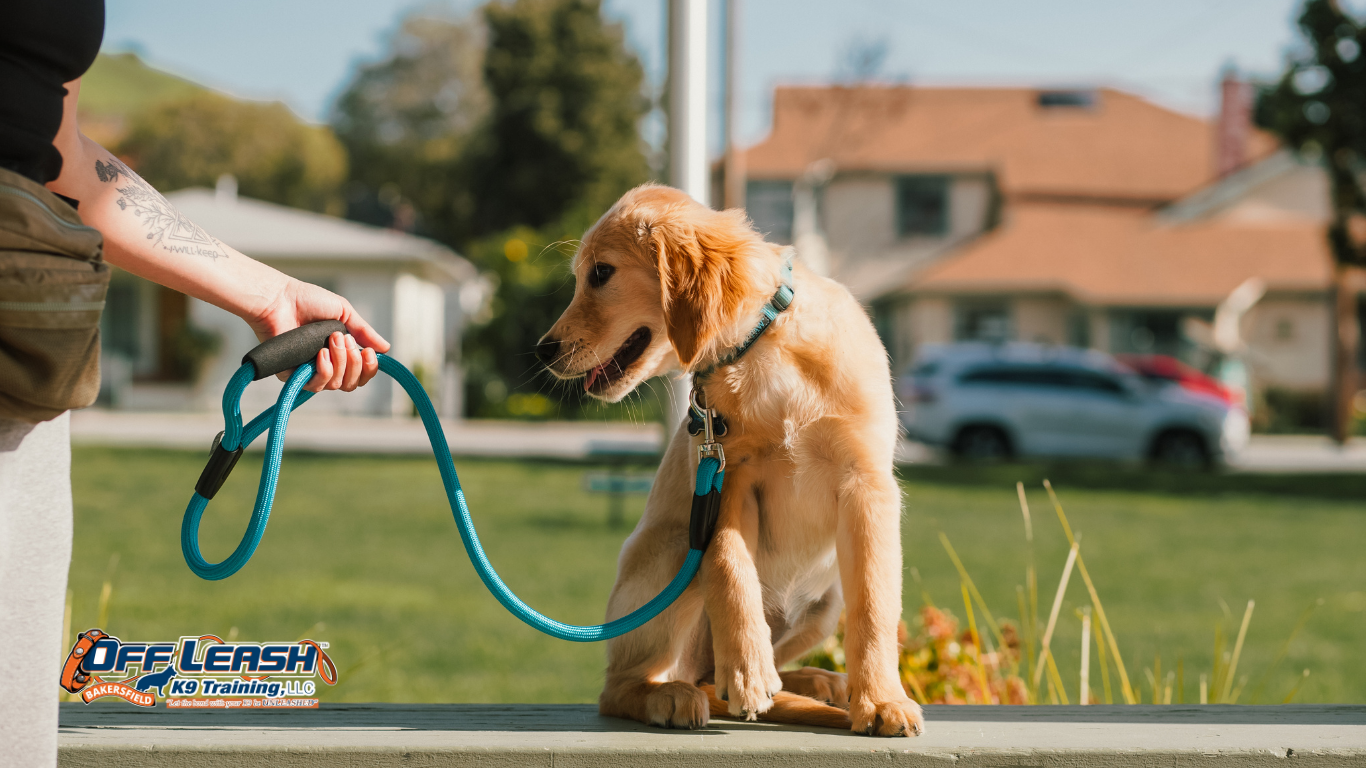
Leash Training Bakersfield: Professional Dog Leash Training for Calm, Confident Walks
Walking your dog should be one of the most enjoyable parts of pet ownership—not a daily struggle. If your dog constantly pulls on the leash, lunges toward distractions, zigzags across the sidewalk, or ignores your cues, professional Leash Training Bakersfield can help transform stressful walks into calm, enjoyable outings.
Loose leash walking is about far more than simply preventing pulling. A well-trained dog learns to stay engaged with their handler, remain emotionally balanced around distractions, and walk politely in a variety of environments. These skills improve both safety and communication while strengthening the relationship between dog and owner.
Dogs that need leash training may:
- Pull continuously
- Lunge toward other dogs
- Chase squirrels or birds
- React to people
- Ignore verbal cues
- Zigzag during walks
- Become overstimulated outdoors
- Bark at passing dogs
- Jump on pedestrians
- Struggle to focus
These behaviors are usually not signs of stubbornness. Instead, they often result from excitement, fear, limited impulse control, inconsistent training, or simply never having learned proper leash manners.
Professional leash training focuses on teaching dogs how to:
- Walk on a loose leash
- Stay engaged with their owner
- Respond to cues around distractions
- Develop emotional regulation
- Build confidence in public
- Make better decisions during walks
For Bakersfield dog owners, leash training provides benefits that extend beyond neighborhood strolls. Dogs with strong leash skills are easier to manage during veterinary visits, outdoor events, hiking trails, pet-friendly businesses, and family outings.
Whether you have a young puppy just learning to walk on a leash or an adult dog with years of pulling habits, positive reinforcement training can help create calmer, more enjoyable walks while building confidence for both ends of the leash.
Key Takeaways
- Leash training teaches dogs to walk calmly without pulling.
- Loose leash walking improves safety and communication.
- Pulling is often caused by excitement, fear, or lack of training.
- Positive reinforcement creates reliable leash manners.
- Engagement exercises improve focus outdoors.
- Emotional regulation helps dogs remain calm around distractions.
- Early training prevents long-term pulling habits.
- Adult dogs can successfully learn loose leash walking.
- Consistency is the key to lasting results.
- Professional leash training helps Bakersfield dogs enjoy safer, calmer, and more rewarding walks.
What Is Leash Training?
Leash training is the process of teaching a dog to walk calmly beside their owner without pulling, lunging, zigzagging, or becoming overwhelmed by distractions. While many people think leash training is simply about stopping pulling, it actually involves building communication, confidence, and emotional control in a wide variety of environments.
A dog that has learned proper leash manners can:
- Walk on a loose leash
- Check in with their handler
- Respond to cues around distractions
- Remain calm near people and other dogs
- Recover quickly after exciting events
- Enjoy walks without constant tension on the leash
Professional Leash Training Bakersfield focuses on creating a dog that enjoys walking while remaining attentive and responsive.
Loose Leash Walking vs. Heel
Many owners confuse loose leash walking with a formal heel.
They are not the same.
A heel means the dog stays in a precise position beside the handler, often used in obedience competitions or specific situations requiring close control.
A loose leash walk allows the dog more freedom to explore while maintaining a relaxed leash and staying connected with their owner.
Most families benefit most from reliable loose leash walking.
Why Leash Training Matters
Every walk teaches something.
If pulling allows a dog to reach:
- Trees
- Other dogs
- People
- Smells
- Fire hydrants
the dog learns that pulling works.
Professional training teaches dogs that calm walking—not pulling—is what earns access to the things they enjoy.
Why Dogs Pull on the Leash
Dogs are not born understanding how to walk politely beside people.
Pulling is usually a learned behavior rather than an attempt to be dominant or stubborn.
Understanding why dogs pull allows owners to address the real cause instead of simply correcting the behavior.
Dogs Naturally Walk Faster Than Humans
Dogs move differently than people.
Their natural walking pace is often much quicker.
Without training, they simply continue walking at their preferred speed.
The Environment Is Rewarding
Outdoor environments are filled with exciting opportunities.
Dogs naturally want to investigate:
- New scents
- Wildlife
- Other dogs
- People
- Moving vehicles
- Birds
- Trees
- Grass
- Sounds
If pulling gets them closer to these rewards, the behavior becomes stronger over time.
Excitement
Many dogs become highly excited the moment the leash appears.
Common signs include:
- Spinning
- Barking
- Jumping
- Pulling immediately
- Ignoring cues
Excitement reduces a dog’s ability to think clearly.
Teaching emotional regulation is just as important as teaching leash skills.
Fear or Anxiety
Not every dog pulls because they are excited.
Some pull because they feel nervous.
Examples include:
- Wanting to move away from a scary object
- Creating distance from another dog
- Escaping loud noises
- Avoiding unfamiliar people
Understanding the dog’s emotional state helps determine the best training approach.
Lack of Impulse Control
Young puppies and many adolescent dogs simply have not learned to pause before acting.
Impulse control develops through consistent practice.
Helpful exercises include:
- Sit
- Wait
- Leave It
- Place
- Engagement games
These skills improve leash manners by teaching dogs to think before reacting.
Benefits of Professional Leash Training
Professional leash training provides benefits that extend far beyond daily walks.
Dogs become easier to handle in nearly every environment.
Improved Safety
Loose leash walking reduces the risk of:
- Escaping equipment
- Running into traffic
- Pulling owners off balance
- Lunging toward distractions
- Tangled leashes
Safer walks protect both dogs and their families.
Better Communication
Professional training strengthens communication between dog and owner.
Dogs learn to:
- Check in frequently
- Respond to cues
- Maintain focus
- Follow guidance in distracting environments
This partnership creates more enjoyable outings.
Increased Confidence
Confident dogs recover more quickly from:
- Loud noises
- Passing bicycles
- Joggers
- Delivery vehicles
- Other dogs
- Busy sidewalks
Instead of reacting impulsively, they learn to remain calm and continue walking.
Better Emotional Regulation
Walking politely requires more than obedience.
Dogs must also learn to:
- Manage excitement
- Recover after surprises
- Ignore distractions
- Stay emotionally balanced
These skills improve behavior both on and off the leash.
Stronger Relationship
Leash training creates teamwork.
Instead of fighting against the leash, owners and dogs begin working together.
Positive experiences strengthen trust while making walks enjoyable for everyone.
Our Positive Reinforcement Training Approach
Our leash training program focuses on teaching dogs what to do, rather than constantly correcting what not to do.
Positive reinforcement encourages lasting behavioral change by rewarding desirable choices.
Reward-Based Learning
Whenever dogs make good decisions, they receive meaningful rewards.
Examples include:
- Walking on a loose leash
- Looking at the handler
- Ignoring distractions
- Choosing calm behavior
- Responding to cues
Dogs naturally repeat behaviors that consistently produce positive outcomes.
Building Engagement
Successful leash walking begins with engagement.
Dogs learn that paying attention to their owner is rewarding.
Engagement exercises encourage dogs to:
- Look at their handler
- Respond to their name
- Walk cooperatively
- Stay mentally connected
This connection becomes the foundation for reliable leash manners.
Gradual Exposure
Rather than overwhelming dogs with busy environments immediately, training progresses step by step.
Dogs first succeed in easier settings before advancing to:
- Neighborhood sidewalks
- Parks
- Shopping areas
- Pet-friendly businesses
- Community events
Gradual exposure builds confidence while preventing unnecessary frustration.
Teaching Emotional Regulation
Many leash problems originate from emotional excitement rather than poor obedience.
Training includes exercises that help dogs:
- Relax around distractions
- Recover after startling events
- Control impulses
- Remain focused
- Walk calmly despite environmental changes
Emotional regulation supports lasting success.
Common Leash Walking Challenges We Address
Every dog is unique, but several leash-related behaviors are especially common.
Our training programs address challenges including:
Pulling Constantly
Dogs learn to replace constant pulling with relaxed, loose leash walking.
Lunging Toward Other Dogs
Through confidence-building and engagement exercises, dogs learn to remain calm around other dogs instead of rushing toward them.
Barking During Walks
Many dogs bark because of excitement, fear, or frustration.
Training teaches alternative responses while improving emotional regulation.
Chasing Wildlife
Birds, squirrels, rabbits, and other animals naturally trigger chase instincts.
Impulse-control exercises help dogs remain responsive instead of reacting immediately.
Ignoring Commands Outdoors
Many dogs listen perfectly inside the house but struggle outdoors.
Our program strengthens focus despite real-world distractions.
Zigzagging Across the Walk
Some dogs constantly weave from side to side, creating tangled leashes and frustrating walks.
Structured leash exercises teach dogs to stay connected with their handler while still enjoying opportunities to sniff and explore appropriately.
By addressing both the emotional and practical aspects of leash walking, professional training creates lasting improvements that extend far beyond preventing pulling. Dogs learn how to stay engaged with their owner, remain calm in distracting environments, and confidently navigate everyday walks. These foundational skills make outings safer, less stressful, and far more enjoyable for both dogs and their families throughout Bakersfield.
Why Bakersfield Dog Owners Choose Professional Training
Every dog is different, and every family has unique training goals. Some owners need help with a puppy learning to walk on a leash for the first time, while others have an adult dog that has pulled for years. Professional Leash Training Bakersfield provides customized guidance that addresses each dog’s behavior, personality, and learning style.
Rather than relying on one-size-fits-all techniques, positive reinforcement training focuses on building confidence, communication, and lasting habits.
Personalized Training Plans
No two dogs learn at exactly the same pace.
Training plans are customized based on factors such as:
- Age
- Breed
- Energy level
- Confidence
- Previous training
- Household lifestyle
- Specific leash challenges
This individualized approach helps dogs make steady progress while avoiding unnecessary frustration.
Real-World Practice
Dogs do not learn leash manners by practicing only inside the home.
Professional training includes gradually introducing real-life situations such as:
- Residential neighborhoods
- Community parks
- Busy sidewalks
- Outdoor shopping areas
- Pet-friendly businesses
- Veterinary clinics
Practicing in everyday environments helps dogs generalize their skills beyond the training session.
Positive Reinforcement Creates Lasting Results
Training focuses on rewarding desirable behaviors instead of relying on fear or intimidation.
Dogs learn that calm choices lead to rewarding experiences, making them more likely to repeat those behaviors naturally.
This approach builds:
- Confidence
- Trust
- Motivation
- Reliable obedience
- Strong communication
Support for the Entire Family
Successful leash training involves more than teaching the dog.
Owners also learn how to:
- Handle the leash properly
- Read canine body language
- Reward good decisions
- Prevent pulling before it starts
- Build consistency at home
When the entire family uses the same techniques, dogs learn more quickly and maintain their new skills.
Frequently Asked Questions
1. At what age should leash training begin?
Leash training can begin as soon as a puppy is comfortable wearing a properly fitted collar or harness. Early positive experiences help prevent pulling habits from developing.
2. Can older dogs still learn loose leash walking?
Absolutely. Dogs of all ages can improve their leash manners through consistent, reward-based training. Even dogs that have pulled for years can learn new habits.
3. How long does leash training take?
Every dog progresses differently. Some dogs show noticeable improvement within a few sessions, while others require additional practice depending on their age, history, and specific challenges.
4. Why does my dog walk perfectly at home but pull outside?
Outdoor environments contain many distractions, including smells, people, dogs, wildlife, and traffic. Professional training teaches dogs to remain engaged with their owner despite these challenges.
5. Should I stop every time my dog pulls?
Consistency is important. Preventing dogs from reaching exciting destinations by pulling helps them learn that a loose leash—not tension—is what keeps the walk moving.
6. Can leash training help reactive dogs?
Yes. While reactivity often requires additional behavior modification, improved leash skills, emotional regulation, and engagement can significantly reduce many reactive behaviors.
7. What equipment works best for leash training?
The best equipment depends on your dog’s size, behavior, and training goals. A professional trainer can recommend appropriate collars, harnesses, or leashes while ensuring they are used safely and effectively.
8. Do you train puppies and adult dogs?
Yes. Both puppies and adult dogs benefit from professional leash training. Early training prevents bad habits, while adult dogs can replace old behaviors with new, reliable skills.
9. Will my dog still be allowed to sniff during walks?
Absolutely. Healthy walks include opportunities for dogs to explore their environment. Training teaches dogs to balance polite walking with designated sniff breaks instead of pulling constantly.
10. Why should I choose professional leash training?
Professional guidance helps owners identify the root cause of pulling, improve communication, and build long-lasting walking habits using proven, positive reinforcement methods.
Call to Action
Imagine taking your dog for a walk without constant pulling, lunging, or frustration.
Imagine enjoying neighborhood strolls, local parks, outdoor restaurants, and pet-friendly businesses with a dog that walks calmly by your side while remaining relaxed around everyday distractions.
That transformation is possible through professional Leash Training Bakersfield.
Our positive reinforcement training programs help dogs develop:
- Loose leash walking
- Better focus
- Emotional regulation
- Impulse control
- Confidence in public
- Reliable obedience
- Calm behavior around distractions
Whether you have a playful puppy, an energetic adolescent, or an adult dog with established pulling habits, we create personalized training plans that fit your goals and your dog’s individual needs.
If you’re ready to enjoy calmer, safer, and more rewarding walks, contact us today to schedule your leash training consultation and begin building a stronger partnership with your dog.
Comprehensive Conclusion
Professional Leash Training Bakersfield is about much more than preventing a dog from pulling. It teaches dogs how to communicate, stay engaged with their handler, regulate their emotions, and confidently navigate the world around them. Every walk becomes an opportunity to strengthen trust, reinforce good decisions, and build reliable habits that improve daily life.
Many leash problems stem from excitement, fear, curiosity, or simply a lack of clear guidance—not stubbornness. By focusing on positive reinforcement, gradual exposure, and consistent practice, dogs learn that calm walking leads to the experiences they enjoy most. Instead of reacting impulsively to every distraction, they develop the ability to stay focused, recover quickly from surprises, and make thoughtful choices.
For Bakersfield dog owners, these skills create meaningful improvements far beyond neighborhood walks. A dog that walks politely on a leash is often easier to manage during veterinary visits, family outings, community events, hiking adventures, and trips to pet-friendly businesses. Strong leash manners also improve safety, reduce stress, and make everyday activities more enjoyable for everyone involved.
Ultimately, successful leash training builds a true partnership between dog and owner. Through patience, consistency, and positive reinforcement, dogs learn that walking beside their handler is rewarding, predictable, and enjoyable. The result is not only better leash manners but also a calmer, more confident companion ready to explore Bakersfield and beyond with trust, focus, and enthusiasm.
Website Contact Form
"*" indicates required fields