Constantly Sniff During Walks: Why Dogs Constantly Sniff During Walks
If your dog seems to stop every few feet to investigate a scent, you’re witnessing one of the most natural canine behaviors. Dogs that constantly sniff during walks aren’t being stubborn or trying to delay the walk—they’re gathering information through their strongest sense.
A dog’s nose is remarkably powerful. While humans rely primarily on vision, dogs depend heavily on scent to understand the world around them. Every tree, fire hydrant, patch of grass, and sidewalk contains valuable information about the animals, people, and events that have recently passed through the area.
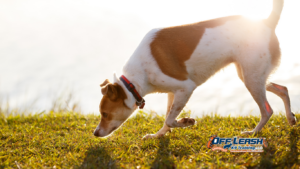
Dogs that constantly sniff during walks may:
- Stop frequently
- Pull toward interesting scents
- Circle an area repeatedly
- Ignore verbal cues while sniffing
- Investigate grass and bushes
- Sniff other dogs’ scent marks
- Slow the pace of the walk
- Become highly focused on one location
- Lift their nose to catch airborne scents
- Return to previously sniffed areas
In most cases, this behavior is completely normal and even beneficial. Sniffing provides mental stimulation, reduces stress, satisfies natural instincts, and allows dogs to process their environment.
However, problems can arise when sniffing causes constant leash pulling, prevents the dog from responding to commands, or makes walks frustrating for the owner. Rather than eliminating sniffing altogether, successful training teaches dogs the difference between structured walking and designated sniffing opportunities.
For Bakersfield dog owners, balancing exploration with obedience creates enjoyable walks that meet both the dog’s natural needs and the owner’s expectations. A dog that understands when to sniff and when to focus becomes easier to manage while still enjoying the mental benefits that scent exploration provides.
Key Takeaways
- Sniffing is a natural and healthy canine behavior.
- Dogs experience the world primarily through scent.
- Sniffing provides important mental enrichment.
- Frequent sniffing does not necessarily indicate poor training.
- Structured walks can include designated sniffing time.
- Loose leash walking and sniffing can coexist.
- Emotional regulation improves focus during walks.
- Reward attention and engagement with the handler.
- Avoid rushing dogs through every walk.
- Most dogs benefit from a balance of exploration and obedience.
What Does “Constantly Sniff During Walks” Mean?
When dogs constantly sniff during walks, they spend much of their time investigating scents along sidewalks, grass, trees, bushes, fire hydrants, and other objects instead of simply walking forward. Many owners worry that their dog is being distracted or stubborn, but in most cases, sniffing is a completely normal and healthy behavior.
Unlike humans, who experience the world primarily through sight, dogs rely heavily on their incredible sense of smell to understand their surroundings.
Every scent tells a story.
A patch of grass may reveal:
- Which dogs recently walked there
- Whether wildlife passed through
- If another animal marked the area
- How recently someone visited
- Environmental changes
To your dog, every walk is an opportunity to gather information.
Dogs that constantly sniff during walks may:
- Stop every few feet
- Investigate trees and bushes
- Return to previously sniffed areas
- Pull toward interesting scents
- Sniff the ground continuously
- Lift their nose to smell the air
- Circle one location repeatedly
- Ignore commands while investigating
- Become deeply focused on scent trails
- Slow the pace of the walk
These behaviors are usually driven by curiosity rather than poor manners.
Understanding why dogs sniff helps owners balance natural exploration with good leash behavior.
Why Sniffing Is Natural
Dogs evolved to use scent for survival.
Wild canines depended on smell to:
- Find food
- Locate family members
- Detect predators
- Identify territory
- Track prey
- Recognize danger
Modern pet dogs still possess these same instincts.
Even though they no longer need to hunt for survival, their brains remain highly motivated by scent exploration.
Why Dogs Depend on Their Sense of Smell
A dog’s nose is one of the most remarkable sensory organs in the animal kingdom.
While humans primarily process visual information, dogs gather enormous amounts of information through scent.
Their noses help them identify:
- Other dogs
- Individual people
- Wildlife
- Food sources
- Environmental changes
- Emotional states
- Familiar locations
- Territorial markings
Every walk becomes an opportunity to collect new information.
The World Through a Dog’s Nose
Imagine reading hundreds of messages during every walk.
That is similar to how dogs experience scent.
Every smell contains information about:
- Time
- Direction
- Identity
- Recent activity
Dogs naturally want to investigate these scent “messages.”
Air Scenting vs. Ground Scenting
Dogs use two primary sniffing techniques.
Ground Scenting
Ground scenting involves investigating:
- Grass
- Sidewalks
- Trees
- Fire hydrants
- Bushes
Dogs gather information left behind by other animals and people.
Air Scenting
Dogs sometimes lift their nose high into the air.
This allows them to detect scents carried by the wind.
Air scenting often helps dogs notice:
- Wildlife
- Other dogs
- People approaching
- Food
- Environmental changes
Both behaviors are completely normal.
Healthy Sniffing vs. Obsessive Sniffing
Not all sniffing is the same.
Healthy sniffing is purposeful and flexible.
Dogs investigate an area briefly before continuing the walk.
Characteristics include:
- Curiosity
- Relaxed body language
- Moving on naturally
- Remaining responsive to the owner
This type of sniffing provides excellent mental enrichment.
Obsessive Sniffing
Occasionally, sniffing becomes excessive.
Some dogs:
- Refuse to leave one area
- Ignore repeated cues
- Become highly fixated
- Pull intensely toward scents
- Struggle to disengage
This may indicate:
- Overstimulation
- Anxiety
- Extremely interesting scent trails
- Limited impulse control
Training can help dogs learn when to explore and when to continue walking.
Why Balance Matters
Dogs should have opportunities to sniff.
However, they should also learn that walking politely remains part of every outing.
Balancing exploration with structure creates enjoyable walks for both dogs and owners.
How Sniffing Benefits Mental Health
Sniffing provides far more than entertainment.
It offers important psychological benefits.
Many trainers refer to sniffing as one of the most effective forms of natural enrichment.
Benefits include:
- Mental stimulation
- Stress reduction
- Confidence building
- Emotional recovery
- Problem-solving opportunities
- Increased relaxation
Many dogs return home mentally satisfied after a sniff-focused walk, even if they have covered a shorter distance.
Sniffing Reduces Stress
Research and practical experience suggest that allowing dogs to investigate their environment often encourages calmer behavior.
Slow sniffing naturally reduces pace.
As excitement decreases, many dogs begin relaxing.
For anxious dogs, sniffing can become an important coping behavior.
Body Language While Investigating Scents
Dogs communicate a great deal while sniffing.
Relaxed sniffing usually includes:
- Loose body posture
- Soft eyes
- Gentle tail movement
- Calm breathing
- Smooth walking
These signs indicate curiosity rather than concern.
Body Language That Suggests Increased Arousal
Sometimes sniffing becomes more intense.
Watch for:
- Stiff posture
- Rapid breathing
- Hard staring after sniffing
- Sudden freezing
- Raised tail
- Refusing treats
- Pulling intensely
These behaviors suggest emotional arousal rather than relaxed exploration.
Owners should recognize the difference between healthy investigation and escalating excitement.
Emotional Regulation During Walks
Emotional regulation allows dogs to enjoy exploring their environment without becoming overwhelmed by every scent they encounter.
Dogs with strong emotional regulation can:
- Sniff appropriately.
- Continue walking when asked.
- Respond to cues.
- Stay on a loose leash.
- Shift attention back to their owner.
- Recover quickly after exciting discoveries.
These skills develop gradually through consistent practice.
Helpful exercises include:
- Loose leash walking
- Engagement games
- Permission-based sniff breaks
- Rewarding voluntary check-ins
- Impulse-control exercises
- Confidence-building walks
- Structured exploration
Rather than viewing sniffing as a problem, owners can use it as a valuable reward while still teaching good walking manners. Over time, dogs learn that they are free to explore when given permission but can also refocus on their owner when it’s time to continue walking. This balance allows dogs to enjoy the mental enrichment of sniffing while developing the obedience, emotional regulation, and leash skills needed for enjoyable walks in any environment.
Common Owner Mistakes
Although sniffing is one of the healthiest activities dogs can enjoy during a walk, many owners accidentally create frustration by either allowing unlimited sniffing or preventing it altogether. The goal is not to eliminate sniffing—it is to create a healthy balance between exploration and structured walking.
Understanding these common mistakes helps dogs enjoy their walks while still developing excellent leash manners.
Rushing Every Walk
Many owners treat walks as exercise only.
They move quickly from one destination to another without allowing their dog time to investigate the environment.
From the dog’s perspective, this can be frustrating.
Dogs naturally want to:
- Smell
- Explore
- Investigate
- Gather information
Allowing short sniff breaks provides valuable mental enrichment.
Allowing Constant Pulling
While sniffing itself is healthy, pulling toward every interesting scent teaches poor leash habits.
If dogs learn that pulling always gets them closer to what they want, pulling becomes stronger over time.
Instead:
- Stop when the leash becomes tight.
- Reward loose leash walking.
- Give permission before allowing sniff breaks.
This teaches dogs that polite walking earns opportunities to explore.
Interrupting Every Sniff
Some owners constantly pull their dog away from every scent.
While this may speed up the walk, it removes one of the primary reasons dogs enjoy going outside.
Instead, allow reasonable opportunities for investigation while maintaining overall structure.
Expecting Perfect Focus
Walks are naturally stimulating.
Expecting dogs to ignore every smell, person, bird, and distraction is unrealistic.
Good training does not eliminate curiosity.
It teaches dogs to shift their attention when asked.
Using Walks Only for Physical Exercise
Exercise is important, but mental stimulation is equally valuable.
A slower walk filled with controlled sniffing often provides greater mental satisfaction than a fast-paced walk where the dog has no opportunity to explore.
Teaching Balance Between Sniffing and Walking
Dogs can absolutely learn both structured leash walking and designated sniffing time.
The key is helping them understand when each activity is appropriate.
Use Permission-Based Sniffing
Teach your dog that sniffing is a reward.
For example:
Walk politely.
Receive permission.
Explore freely.
Continue walking again.
This simple routine creates clear communication.
Reward Loose Leash Walking
Whenever your dog walks beside you with a loose leash:
- Praise calmly.
- Offer a reward.
- Continue moving.
Dogs quickly learn that polite walking earns more freedom.
Add “Go Sniff” Breaks
Many trainers use a release cue such as:
“Go sniff.”
This tells the dog they are temporarily free to investigate the environment.
After a short period, calmly resume structured walking.
Dogs soon learn the difference between working and exploring.
Practice Engagement
Reward your dog whenever they voluntarily:
- Look at you
- Check in
- Walk beside you
- Respond to their name
These moments strengthen focus without discouraging natural curiosity.
End Walks Calmly
Rather than finishing every walk immediately after exciting sniffing, include several minutes of relaxed walking before returning home.
This helps dogs transition smoothly from exploration back to a calm emotional state.
Constantly Sniff During Walks in Bakersfield
Bakersfield offers dogs a wide variety of scent-rich environments to explore.
Popular walking areas include:
- Residential neighborhoods
- Community parks
- River trails
- Open fields
- Downtown sidewalks
- Nature preserves
- Pet-friendly parks
- Walking paths
Each environment contains unique scent experiences that provide valuable mental enrichment.
Professional dog training helps Bakersfield owners develop:
- Loose leash walking
- Reliable engagement
- Impulse control
- Emotional regulation
- Public obedience
- Balanced exploration skills
These abilities allow dogs to enjoy sniffing while remaining responsive in busy environments.
Long-Term Benefits of Structured Walks
Combining structured walking with healthy sniffing provides lasting behavioral benefits.
Long-term advantages include:
- Better leash manners
- Increased confidence
- Improved emotional regulation
- Reduced stress
- Better focus
- Stronger owner engagement
- Greater mental stimulation
- Reduced frustration
- More enjoyable walks
- Improved overall well-being
Dogs that experience both exploration and structure often become calmer companions both indoors and outdoors.
Frequently Asked Questions
1. Is it normal for my dog to sniff constantly during walks?
Yes. Dogs naturally experience the world through scent. Frequent sniffing is healthy and provides important mental stimulation.
2. Should I let my dog sniff during every walk?
Absolutely. Allowing appropriate sniffing opportunities supports emotional health and satisfies natural instincts. The goal is balance, not eliminating sniffing.
3. Why does my dog stop every few feet?
Your dog is gathering information left by other animals, people, and wildlife. Every scent provides valuable details about the surrounding environment.
4. Can too much sniffing become a problem?
Occasionally. If your dog refuses to move on, ignores cues completely, or becomes highly fixated, structured training can help improve impulse control.
5. Does sniffing tire dogs out?
Yes. Mental work often leaves dogs pleasantly tired. Many dogs return home calmer after a scent-focused walk than after a longer walk without opportunities to sniff.
6. Should I stop my dog from smelling other dogs’ scent marks?
Not necessarily. Brief investigation is usually normal and enriching, provided your dog remains responsive and walks politely afterward.
7. Can sniffing reduce anxiety?
For many dogs, yes. Sniffing encourages slower movement, exploration, and information gathering, which often helps lower stress and build confidence.
8. How do I teach my dog when it’s okay to sniff?
Use a consistent release cue such as “Go sniff” and reward polite walking between exploration breaks. This creates clear expectations.
9. Can professional training improve leash manners without eliminating sniffing?
Absolutely. Professional training focuses on balancing structured walking with natural enrichment so dogs can enjoy both activities successfully.
10. Will my dog eventually sniff less?
Probably not—and that’s perfectly normal. Most dogs continue enjoying scent exploration throughout their lives. With training, they simply become better at transitioning between sniffing and focused walking when asked.
Comprehensive Conclusion
Constantly Sniff During Walks is one of the most natural behaviors dogs display because scent is their primary way of understanding the world. Every tree, patch of grass, sidewalk, and fire hydrant contains valuable information about the people, animals, and events that have recently passed by. Rather than seeing sniffing as a distraction, owners should recognize it as an important form of communication, mental enrichment, and environmental exploration.
The key is finding the right balance. Dogs benefit from opportunities to investigate interesting scents, but they also need to learn when it’s time to walk politely on a loose leash and respond to their owner’s guidance. Through permission-based sniff breaks, engagement exercises, and consistent leash training, owners can meet their dog’s natural needs without sacrificing enjoyable walks.
For Bakersfield dog owners, structured walks combined with healthy exploration create a rewarding experience in neighborhoods, parks, trails, and pet-friendly public spaces. Dogs that learn this balance become easier to handle, more emotionally regulated, and better prepared to navigate a wide variety of environments with confidence.
Ultimately, the best walks are not necessarily the longest—they are the ones that satisfy both the dog’s mind and body. By allowing appropriate sniffing while teaching clear expectations for loose leash walking and responsiveness, owners help their dogs become calmer, happier, and more connected companions. Over time, this balanced approach strengthens the bond between dog and owner while making every walk a positive experience for both.
Website Contact Form
"*" indicates required fields