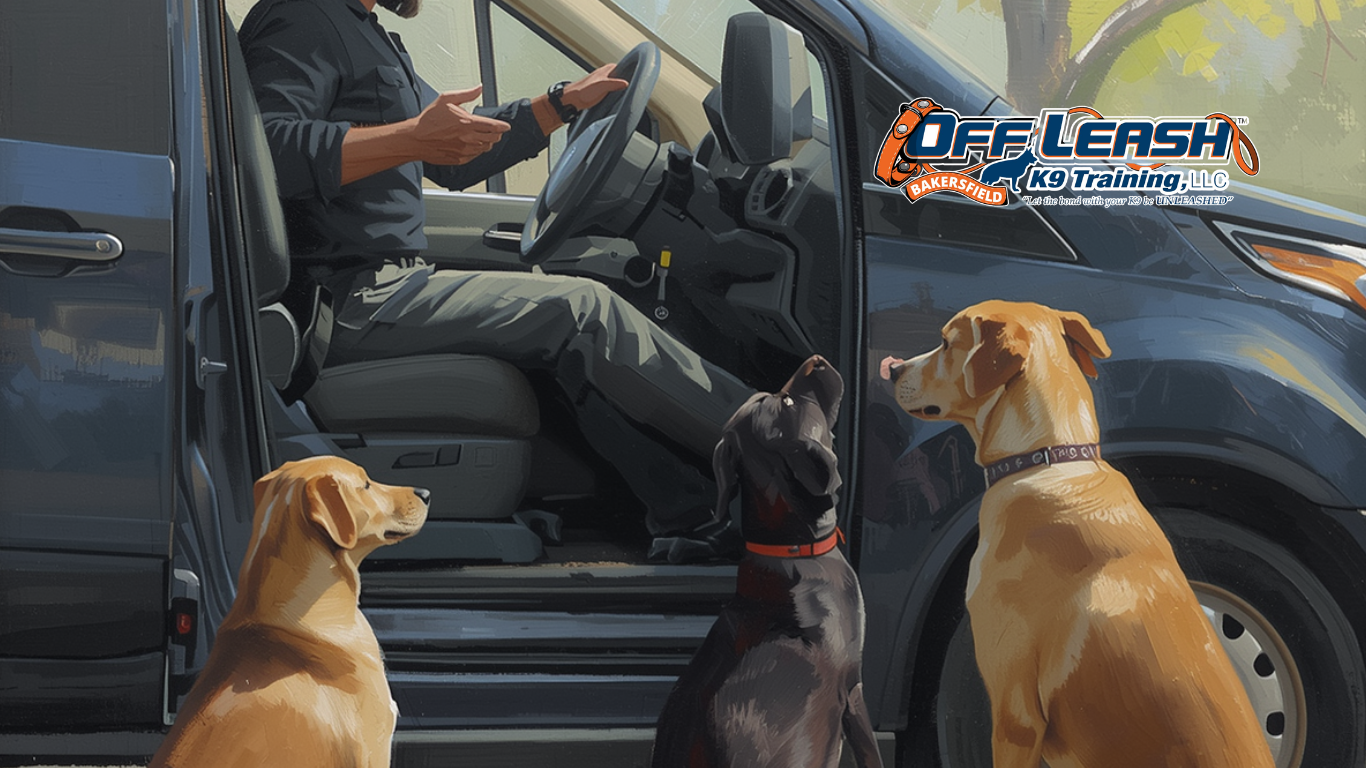
Stay Neutral: Teaching Dogs to Stay Neutral Around Delivery Drivers
Stay Neutral training is one of the most important skills dogs can learn for real-world behavior. Many dogs struggle to stay calm when delivery drivers approach the home, creating barking, lunging, whining, pacing, or overexcited reactions that quickly become daily habits. The sound of trucks, footsteps, doorbells, knocking, and sudden movement near the property can easily overstimulate dogs that lack emotional regulation and impulse control.
For many owners, delivery time turns into chaos within seconds. Dogs rush windows, charge doors, bark continuously, or become impossible to redirect once excitement starts building. While these reactions are common, they often become stronger over time if dogs repeatedly practice them without structure or guidance. Every barking episode reinforces emotional overreaction and teaches dogs that reacting intensely is part of the routine.
Teaching dogs to stay neutral around delivery drivers is not about removing awareness or preventing alert behavior completely. Instead, neutrality training focuses on helping dogs remain calm, emotionally balanced, and responsive during high-stimulation situations. Dogs learn that not every person approaching the home requires a dramatic emotional reaction.
Without proper training, repeated overreactions can create long-term frustration patterns, poor obedience, barrier reactivity, and heightened stress levels inside the home. Structured training replaces chaos with calmness while helping dogs improve focus, patience, and emotional stability around distractions.
For Bakersfield dog owners, neutrality training is especially valuable because busy neighborhoods, frequent package deliveries, outdoor activity, and active households expose dogs to constant environmental stimulation. Teaching calm behavior early helps create more reliable obedience, safer household routines, and better emotional control in everyday situations.
Key Takeaways
- Delivery drivers commonly trigger barking and territorial behavior
- Neutrality training teaches dogs emotional regulation and calmness
- Repeated overreactions can become deeply reinforced habits
- Calm behavior should be rewarded consistently
- Place training helps dogs stay settled during deliveries
- Overstimulation often drives excessive barking and lunging
- Structured routines improve impulse control and focus
- Real-world training builds more reliable behavior around distractions
Why Dogs React to Delivery Drivers
Dogs react strongly to delivery drivers for several behavioral and environmental reasons. Understanding why the behavior happens is the first step toward improving it.
Many dogs view approaching strangers near the home as potential threats. Territorial instincts naturally increase alertness when someone enters the dog’s perceived space. Delivery activity also includes unpredictable sounds such as:
- Truck engines
- Doorbells
- Knocking
- Footsteps
- Gates opening
- Package handling noises
These sudden environmental triggers immediately increase arousal levels for many dogs.
Some dogs also become frustrated because they cannot directly interact with the person outside. Barriers like doors, fences, or windows can increase emotional intensity. This frustration often appears as barking, spinning, pacing, or charging behavior.
Dogs also learn through repetition. If a dog barks every time a delivery arrives and the person eventually leaves, the dog may believe the barking successfully “removed” the threat. This reinforces the reaction repeatedly over time.
Without training, many dogs develop strong habits around delivery activity because they practice the behavior daily.
The Difference Between Alertness and Reactivity
It is completely normal for dogs to notice environmental changes. Calm awareness is not the problem. Problems begin when awareness escalates into emotional overreaction.
A neutral dog may:
- Notice the delivery
- Briefly observe the situation
- Stay responsive to commands
- Recover quickly afterward
A reactive dog may:
- Bark excessively
- Charge the door
- Ignore commands
- Pace or whine afterward
- Remain overstimulated for long periods
Neutrality training focuses on reducing emotional escalation rather than suppressing awareness completely.
Why Neutrality Matters in Dog Training
Neutrality is one of the most overlooked skills in modern dog training. Many owners focus heavily on obedience commands while ignoring emotional regulation.
A dog that can “sit” but cannot remain emotionally calm during stimulation may still struggle significantly in public or household situations.
Neutrality improves:
Impulse Control
Dogs learn how to pause and think before reacting impulsively.
Emotional Stability
Calm dogs recover faster from excitement and stress.
Household Behavior
Dogs become easier to manage during visitors, deliveries, and unexpected activity.
Public Obedience
Neutral dogs respond more reliably in distracting environments.
Confidence
Emotionally balanced dogs often feel safer and more secure overall.
How Dogs Learn Neutrality
Dogs do not naturally develop strong emotional neutrality on their own. Calmness is a learned behavior that develops through repetition, structure, and reinforcement.
Reward Calmness Early
One of the biggest mistakes owners make is only reacting once the dog becomes overly excited. Calm behavior should be acknowledged before escalation begins.
For example:
- Quiet observation gets rewarded
- Relaxed body language gets reinforced
- Settling on place earns praise
Dogs repeat behaviors that consistently lead to positive outcomes.
Teach a Reliable Place Command
Place training is extremely valuable for delivery neutrality.
A strong place command teaches dogs to:
- Stay settled during stimulation
- Avoid rushing doors
- Focus on the handler
- Practice emotional control
Dogs that understand boundaries often recover faster from environmental triggers.
Practice Controlled Exposure
Dogs improve emotional regulation gradually through exposure to manageable levels of stimulation.
Controlled setups may include:
- Simulated knocks
- Family members approaching doors
- Practice delivery scenarios
- Controlled visitor sessions
Gradual exposure helps dogs build confidence without becoming overwhelmed.
Reinforce Focus Around Triggers
Dogs that learn to disengage from triggers and re-engage with the handler develop better emotional control over time.
Focus exercises improve:
- Attention
- Responsiveness
- Recovery speed
- Impulse control
Common Mistakes That Increase Reactivity
Many owners unintentionally strengthen reactive behavior patterns.
Yelling During Barking Episodes
Dogs often interpret yelling as additional excitement or participation in the reaction.
Repeating Commands Excessively
Repeating commands teaches dogs they can ignore the first cue.
Allowing Door Charging
Each successful door-rushing episode reinforces impulsive behavior.
Inconsistent Rules
Allowing excitement sometimes but correcting it other times creates confusion.
Rewarding Excitement With Attention
Even negative attention can reinforce overstimulated behavior in some dogs.
Consistency is essential for long-term improvement.
Signs Your Dog Struggles With Neutrality
Dogs lacking emotional neutrality often display predictable patterns.
Common signs include:
- Barking at every sound
- Running to windows constantly
- Lunging at doors
- Whining during deliveries
- Difficulty settling afterward
- Hyper-fixation on outside movement
- Ignoring commands during excitement
- Pacing or spinning behavior
These behaviors usually indicate emotional overarousal rather than stubbornness.
The Role of Overstimulation
Overstimulation plays a major role in delivery-related behavior problems.
When arousal levels become too high, dogs lose the ability to think clearly and respond calmly. Excited dogs often struggle with:
- Impulse control
- Focus
- Listening skills
- Recovery time
- Emotional balance
This is why physically exhausting a dog alone does not always solve behavior issues. Mental structure and emotional regulation are equally important.
Building Calm Household Behavior
Neutrality training should become part of everyday life rather than only practiced during delivery situations.
Helpful routines include:
- Calm leash exits
- Structured greetings
- Place training during meals
- Settling exercises indoors
- Waiting at thresholds
- Calm crate routines
Daily structure improves overall emotional regulation significantly.
Delivery Driver Training in Bakersfield
For Bakersfield dog owners, neutrality training is especially valuable because of busy residential activity and outdoor stimulation. Frequent package deliveries, neighborhood traffic, visitors, and public noise create constant opportunities for dogs to rehearse reactive behavior.
Dogs living in high-stimulation environments often benefit greatly from structured real-world training that focuses on calmness rather than constant excitement.
Teaching neutrality early helps Bakersfield dogs become more adaptable, emotionally stable, and manageable both inside and outside the home.
Frequently Asked Questions
1. Why does my dog bark at delivery drivers?
Dogs often bark because of territorial instincts, sudden movement, excitement, or frustration caused by barriers like doors and windows.
2. Can dogs learn to stay calm during deliveries?
Yes. With structure, repetition, and consistent reinforcement of calm behavior, most dogs can improve significantly.
3. What is neutrality training for dogs?
Neutrality training teaches dogs to remain emotionally balanced and calm around distractions without excessive reactions.
4. Should I punish barking behavior?
Harsh punishment can increase frustration, anxiety, or excitement. Structured guidance and calm reinforcement are usually more effective.
5. Why does my dog stay excited after the delivery leaves?
Some dogs struggle to regulate arousal levels and remain overstimulated even after the trigger disappears.
6. Does place training help with delivery behavior?
Yes. Place training teaches dogs to settle calmly and avoid impulsive reactions near doors.
7. How long does neutrality training take?
Progress varies depending on the dog’s history, temperament, and consistency of training, but regular practice creates steady improvement over time.
Conclusion
Teaching dogs to stay neutral around delivery drivers is one of the most valuable real-world skills owners can develop. Rather than reacting impulsively to every sound, knock, or visitor, dogs learn how to remain calm, emotionally balanced, and responsive during stimulating situations.
Neutrality training is not about suppressing a dog’s awareness. It is about helping dogs build emotional regulation, impulse control, and confidence while reducing frustration-based behavior. Dogs that learn calmness around household triggers often become easier to manage in many other areas of life as well.
With consistency, structure, and proper real-world exposure, owners can replace chaos and overreaction with calmer, more reliable behavior. For Bakersfield dog owners especially, neutrality training creates safer, more peaceful households while improving long-term obedience and emotional stability in everyday environments.
"*" indicates required fields