Puppy Biting Help Bakersfield | Stop Puppy Biting Behavior Fast
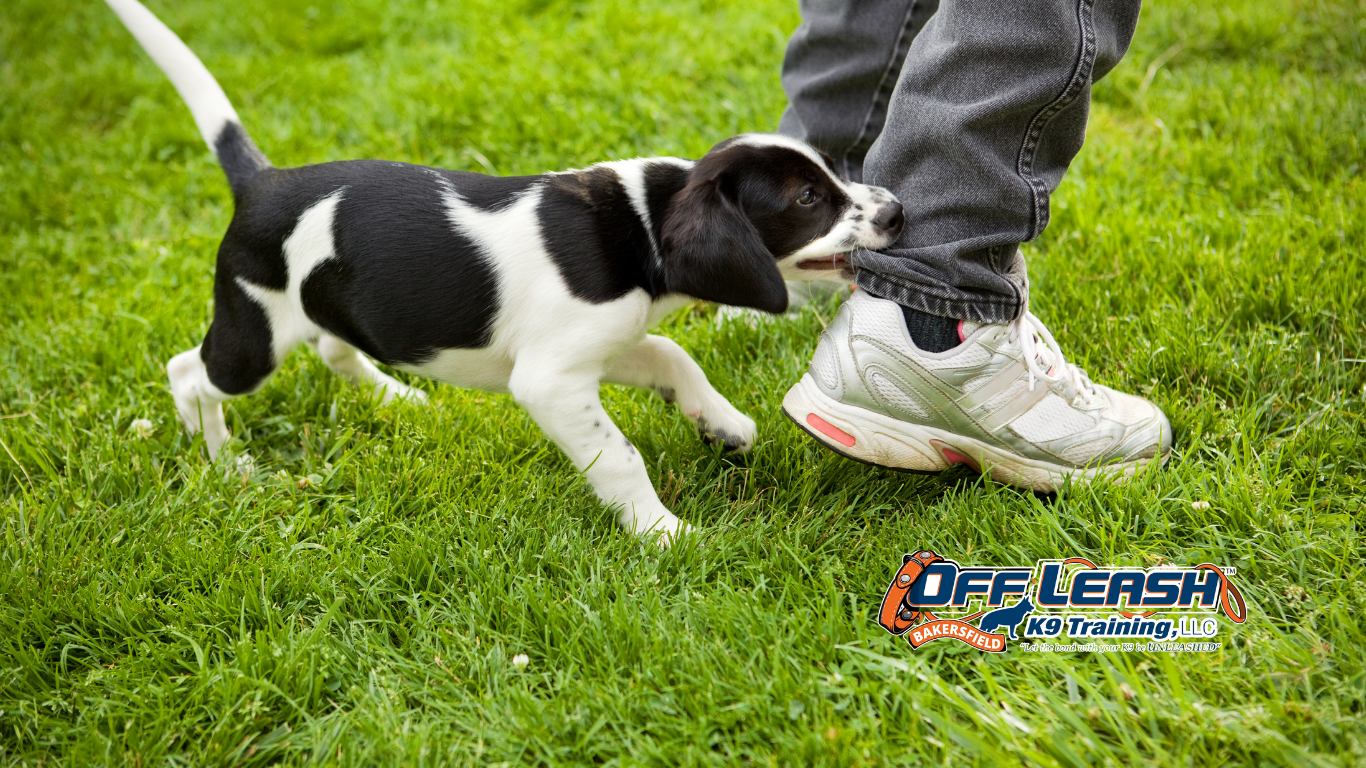
Puppy biting is one of the most common challenges new dog owners face, especially during the first several months of development. While nipping and mouthing are completely natural puppy behaviors, many owners become frustrated when biting becomes excessive, painful, or difficult to control. Puppies use their mouths to explore the world, interact during play, and cope with teething discomfort, but without proper guidance, these behaviors can quickly become overwhelming inside the home.
Most puppies bite during moments of excitement, play, frustration, teething, or overstimulation. In many cases, biting intensifies when puppies become overtired or overly aroused and struggle to calm themselves down. This is why some puppies seem calm one moment and suddenly begin jumping, nipping, or grabbing clothing the next. Without structure and boundaries, puppies may continue practicing rough behavior that becomes more difficult to manage as they grow larger and stronger.
Early puppy training plays a major role in preventing long-term behavior problems. Teaching puppies appropriate play behavior, impulse control, emotional regulation, and calmness helps create a more balanced and responsive adult dog. Puppies that learn boundaries early are often easier to manage in public settings, around visitors, and during everyday routines at home.
For Bakersfield puppy owners, training becomes even more important due to busy environments, outdoor distractions, public outings, and active households. Structured puppy training can help stop unwanted biting behaviors while building confidence, focus, obedience, and emotional stability from an early age. Addressing puppy biting early creates safer interactions, less frustration, and a stronger relationship between owners and their dogs.
Key Takeaways
- Puppy biting is a normal developmental behavior but still requires guidance
- Overstimulation and excitement often increase biting intensity
- Puppies need structure, consistency, and boundaries to learn appropriate behavior
- Calm redirection works more effectively than punishment or yelling
- Early training helps prevent future obedience and behavior problems
- Teaching emotional regulation is just as important as teaching commands
- Structured puppy training improves impulse control and focus
- Consistent routines help puppies settle more easily inside the home
Why Puppies Bite
Puppies naturally explore the world with their mouths. Biting, mouthing, and chewing behaviors commonly happen because puppies are still learning how to interact appropriately with people and their environment. These behaviors are especially common during teething phases when discomfort encourages puppies to chew and bite more frequently.
Common reasons puppies bite include:
- Teething discomfort
- Play excitement
- Lack of impulse control
- Overtiredness
- Overstimulation
- Attention-seeking behavior
- Frustration during play
- Excess energy without proper outlets
Many puppies bite more intensely when they become overly excited, frustrated, or unable to settle themselves calmly. This is why biting often increases during chaotic play sessions or busy household activity.
Redirect to Appropriate Toys
When puppies begin biting hands, clothing, furniture, or shoes, immediately redirect them toward a chew toy or appropriate object. Consistent redirection helps puppies learn what they are allowed to bite and chew.
Avoid Encouraging Rough Play
Rough wrestling, chasing hands, or fast movements can increase excitement and unintentionally encourage harder biting behaviors. Calm interactions create better long-term habits.
Reward Calm Behavior
Puppies learn faster when calm behavior is reinforced consistently. Rewarding relaxed behavior teaches puppies that calmness earns attention and rewards.
Use Short Training Sessions
Short, structured training sessions help puppies focus while preventing overstimulation. Young puppies have limited attention spans, so shorter sessions are often more effective.
Teach Boundaries Early
Prioritize Rest and Routine
Many biting episodes happen because puppies are overtired. Consistent naps, routines, and quiet time help reduce overstimulation and improve overall behavior.
Common Puppy Biting Mistakes
Many owners accidentally reinforce biting behavior without realizing it. Inconsistent responses can confuse puppies and make unwanted behaviors continue longer.
Common mistakes include:
- Playing too roughly
- Allowing inconsistent household rules
- Encouraging chasing games
- Rewarding excitement unintentionally
- Punishing puppies harshly
- Ignoring overstimulation signs
- Allowing biting during play sometimes but correcting it other times
Consistency and structure are essential for long-term improvement and clearer communication.
Puppy Biting and Overstimulation
Many puppies bite more when they become tired, overstimulated, frustrated, or unable to regulate excitement levels. Puppies often struggle to calm themselves once excitement escalates too high.
Common signs of overstimulation include:
- Zoomies
- Excessive barking
- Jumping constantly
- Ignoring commands
- Intense mouthing
- Difficulty settling
- Grabbing clothing or leash biting
Teaching puppies how to calm down is just as important as teaching obedience commands. Calmness should become part of everyday training routines rather than only focusing on physical exercise.
Puppy Biting Help in Bakersfield
Busy environments, outdoor distractions, public outings, and high-energy households in Bakersfield can increase puppy excitement levels significantly. Public parks, outdoor patios, shopping centers, and neighborhood activity often expose puppies to constant stimulation that can trigger excessive biting or hyper behavior if they lack emotional control.
Structured puppy training helps Bakersfield owners teach calm behavior, boundaries, impulse control, and emotional regulation before small puppy behaviors become larger long-term problems. Early social exposure combined with clear structure creates more stable, confident, and responsive adult dogs.
Puppies that receive proper training early often adapt better to real-world environments, public settings, and daily routines both inside and outside the home.
Frequently Asked Questions
1. Is puppy biting normal?
2. At what age do puppies stop biting?
Most puppies improve significantly as they mature and receive consistent structure, boundaries, and training guidance.
3. Should I punish my puppy for biting?
Harsh punishment can increase fear, stress, or excitement. Calm redirection and structured guidance are usually more effective.
4. Why does my puppy bite more when excited?
Excitement and overstimulation reduce impulse control, causing puppies to react more physically through jumping, mouthing, and biting.
5. Can training stop puppy biting completely?
Yes. With consistency, structure, proper outlets, and emotional regulation training, most puppies learn appropriate behavior successfully.
Conclusion
Puppy biting is a normal stage of development, but it should not be ignored or allowed to continue without guidance. Early structure, calm leadership, consistency, and proper training help puppies develop better emotional control, impulse regulation, and appropriate social behavior. The earlier owners begin teaching boundaries and calmness, the easier it becomes to prevent long-term behavior issues from developing later in life.
For Bakersfield puppy owners, addressing biting behaviors early creates calmer, more confident dogs that respond better both at home and in busy public environments. Structured puppy training not only reduces unwanted biting but also builds the foundation for better obedience, stronger focus, and a healthier relationship between dogs and their owners.