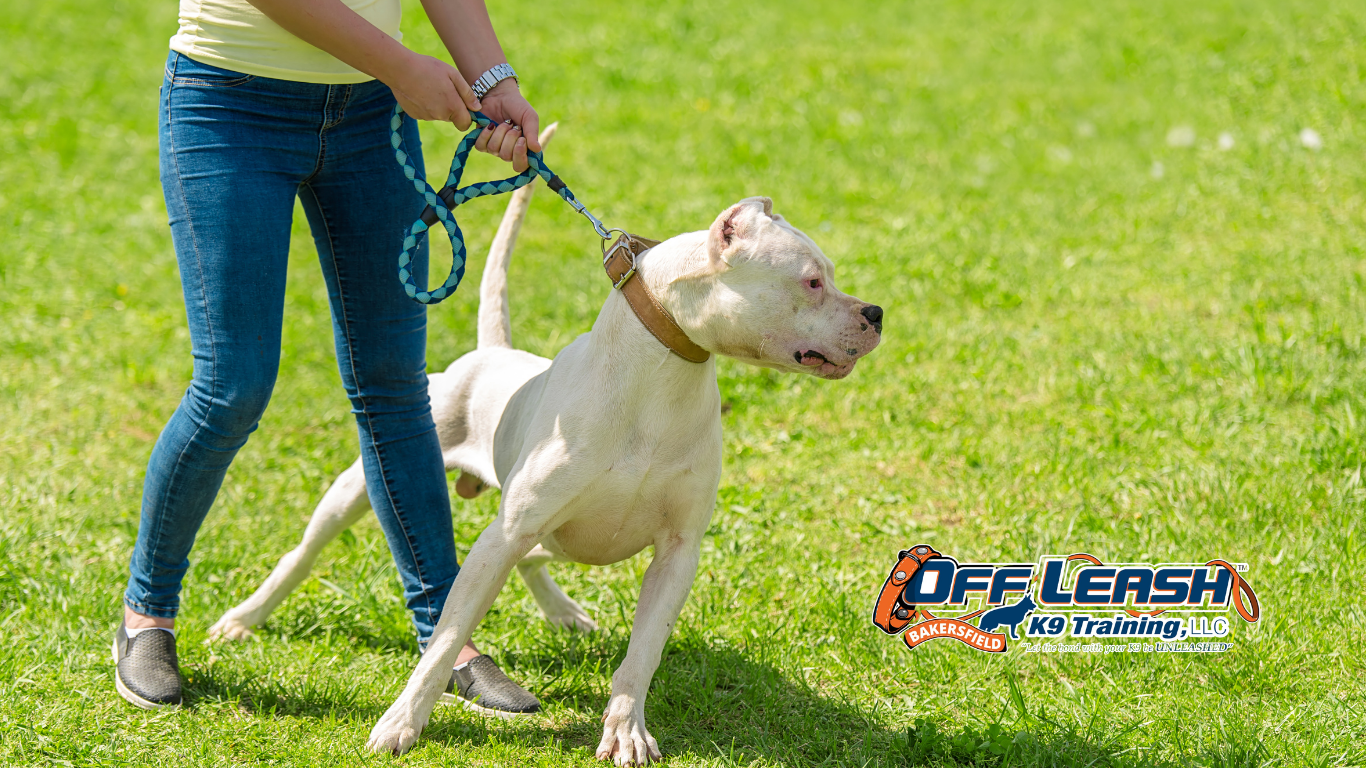
Leash Pulling Problems: Bakersfield Dog Trainer for Leash Pulling Problems
Leash Pulling Problems are one of the most common frustrations dog owners experience during daily walks. What should be a relaxing and enjoyable activity often becomes stressful, exhausting, and difficult to manage. Many dogs begin pulling the moment they leave the house, dragging owners down sidewalks, lunging toward distractions, zig-zagging across paths, or becoming completely overstimulated outdoors.
For some owners, leash pulling starts when dogs are still puppies and slowly becomes worse over time. Others notice pulling behavior developing suddenly when dogs become more confident, energetic, or reactive in public environments. Regardless of when it starts, leash pulling can quickly turn walks into chaotic experiences that create frustration for both the owner and the dog.
Many people assume dogs pull because they are stubborn, dominant, or intentionally disobedient. In reality, leash pulling is often driven by excitement, emotional arousal, environmental stimulation, frustration, or lack of structure during walks. Dogs naturally move toward things they find rewarding. If pulling successfully gets them closer to smells, people, dogs, movement, or exploration, the behavior becomes reinforced repeatedly.
Every walk becomes practice. If dogs pull every day without clear guidance, the behavior slowly becomes automatic. Over time, many dogs stop paying attention to the handler completely and become hyper-focused on the environment instead.
Busy outdoor environments throughout Bakersfield can make leash behavior especially challenging. Public parks, crowded sidewalks, outdoor shopping areas, patios, traffic, bicycles, children, and other dogs create constant stimulation that can overwhelm dogs lacking emotional regulation and impulse control.
This is why leash pulling is rarely just a physical issue. It is often an emotional and behavioral issue as well.
Structured leash training focuses on helping dogs remain calm, engaged, and emotionally balanced during walks instead of becoming overstimulated by the environment. Dogs learn that walking calmly creates freedom and progress, while pulling no longer controls movement.
For Bakersfield dog owners, improving leash manners creates safer walks, better obedience, reduced stress, and a much stronger relationship between owner and dog.
Key Takeaways
- Leash pulling is usually caused by excitement and overstimulation
- Dogs repeat pulling because the behavior often gets rewarded
- Emotional regulation is critical for better leash manners
- Structured walking routines improve focus and obedience
- Calm behavior should be rewarded consistently
- Real-world distractions challenge impulse control
- Consistency is essential during leash training
- Loose leash walking creates safer and calmer walks
- Structured training improves communication between dogs and owners
- Real-world exposure helps dogs develop reliability outdoors
Why Dogs Develop Leash Pulling Problems
Dogs naturally move toward things they enjoy. Walks provide constant rewards including:
- New smells
- Movement
- Exploration
- Social interaction
- Wildlife
- Other dogs
- Open space
- Excitement and stimulation
When a dog pulls and successfully reaches something rewarding, the pulling behavior becomes reinforced automatically.
For example:
- Pulling reaches a smell faster
- Pulling reaches another dog
- Pulling increases movement speed
- Pulling reaches a person for attention
- Pulling leads to exploration
The dog learns that leash tension works.
Over time, repeated pulling becomes a deeply practiced habit that feels normal to the dog.
Excitement and Emotional Arousal
Many leash pulling problems are rooted in emotional excitement.
Dogs often become highly stimulated before walks even begin. Some dogs start spinning, whining, jumping, barking, or pacing the moment they see the leash.
Once excitement levels rise too high, the dog’s ability to think clearly and respond calmly decreases significantly.
An overstimulated dog often struggles with:
- Listening
- Focus
- Impulse control
- Emotional regulation
- Calm decision-making
This is why many dogs seem to “forget” training outside the home.
The issue is often not knowledge.
The issue is emotional state.
Why Dogs Pull More Outside Than Indoors
Many owners become confused when dogs behave well inside but pull nonstop outdoors.
Outdoor environments contain dramatically more stimulation.
Outside distractions may include:
- Cars
- People
- Other dogs
- Smells
- Noise
- Birds and squirrels
- Open space
- Sudden movement
- Environmental unpredictability
These distractions increase emotional arousal levels quickly.
Dogs lacking real-world focus often struggle to stay engaged with the handler once environmental stimulation takes over.
This is why leash training must happen in real-world environments rather than only indoors.
The Hidden Reinforcement Behind Pulling
Every time a dog pulls and continues moving forward, the behavior gets reinforced.
Dogs learn through consequences.
If pulling creates movement, exploration, and rewards, dogs naturally repeat the behavior.
This creates a cycle:
- Dog pulls
- Dog moves forward
- Pulling gets rewarded
- Dog pulls again
Over time, dogs become conditioned to believe that leash tension controls the walk.
Common Signs of Leash Pulling Problems
Dogs struggling with leash manners often display behaviors such as:
- Constant tension on the leash
- Lunging toward dogs or people
- Pulling harder near distractions
- Zig-zagging during walks
- Ignoring commands outdoors
- Hyper-fixation on smells
- Difficulty calming down
- Excessive panting during walks
- Jumping or spinning behavior
- Barking while walking
These behaviors usually indicate overstimulation and poor emotional regulation rather than stubbornness.
Why Traditional Walks Sometimes Make Pulling Worse
Many owners unknowingly increase pulling behavior through inconsistent walking habits.
Common issues include:
- Allowing dogs to lead constantly
- Walking during extreme excitement
- Providing unlimited freedom without structure
- Repeating commands excessively
- Inconsistent leash rules
- Walking too quickly during arousal
Dogs need clarity.
Without consistent structure, leash communication becomes confusing.
The Importance of Structured Walks
Structured walks teach dogs that calmness and focus create forward movement.
A structured walk includes:
- Calm exits from the home
- Clear leash expectations
- Controlled pace
- Focus on the handler
- Boundaries around pulling
- Consistent communication
Structure helps lower emotional arousal while increasing engagement with the owner.
Calmness Before the Walk Matters
One of the most overlooked parts of leash training happens before the walk even begins.
Many dogs become overexcited before leaving the house.
If dogs are already spinning, barking, whining, or lunging indoors, pulling outside often becomes inevitable.
Teaching calmness before movement begins is extremely important.
Dogs should learn:
- Calm leash preparation
- Controlled doorway behavior
- Waiting patiently
- Settling before exiting
Starting walks calmly creates a better emotional foundation.
Loose Leash Walking vs Perfect Heel
Many owners confuse loose leash walking with formal heel training.
Loose leash walking simply means:
- No constant pulling
- Controlled leash tension
- Better focus
- Calm walking behavior
Dogs do not need to maintain perfect competition-style heel position at all times.
The goal is calm, manageable behavior.
Why Emotional Regulation Matters During Walks
Many leash issues are emotional problems rather than obedience problems.
Dogs that become overwhelmed emotionally often lose the ability to think clearly.
This is why emotional regulation training matters so much.
Dogs need to learn:
- How to recover from excitement
- How to disengage from distractions
- How to settle during stimulation
- How to remain focused under pressure
Teaching calmness changes behavior more effectively than constant correction alone.
How Structured Leash Training Helps
Structured leash training focuses on creating emotional balance and engagement.
Build Engagement With the Handler
Dogs that pay attention to their owner walk more calmly.
Engagement exercises improve:
- Focus
- Responsiveness
- Communication
- Emotional regulation
Reward Calm Walking
Calm leash behavior should be reinforced consistently.
Dogs repeat behaviors that lead to rewards.
Practice Around Real Distractions
Dogs improve reliability by practicing around:
- People
- Dogs
- Traffic
- Parks
- Outdoor shopping areas
- Public environments
Create Clear Boundaries
Consistent leash expectations reduce confusion.
Dogs should understand:
- Pulling does not create freedom
- Calmness creates movement
- Focus creates rewards
Common Mistakes During Leash Training
Many owners accidentally strengthen leash pulling without realizing it.
Repeating Commands Constantly
Repeating commands teaches dogs they can ignore the first cue.
Inconsistent Rules
Allowing pulling sometimes but correcting it other times creates confusion.
Overstimulating Dogs Before Walks
High excitement before walks often predicts poor leash behavior.
Rushing Progress Too Quickly
Dogs need gradual exposure to distractions.
Using Walks Only for Physical Exercise
Mental structure matters just as much as physical activity.
Why Dogs Pull Harder Around Other Dogs
Other dogs create strong emotional reactions for many dogs.
Some dogs pull because of:
- Excitement
- Frustration
- Social anticipation
- Fear or anxiety
- Reactivity
Dogs lacking neutrality around other dogs often struggle significantly during walks.
Teaching neutrality and emotional regulation helps reduce pulling intensity.
The Role of Overstimulation
Overstimulation is one of the biggest causes of leash pulling.
Dogs that become emotionally overloaded often display:
- Pulling
- Barking
- Lunging
- Hyper-fixation
- Poor listening
- Frustration behaviors
This is why calmness training is critical.
Exercise alone does not automatically create emotional balance.
Why Real-World Training Is Essential
Many dogs behave differently outdoors because real-world environments challenge emotional stability.
Training indoors is helpful, but dogs also need practice around:
- Noise
- Movement
- Public distractions
- New environments
- Environmental pressure
Real-world exposure teaches dogs how to remain calm and responsive despite stimulation.
Bakersfield Leash Training Challenges
Bakersfield provides many environmental distractions that challenge leash behavior.
Common triggers include:
- Busy sidewalks
- Outdoor events
- Public parks
- Shopping centers
- Patio restaurants
- Warm weather stimulation
- Neighborhood activity
- Other dogs and pedestrians
Dogs that lack structure often become overwhelmed in these environments.
Structured real-world training helps Bakersfield dogs improve focus, calmness, and emotional regulation during walks.
The Importance of Consistency
Consistency is one of the most important parts of successful leash training.
Dogs learn patterns quickly.
If leash expectations constantly change, dogs struggle to understand what behavior is expected.
Consistency includes:
- Clear leash rules
- Calm communication
- Repetition
- Structured routines
- Consistent rewards
The clearer the communication becomes, the faster dogs improve.
Building Better Walking Habits
Strong leash manners develop through daily habits.
Helpful routines include:
- Calm exits from doors
- Structured leash preparation
- Rewarding focus regularly
- Practicing patience before movement
- Keeping dogs emotionally balanced
- Ending walks calmly
Small habits create major long-term improvements.
Why Pulling Creates Frustration for Owners
Leash pulling does not only affect dogs.
Owners often experience:
- Physical strain
- Frustration
- Embarrassment
- Reduced confidence
- Stress during walks
- Avoidance of public outings
Improving leash behavior creates a more enjoyable experience for both dog and owner.
Leash Pulling and Reactivity
Some leash pulling cases involve deeper behavioral issues.
Dogs that bark, lunge, or explode emotionally around triggers may be struggling with:
- Frustration reactivity
- Fear reactivity
- Overarousal
- Poor emotional control
In these situations, emotional regulation becomes even more important than obedience commands.
Why Dogs Need Neutrality Outdoors
Neutrality means dogs can notice the environment without overreacting emotionally.
Neutral dogs:
- Observe calmly
- Recover quickly
- Stay responsive
- Avoid hyper-fixation
- Maintain emotional balance
Neutrality training dramatically improves leash behavior.
The Benefits of Better Leash Manners
Improved leash behavior creates many long-term benefits.
Benefits include:
- Safer walks
- Better obedience
- Reduced stress
- Improved public behavior
- More confidence for owners
- Better emotional regulation
- Improved focus around distractions
- Easier public outings
Leash training improves much more than walking alone.
Frequently Asked Questions
1. Why does my dog pull on leash so much?
2. Can leash pulling be fixed?
Yes. Consistent structure, emotional regulation training, and leash practice can improve pulling significantly.
3. Do harnesses stop leash pulling?
Harnesses may improve physical control, but training and emotional regulation are still necessary for long-term success.
4. Why does my dog pull more outside than inside?
Outdoor environments contain more stimulation, distractions, smells, and movement that increase excitement levels.
5. How long does leash training take?
Every dog learns differently, but consistent practice and clear communication usually create steady improvement over time.
6. Should I let my dog walk in front of me?
Position itself is less important than emotional control, focus, and leash manners.
7. Why does my dog pull harder around other dogs?
Many dogs become emotionally overstimulated, frustrated, or overexcited around other dogs.
8. Can overstimulation cause leash pulling?
Yes. Overstimulated dogs often struggle with focus, impulse control, and calm walking behavior.
9. Why does my dog ignore commands during walks?
Environmental distractions often overpower focus when dogs lack real-world obedience training.
10. What helps dogs stay calmer during walks?
Structure, emotional regulation exercises, consistent expectations, and real-world training help dogs remain calmer outdoors.
Conclusion
Leash pulling problems can make daily walks stressful, frustrating, and exhausting for both dogs and owners. What begins as excitement or curiosity often develops into a deeply reinforced habit when dogs repeatedly learn that pulling creates movement, access, and rewards.
Most leash pulling behaviors are not caused by stubbornness or dominance. They are usually connected to emotional arousal, overstimulation, poor impulse control, and lack of structure during walks. Dogs that become overwhelmed by environmental stimulation often struggle to stay focused, calm, and responsive outdoors.
Structured leash training helps dogs build emotional regulation, engagement, and better communication with their handler. Instead of reacting impulsively to every distraction, dogs learn how to walk calmly, remain emotionally balanced, and respond more reliably in public environments.
For Bakersfield dog owners, leash training becomes especially important because busy outdoor settings create constant opportunities for overstimulation. Public parks, sidewalks, shopping centers, neighborhood activity, and crowded environments challenge dogs that lack structure and focus.
With consistency, clear expectations, calm leadership, and real-world practice, leash pulling can improve significantly over time. Dogs that develop better leash manners often become easier to manage not only during walks but also in many other areas of life.
Improving leash behavior creates safer outings, calmer public behavior, stronger obedience, and a more enjoyable relationship between dogs and their owners. Structured training gives dogs the tools they need to remain focused, balanced, and successful in real-world environments.
"*" indicates required fields