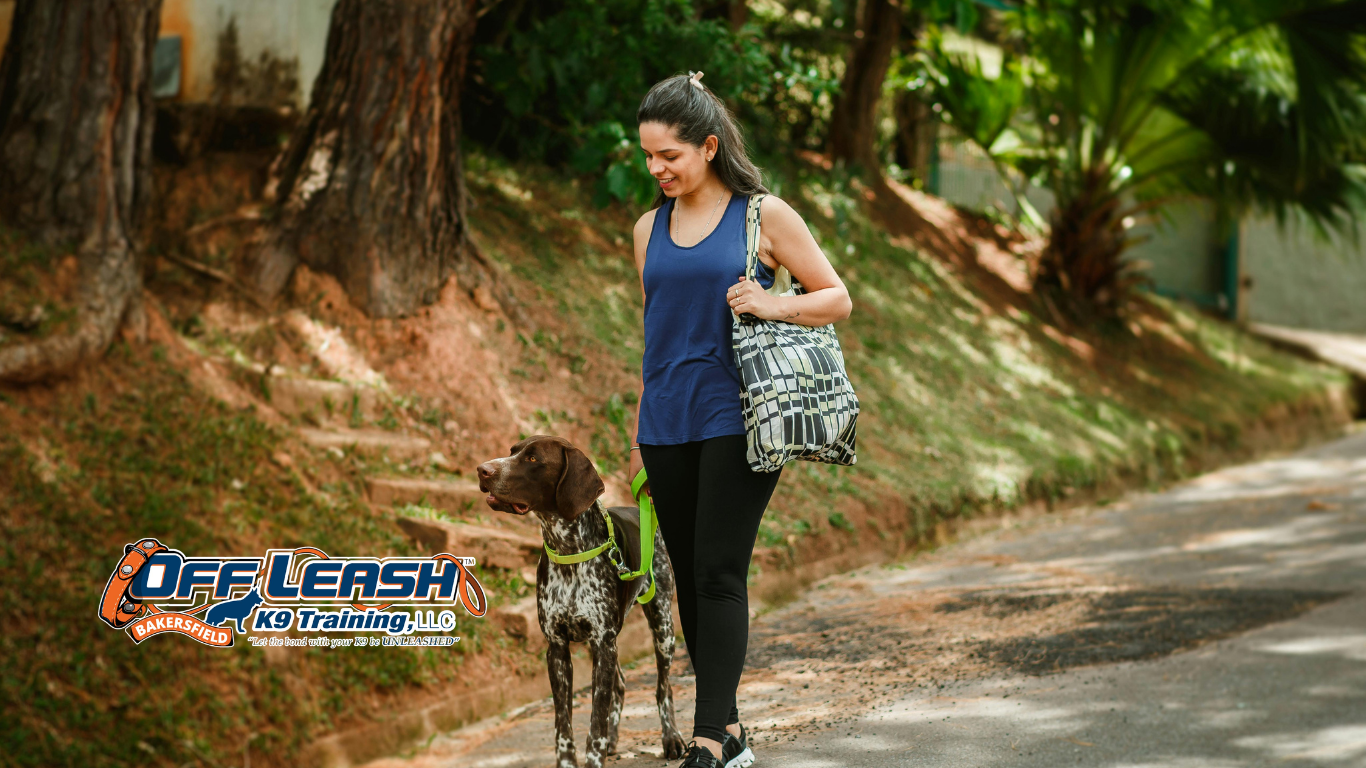
Calm Walking: How Dogs Learn Calm Walking Behavior
Dogs that learn calm walking behavior can move through busy environments without becoming emotionally overwhelmed. Many dog owners believe walking politely on a leash is something dogs naturally know how to do. In reality, calm walking is a learned behavior that requires training, emotional regulation, impulse control, consistency, and real-world practice.
For many dogs, walks are the most exciting part of the day. The moment the leash comes out, excitement levels begin to rise. Dogs start anticipating smells, people, other dogs, movement, sounds, and endless opportunities to explore. While enthusiasm is completely normal, excessive excitement often creates many of the leash problems owners struggle with every day.
Common walking problems include:
- Pulling on leash
- Barking at distractions
- Lunging toward dogs
- Jumping during walks
- Ignoring commands
- Zig-zagging constantly
- Reactivity around people
- Hyper-fixation on smells
- Difficulty settling afterward
A dog that pulls toward another dog may fully understand the heel command. A dog that lunges toward a squirrel may know exactly what “leave it” means. The challenge is not necessarily a lack of knowledge. The challenge is that excitement, curiosity, frustration, or overstimulation have become stronger than the dog’s ability to stay calm and make good decisions.
This is why calm walking is about much more than loose leash walking.
Calm walking involves:
- Emotional balance
- Focus
- Engagement
- Patience
- Self-control
- Neutrality
- Confidence
- Reliable decision-making
Dogs that learn calm walking behavior can move through busy environments without becoming emotionally overwhelmed. They can observe distractions without reacting to them. They can enjoy exploring the world while still maintaining a connection with their handler.
Busy environments throughout Bakersfield make calm walking especially important. Public parks, sidewalks, shopping centers, apartment complexes, outdoor restaurants, school zones, and neighborhood events constantly expose dogs to distractions. Dogs that lack emotional regulation often struggle in these environments because every distraction becomes a trigger for excitement or frustration.
The good news is that calm walking can be taught. Through structured training, dogs learn how to process the world more calmly, stay connected to their handler, and make better decisions during walks.
Key Takeaways
- Calm walking is a learned skill, not a natural behavior
- Emotional regulation affects leash manners significantly
- Pulling often comes from excitement rather than disobedience
- Dogs need practice remaining calm around distractions
- Impulse control improves walking behavior dramatically
- Structure and consistency create better leash manners
- Focus and engagement reduce pulling and reactivity
- Real-world training builds reliable walking behavior
- Calm walking improves confidence and obedience
- Better walking habits create more enjoyable outings
What Is Calm Walking?
A dog demonstrating calm walking behavior can:
- Walk politely on leash
- Stay engaged with the handler
- Ignore unnecessary distractions
- Remain emotionally stable
- Recover quickly from excitement
- Respond to commands consistently
Calm walking does not mean the dog is robotic.
The dog can still:
- Explore
- Sniff
- Observe the environment
- Enjoy the walk
The difference is that the dog remains mentally connected and emotionally balanced throughout the experience.
Why Walking Is Difficult for Many Dogs
Walking seems simple from a human perspective.
For dogs, however, walks are highly stimulating experiences.
During a walk, dogs encounter:
- Smells
- Wildlife
- Other dogs
- Moving vehicles
- Children
- Food scents
- Noise
- New environments
Each of these distractions competes for attention.
Without training, many dogs naturally prioritize environmental stimulation over engagement with their handler.
Why Dogs Pull on Leash
Pulling is one of the most common leash problems.
Many owners mistakenly believe dogs pull because they are dominant or stubborn.
In reality, dogs usually pull because:
- They are excited
- They want to explore
- They see something interesting
- They smell something rewarding
- They want faster access to a destination
Pulling is often self-rewarding.
Every time a dog pulls and successfully moves closer to what they want, the behavior becomes reinforced.
The Pulling Cycle
Many dogs unintentionally learn this pattern:
- See something interesting
- Pull toward it
- Reach it successfully
- Pulling gets rewarded
Over time, pulling becomes automatic.
The dog learns that leash tension helps achieve goals.
Emotional Regulation and Walking Behavior
Many leash problems are emotional regulation problems first.
Dogs that struggle emotionally often:
- Pull harder
- Bark more frequently
- React faster
- Ignore commands
- Become overstimulated
Dogs that regulate emotions effectively often:
- Stay calmer
- Focus longer
- Recover faster
- Walk more politely
- Respond consistently
Emotional balance is one of the foundations of calm walking.
Why Excitement Creates Walking Problems
Many owners view excitement as harmless.
However, excessive excitement often creates poor leash manners.
Excited dogs commonly:
- Pull constantly
- Bark
- Jump
- Ignore commands
- Become hyper-focused on distractions
Excitement itself is not bad.
The problem occurs when excitement becomes stronger than self-control.
Why Calmness Improves Walking
Calm dogs process information more effectively.
When dogs remain emotionally balanced, they can:
- Listen better
- Focus longer
- Make better decisions
- Ignore distractions
- Respond consistently
Calmness creates reliability.
The Importance of Focus
Focus is one of the most valuable walking skills.
Dogs that maintain focus can:
- Ignore distractions
- Stay connected to the handler
- Walk politely
- Recover quickly from excitement
Focus acts as a bridge between obedience and real-world reliability.
Why Engagement Matters
Engagement means the dog chooses to pay attention to the handler despite distractions.
Engaged dogs often:
- Check in frequently
- Respond quickly
- Stay connected
- Recover from distractions faster
Engagement dramatically improves calm walking behavior.
Why Outdoor Environments Challenge Dogs
Indoor environments are predictable.
Outdoor environments contain:
- Noise
- Movement
- Smells
- Unpredictability
- Social interaction
Each distraction increases emotional arousal.
Dogs must learn how to remain calm despite these challenges.
Why Smells Distract Dogs
Dogs experience the world primarily through scent.
Outdoor smells provide information about:
- Other dogs
- Wildlife
- Food
- Human activity
- Environmental changes
Strong smells can easily overpower focus.
This is why many dogs stop listening outdoors.
Why Dogs React to Other Dogs
Other dogs create powerful emotional stimulation.
Dogs often become:
- Excited
- Frustrated
- Anxious
- Reactive
Without training, these emotions commonly lead to:
- Pulling
- Barking
- Lunging
- Hyper-fixation
Calm walking requires emotional neutrality around other dogs.
Why Neutrality Matters
Neutrality means observing distractions without emotional overreaction.
Neutral dogs:
- Notice distractions
- Stay calm
- Continue walking
- Maintain focus
Neutrality is often more valuable than socialization alone.
Why Impulse Control Is Critical
Impulse control helps dogs resist immediate reactions.
Dogs with strong impulse control can:
- Ignore distractions
- Wait patiently
- Stay calm
- Walk politely
Impulse control directly improves walking behavior.
Common Signs of Poor Impulse Control
Examples include:
- Pulling
- Jumping
- Barking
- Lunging
- Chasing movement
- Ignoring commands
These behaviors often improve when self-control improves.
Why Structured Walks Work
Structure creates predictability.
Structured walks often include:
- Calm leash preparation
- Controlled exits
- Consistent walking expectations
- Clear boundaries
- Engagement exercises
Structure reduces emotional chaos.
Why Routine Improves Walking Behavior
Dogs thrive on predictable routines.
Routine helps reduce:
- Anxiety
- Overexcitement
- Confusion
Predictable walking habits often improve emotional stability.
Why Puppies Need Calm Walking Skills Early
Puppies benefit greatly from early leash training.
Early training improves:
- Confidence
- Focus
- Emotional regulation
- Public behavior
Puppies that learn calm walking early often become easier adult dogs.
Why Adolescence Makes Walking Harder
Adolescent dogs commonly experience:
- Increased excitement
- More independence
- Reduced focus
- Stronger environmental interest
This phase often challenges leash manners temporarily.
Consistency becomes especially important during adolescence.
Why Overstimulation Leads to Poor Walks
Overstimulated dogs often:
- Pull harder
- Bark more
- Ignore commands
- React emotionally
Signs of overstimulation include:
- Excessive panting
- Hyperactivity
- Difficulty settling
- Constant environmental scanning
Managing arousal levels improves walking behavior dramatically.
The Role of Confidence
Confident dogs often walk more calmly.
Confident dogs:
- Recover faster from surprises
- Handle distractions better
- Stay emotionally balanced
Confidence and calm walking frequently develop together.
How Dogs Learn Calm Walking
Calm walking develops through repetition.
Dogs learn through:
- Consistency
- Structure
- Reinforcement
- Real-world exposure
Progress happens gradually.
Step 1: Build Engagement
Teach dogs that paying attention to the handler is rewarding.
Engagement creates the foundation for calm walking.
Step 2: Reward Calm Behavior
Calm behavior should be reinforced consistently.
Examples include:
- Walking politely
- Checking in voluntarily
- Ignoring distractions
Dogs repeat behaviors that produce positive outcomes.
Step 3: Improve Impulse Control
Exercises like:
- Sit
- Stay
- Place
- Wait
- Leave it
help improve patience and emotional regulation.
Step 4: Practice Around Distractions
Dogs improve by working around:
- People
- Dogs
- Movement
- Noise
- Environmental stimulation
Gradual exposure builds confidence and reliability.
Step 5: Increase Real-World Difficulty
As skills improve, dogs can practice in:
- Parks
- Sidewalks
- Shopping centers
- Outdoor events
- Public spaces
Real-world training creates dependable behavior.
Why Real-World Training Matters
Dogs do not automatically generalize obedience.
A dog that behaves perfectly at home may struggle outdoors.
Training must occur in the environments where reliability is expected.
Common Walking Mistakes Owners Make
Many owners unintentionally reinforce poor behavior.
Examples include:
- Allowing pulling
- Repeating commands constantly
- Walking in overwhelming environments too soon
- Rewarding excitement unintentionally
- Inconsistent rules
Consistency creates better outcomes.
Why Mental Exercise Improves Walking
Mental stimulation helps reduce impulsive behavior.
Helpful activities include:
- Obedience work
- Puzzle toys
- Scent games
- Engagement exercises
Mental exercise often improves emotional regulation.
Why Recovery Speed Matters
Emotionally balanced dogs recover quickly after excitement.
Recovery means returning to a calm state after stimulation.
Dogs with poor recovery often:
- Stay excited
- Continue scanning
- Remain reactive
Faster recovery indicates improving emotional regulation.
Calm Walking in Bakersfield
Busy Bakersfield environments provide many opportunities for dogs to practice calm walking.
Common training locations include:
- Public parks
- Neighborhood sidewalks
- Outdoor shopping centers
- Apartment complexes
- Community events
Structured Bakersfield dog training helps improve:
- Loose leash walking
- Emotional regulation
- Focus
- Public obedience
- Confidence around distractions
Long-Term Benefits of Calm Walking
Dogs with calm walking skills often become:
- Easier to handle
- More confident
- Less reactive
- More adaptable
- Better companions
Walking becomes more enjoyable for both the dog and owner.
Frequently Asked Questions
1. What is calm walking?
Calm walking is the ability to walk politely while remaining emotionally balanced and responsive.
2. Why does my dog pull during walks?
Dogs often pull because of excitement, curiosity, or environmental distractions.
3. Can calm walking be taught?
Yes. Through structure, consistency, and real-world practice, dogs can learn calm walking behavior.
4. Why is emotional regulation important during walks?
Emotional regulation helps dogs stay calm, focused, and responsive despite distractions.
5. What is the difference between calm walking and loose leash walking?
Loose leash walking focuses on leash position. Calm walking includes emotional balance, focus, engagement, and self-control.
6. Why does my dog walk well at home but not outside?
Outdoor environments contain significantly more stimulation, making focus more difficult.
7. Can puppies learn calm walking?
Yes. Early training helps puppies develop good leash habits and emotional stability.
8. Why does my dog get worse around other dogs?
Other dogs often increase excitement, frustration, or anxiety, reducing self-control.
9. How long does it take to improve leash behavior?
Progress varies, but consistency and daily practice typically produce steady improvement.
10. Can professional training help with calm walking?
Conclusion
Calm Walking is much more than teaching a dog not to pull on a leash. It is the result of emotional regulation, self-control, focus, engagement, confidence, and structured training. Dogs that learn calm walking behavior can navigate busy environments without becoming overwhelmed by distractions, excitement, or frustration.
Many leash problems are not caused by stubbornness or disobedience. Instead, they often result from emotional arousal that exceeds the dog’s ability to remain calm and make good decisions. By teaching emotional balance and impulse control, owners can help their dogs develop reliable walking habits that extend far beyond basic obedience.
For Bakersfield dog owners, calm walking is especially valuable because everyday environments are filled with distractions, movement, and stimulation. Through consistency, structure, gradual exposure, and real-world practice, dogs can learn to walk politely, stay focused, and enjoy public outings with confidence.
Over time, calm walking strengthens the relationship between dogs and their owners, improves public behavior, and creates safer, more enjoyable experiences wherever life takes them.
"*" indicates required fields