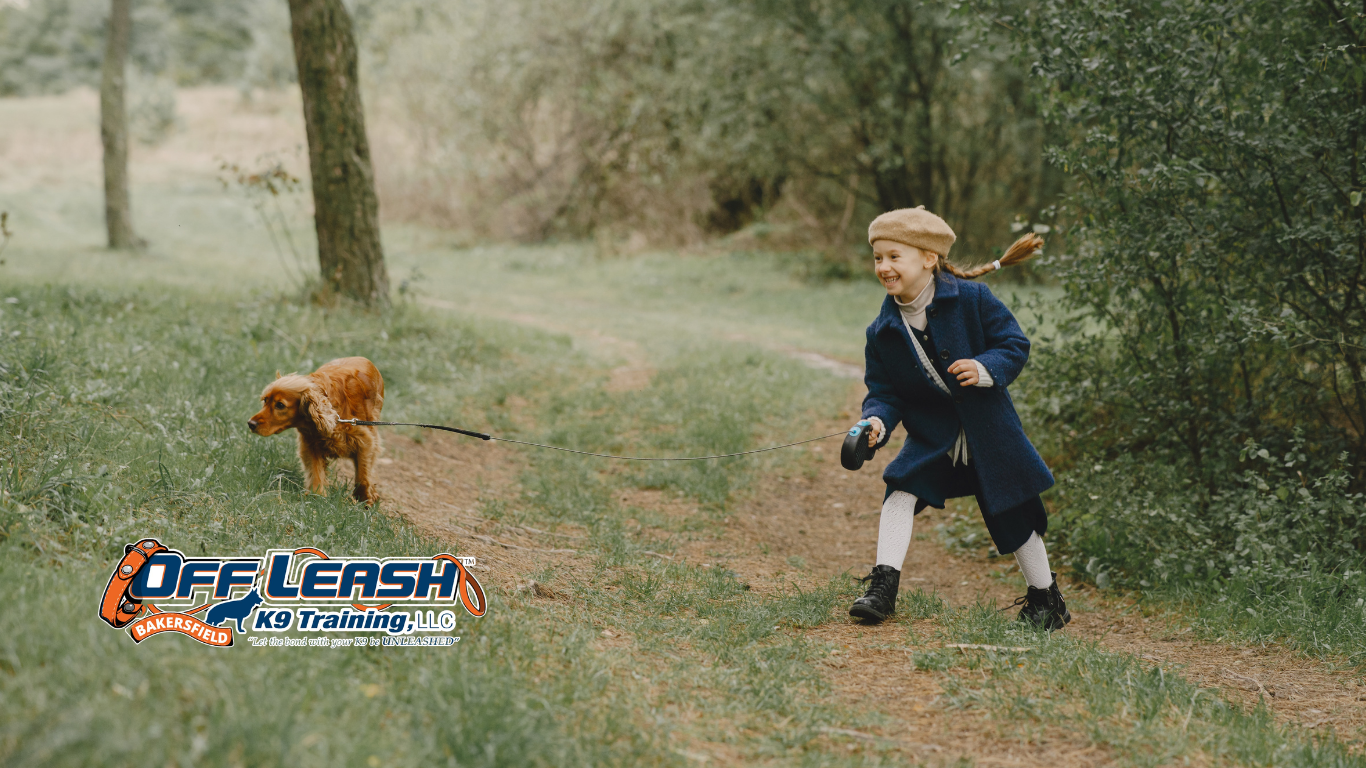
Hyper Around Children: Why Dogs Become Hyper Around Children
Hyper Around Children is one of the most common behavior concerns dog owners experience, especially in family households and public environments where children are present regularly. Many dogs that behave calmly around adults suddenly become overly excited, impulsive, distracted, or difficult to control when children enter the picture. Owners often describe their dogs as acting like a completely different animal around kids.

A dog that normally listens well may suddenly:
- Jump repeatedly
- Pull toward children
- Bark excessively
- Run in circles
- Ignore commands
- Chase moving kids
- Mouth hands or clothing
- Become unable to settle
These behaviors can be frustrating for owners and overwhelming for children. In some situations, they can even become safety concerns when large dogs accidentally knock children down or become too excited during play.
The good news is that most dogs who become hyper around children are not aggressive. In fact, many of these dogs genuinely enjoy children and want interaction. The problem is not dislike or hostility. The problem is excessive emotional arousal and poor impulse control.
Children naturally create some of the most stimulating situations dogs encounter in daily life.
Kids often:
- Run quickly
- Scream loudly
- Change direction suddenly
- Wave toys
- Jump around
- Play chase games
- Display unpredictable behavior
From a dog’s perspective, these activities are extremely exciting.
Dogs are naturally attracted to movement. Fast movement can trigger curiosity, play drive, chase instincts, excitement, and hyper-focus. When children combine movement with noise and emotional energy, many dogs struggle to remain calm and focused.
One of the biggest misconceptions among dog owners is believing that exposure alone will teach dogs how to behave around children. Unfortunately, repeated exposure without structure often teaches dogs to become even more excited over time. Every exciting interaction strengthens the emotional response.
Calm behavior around children is not automatic.
It is a learned skill.
Dogs must learn:
- Emotional regulation
- Impulse control
- Focus under distraction
- Appropriate social behavior
- Calm greetings
- Neutrality around excitement
Busy environments throughout Bakersfield regularly expose dogs to children. Parks, schools, sports fields, playgrounds, neighborhood sidewalks, apartment complexes, and family gatherings create constant opportunities for dogs to become overstimulated.
Without proper guidance, many dogs develop habits that become increasingly difficult to manage as they mature.
The goal is not to teach dogs to ignore children completely.
The goal is to teach dogs how to remain emotionally balanced, focused, and responsive even when children are nearby.
Through structured training, dogs can learn to enjoy being around children without becoming overwhelmed by excitement.
Key Takeaways
- Children create powerful excitement for many dogs
- Hyper behavior is usually caused by overstimulation rather than aggression
- Movement and noise increase emotional arousal significantly
- Dogs need impulse control around children
- Calm behavior must be taught consistently
- Emotional regulation improves family interactions
- Structured exposure helps dogs remain balanced
- Real-world training improves reliability
- Consistency is essential for long-term success
- Dogs can learn to stay calm around children through training
Why Dogs Become Hyper Around Children
Children naturally create multiple forms of stimulation simultaneously.
Most dogs are drawn to:
- Motion
- Sound
- Energy
- Interaction
- Novel experiences
Children combine all of these factors into one environment.
This often overwhelms emotional regulation.
Many dogs become so excited that they stop thinking clearly and begin reacting impulsively instead.
Why Movement Is So Exciting to Dogs
Movement is one of the strongest triggers for canine attention.
Running children activate natural instincts associated with:
- Chasing
- Investigating
- Playing
- Pursuing movement
Fast motion immediately captures attention.
For some dogs, movement becomes more rewarding than listening to commands.
The dog becomes focused on the child rather than the handler.
Why Children Move Differently Than Adults
Adults generally move in predictable ways.
Children often:
- Change direction suddenly
- Run unexpectedly
- Jump without warning
- Fall and get back up
- Move erratically
These unpredictable patterns are highly stimulating for dogs.
The unpredictability creates excitement and curiosity.
Why High-Pitched Voices Increase Excitement
Children’s voices are very different from adult voices.
They tend to be:
- Higher pitched
- Louder
- More emotional
- Less predictable
Dogs are naturally sensitive to vocal changes.
High-pitched sounds frequently increase emotional arousal and excitement.
Emotional Arousal and Hyper Behavior
Emotional arousal refers to a dog’s internal level of excitement or stimulation.
Low arousal allows dogs to:
- Focus
- Think clearly
- Listen
- Follow commands
High arousal often causes:
- Pulling
- Jumping
- Barking
- Ignoring commands
- Loss of impulse control
Many dogs become hyper around children because arousal levels rise too high.
Why Excitement Can Look Like Disobedience
Many owners assume their dog is choosing not to listen.
In reality, the dog often cannot focus effectively due to emotional overload.
The dog may know commands such as:
- Sit
- Stay
- Down
- Heel
- Come
Yet still fail to respond around children because excitement overwhelms thinking ability.
Why Puppies Become Hyper Around Children
Puppies naturally struggle with emotional regulation.
Young dogs lack:
- Patience
- Self-control
- Focus
- Frustration tolerance
Children amplify these challenges.
Puppies often:
- Jump excessively
- Chase kids
- Mouth hands
- Bark during play
- Ignore commands
Without guidance, these behaviors can become long-term habits.
Why Adolescent Dogs Struggle Even More
Adolescence is one of the most challenging developmental stages.
During adolescence, dogs often experience:
- Increased excitement
- Stronger curiosity
- Reduced focus
- Greater impulsiveness
Children frequently become overwhelming distractions during this stage.
Many owners notice behavior worsening between six and eighteen months of age.
Why Friendly Dogs Can Still Cause Problems
A friendly dog can still create safety concerns.
Examples include:
- Jumping on small children
- Knocking kids over
- Pulling toward children
- Chasing running kids
- Accidental scratching
The dog may have positive intentions but poor self-control.
Training focuses on improving emotional regulation rather than eliminating friendliness.
Why Dogs Chase Running Children
Chasing is one of the most common issues.
Running triggers natural instincts.
Dogs often perceive running children as:
- Playmates
- Moving targets
- Sources of excitement
Without impulse control, many dogs instinctively chase movement.
Why Mouthing Happens Around Kids
Mouthing commonly increases during excitement.
Dogs may:
- Grab clothing
- Mouth hands
- Nibble during play
Most mouthing is not aggression.
Instead, it is often an expression of excitement and poor impulse control.
Why Barking Increases Around Children
Children frequently trigger barking because they create intense stimulation.
Dogs may bark due to:
- Excitement
- Frustration
- Overstimulation
- Attention-seeking
Barking often becomes a release for excess emotional energy.
Why Some Dogs Become Protective Around Children
Not all hyper behavior comes from excitement.
Some dogs become overly attentive or protective.
They may:
- Follow children constantly
- Position themselves nearby
- React to strangers approaching
These behaviors often stem from emotional attachment and vigilance.
Why Emotional Regulation Matters
Emotional regulation is the ability to manage excitement appropriately.
Dogs with strong emotional regulation can:
- Observe children calmly
- Ignore unnecessary stimulation
- Stay focused
- Recover quickly
Dogs lacking emotional regulation often struggle around kids.
The Difference Between Socialization and Training
Many owners confuse socialization with behavior training.
Socialization introduces dogs to experiences.
Training teaches dogs how to behave during those experiences.
Exposure alone does not teach calmness.
Dogs need guidance and structure.
Why Neutrality Is Important
Neutrality means children do not automatically trigger excitement.
A neutral dog can:
- Notice children
- Stay calm
- Remain focused
- Avoid impulsive reactions
Neutrality often creates safer interactions than excessive enthusiasm.
Why Impulse Control Is Critical
Impulse control allows dogs to pause before reacting.
Dogs with strong impulse control can:
- Resist chasing
- Avoid jumping
- Stay calmer
- Make better decisions
Impulse control improves every aspect of behavior around children.
Signs Your Dog Needs Better Impulse Control
Examples include:
- Jumping repeatedly
- Pulling toward kids
- Barking excessively
- Ignoring commands
- Difficulty settling
These behaviors often improve dramatically with impulse control training.
Why Boundaries Matter Around Children
Dogs need clear expectations.
Healthy boundaries include:
- No chasing
- No jumping
- No rough play
- Respecting space
- Calm greetings
Boundaries create predictability.
Why Consistency Matters
Dogs learn through repetition.
If jumping is allowed sometimes but corrected other times, confusion develops.
Consistent expectations help dogs learn faster.
Why Calm Greetings Matter
Many hyper behaviors begin during greetings.
Dogs often become overwhelmed when:
- Children run toward them
- Multiple kids gather around
- Excitement escalates immediately
Teaching calm greetings prevents many problems.
Why Recovery Speed Matters
Emotionally balanced dogs recover quickly after excitement.
Dogs with poor regulation often remain excited long after the interaction ends.
Recovery speed is a valuable indicator of progress.
Common Mistakes Owners Make
Many owners unintentionally reinforce hyper behavior.
Examples include:
- Encouraging rough play
- Allowing chasing games
- Rewarding excitement
- Inconsistent rules
- Waiting too long to intervene
These mistakes strengthen unwanted habits.
Structured Training Around Children
Effective training focuses on emotional regulation.
Reward Calm Behavior
Calmness should be reinforced consistently.
Build Engagement
Teach dogs to focus on the handler despite distractions.
Improve Impulse Control
Exercises such as:
- Place
- Stay
- Wait
- Leave It
build patience and self-control.
Increase Exposure Gradually
Start with manageable environments before increasing difficulty.
Why Real-World Practice Matters
Dogs improve through realistic exposure.
Helpful training locations include:
- Parks
- Sidewalks
- Schools
- Sports fields
- Neighborhood events
Real-world repetition builds reliability.
Hyper Around Children in Bakersfield
Bakersfield offers many environments where dogs encounter children regularly.
Common locations include:
- Public parks
- School zones
- Apartment complexes
- Family events
- Community gatherings
- Sports complexes
Structured Bakersfield dog training helps improve:
- Emotional regulation
- Focus around children
- Public obedience
- Impulse control
- Calm social behavior
Long-Term Benefits of Calm Behavior Around Children
Dogs that learn calm behavior around children often become:
- Safer family companions
- Easier to manage
- More confident
- More reliable
- Better behaved in public
These skills improve everyday life significantly.
Frequently Asked Questions
1. Why does my dog become hyper around children?
2. Is hyper behavior around children aggression?
Usually not. Most dogs become hyper because of excitement and overstimulation rather than aggression.
3. Why does my dog ignore commands around kids?
Children often become more rewarding and stimulating than the handler, reducing focus and impulse control.
4. Can dogs learn to stay calm around children?
5. Why does my dog chase running children?
Running activates natural chase instincts and increases excitement.
6. Why does my puppy jump on children constantly?
Puppies have limited impulse control and often become overwhelmed by excitement.
7. Can excitement be dangerous?
Yes. Friendly dogs can accidentally knock children over or become too rough during play.
8. What is neutrality around children?
Neutrality means the dog notices children without becoming overly excited or reactive.
9. How important are boundaries?
Boundaries help dogs understand what behavior is expected around children.
10. Can professional training help?
Conclusion
Hyper Around Children behavior is extremely common because children create some of the most exciting and stimulating situations dogs encounter. Running, screaming, playing, and unpredictable movement naturally increase emotional arousal and challenge a dog’s ability to remain calm and focused.
Most dogs that become hyper around children are not aggressive. Instead, they are emotionally overwhelmed by excitement and stimulation. Without structure and guidance, many dogs struggle to regulate these emotions, leading to jumping, barking, chasing, pulling, and loss of focus.
The solution is not simply exposing dogs to more children. True improvement comes from teaching emotional regulation, impulse control, neutrality, engagement, and calm decision-making. Through consistent training and structured exposure, dogs learn how to remain balanced even in highly stimulating environments.
For Bakersfield dog owners, these skills are especially important because children are present in many public spaces, including parks, schools, sports fields, apartment communities, and neighborhood gatherings. Dogs that learn calm behavior around children become safer, more reliable, and easier to include in everyday family activities.
With patience, consistency, and proper training, dogs can learn to enjoy being around children without becoming overwhelmed by excitement, creating safer and more enjoyable experiences for everyone involved.
"*" indicates required fields