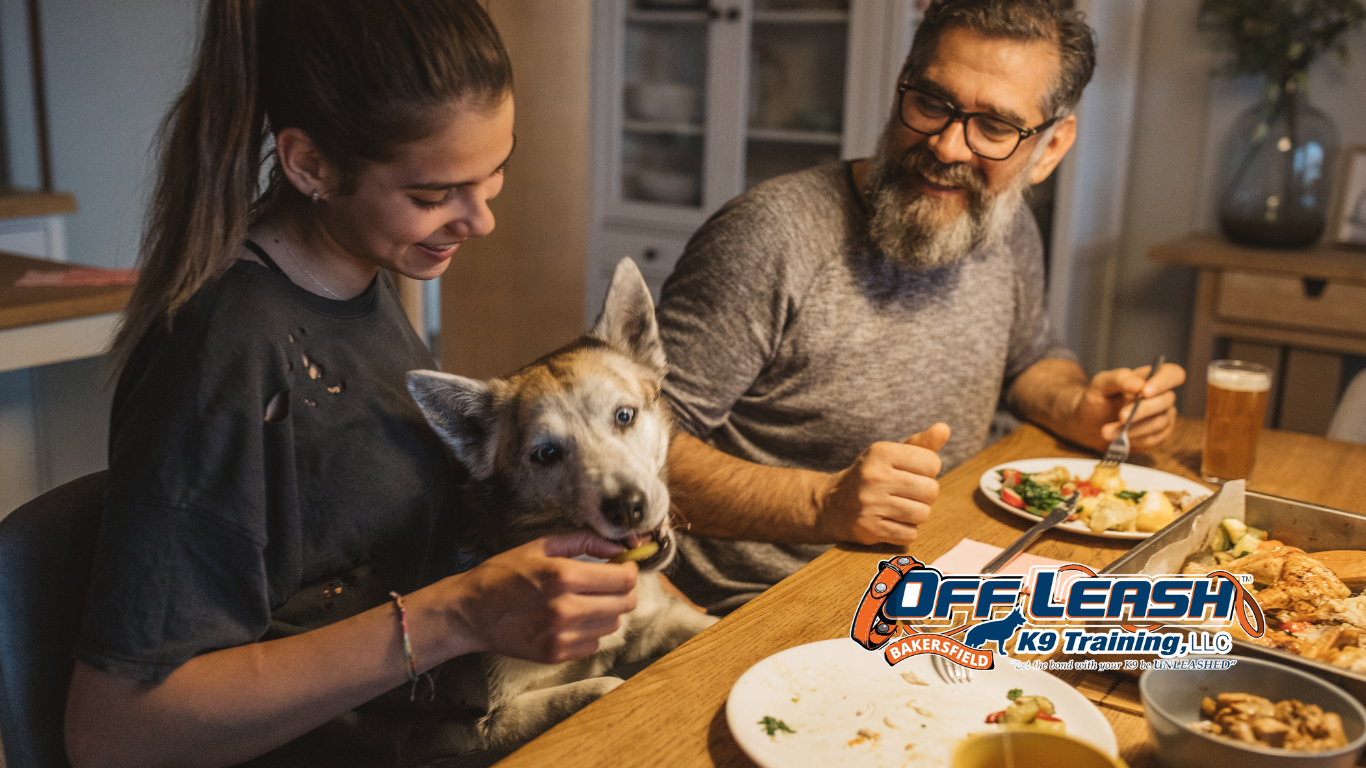
Bark During Family Meals: Why Dogs Bark During Family Meals
Bark During Family Meals is a common challenge for dog owners. What should be a peaceful dinner often turns into barking, whining, pacing, begging, or jumping around the table. Some dogs bark the moment plates are placed on the table, while others wait until someone starts eating before demanding attention.
Although this behavior can be frustrating, it is usually not caused by disobedience. In many cases, dogs bark because they have learned that family meals are exciting events filled with food, movement, conversation, and the possibility of receiving leftovers. If barking has ever resulted in attention, table scraps, or even someone speaking to the dog, the behavior may become stronger over time.
Dogs that bark during family meals may also:
- Whine continuously
- Sit and stare at people eating
- Pace around the dining room
- Jump on chairs or people
- Beg for food
- Paw at family members
- Bark louder when ignored
- Steal food from the table
- Become restless
- Ignore commands
These behaviors are often fueled by emotional arousal. The smells of freshly prepared food, the excitement of everyone gathering together, and the expectation of rewards can quickly overwhelm a dog’s impulse control.
Some dogs bark because they are excited. Others bark out of frustration because they cannot reach the food. A few bark because they have accidentally learned that persistence eventually pays off. Understanding the reason behind the barking is the first step toward changing it.
For Bakersfield dog owners, good mealtime manners are especially important during family dinners, holidays, backyard barbecues, and gatherings with guests. A dog that can settle quietly during meals creates a calmer home environment and is much easier to manage when visitors are present.
The encouraging news is that mealtime barking can be improved. Through structured routines, place training, impulse control exercises, and consistent expectations, dogs can learn that calm behavior—not barking—is what earns rewards.
Key Takeaways
- Family meals are highly exciting for many dogs.
- Barking often develops because it has been rewarded in the past.
- Food smells increase emotional arousal.
- Impulse control helps dogs remain calm during meals.
- Consistency is essential for changing barking habits.
- Place training is highly effective during family dinners.
- Calm behavior should always be rewarded.
- Avoid accidentally reinforcing barking with attention or food.
- Daily practice creates lasting household manners.
- Most dogs can learn to relax quietly during meals with structured training.
What Does “Bark During Family Meals” Mean?
When dogs bark during family meals, they vocalize repeatedly while people are eating because the dining experience has become emotionally exciting, rewarding, or frustrating. Instead of relaxing while the family eats, they may bark, whine, pace, stare, jump, or beg in an effort to gain attention, food, or participation in the activity.
For many dogs, family meals represent one of the most stimulating events of the day.
The kitchen fills with food smells.
People gather together.
Plates move around the table.
Chairs slide across the floor.
Conversations become louder.
From the dog’s perspective, all of these events signal something important is happening.
Without training, many dogs respond by barking.
Dogs that bark during family meals may also:
- Whine continuously
- Pace around the dining room
- Jump on family members
- Paw at legs
- Stare at food
- Follow people around the table
- Steal dropped food
- Bark louder when ignored
- Ignore obedience commands
- Become restless throughout the meal
These behaviors are usually driven by emotional arousal rather than intentional disobedience.
Understanding the motivation behind the barking is the first step toward changing it.
Why Mealtime Is Different for Dogs
Most household routines become predictable.
Dogs quickly learn:
- Breakfast happens every morning.
- Dinner happens every evening.
- People gather before eating.
- Food appears shortly afterward.
Because these routines repeat every day, anticipation grows stronger over time.
Eventually, simply hearing plates or silverware may trigger barking before food even reaches the table.
Why Food Excites Dogs So Much
Food is one of the strongest natural rewards available to dogs.
Long before domestication, survival depended on finding food whenever opportunities appeared.
Although modern dogs receive regular meals, those survival instincts remain.
Their brains naturally prioritize food.
This explains why many dogs react immediately to:
- Treat bags opening
- Refrigerator doors
- Food bowls
- Cooking smells
- Family members entering the kitchen
These everyday events predict something highly rewarding.
Anticipation Creates Excitement
Dogs often become excited before food actually appears.
For example:
Someone walks into the kitchen.
The dog follows.
Cabinets open.
The dog begins whining.
Dinner is prepared.
The barking increases.
Eventually, anticipation itself becomes exciting.
The dog learns to react long before eating begins.
Every Meal Reinforces Learning
Dogs constantly learn from daily routines.
If barking consistently occurs immediately before dinner arrives, the dog may begin believing:
“My barking is part of mealtime.”
Although owners never intended to teach this behavior, repetition strengthens the habit.
Why Some Dogs Are More Food Motivated
Food motivation varies between dogs.
Factors include:
- Breed
- Personality
- Age
- Previous experiences
- Activity level
- Health
Highly food-motivated dogs often become more excited during family meals than dogs motivated primarily by toys or praise.
Attention-Seeking vs. Hunger
Many owners assume barking means the dog is hungry.
In reality, most dogs barking during family meals have already received appropriate meals.
The barking is usually motivated by:
- Wanting attention
- Wanting table scraps
- Wanting to participate
- Frustration
- Excitement
Understanding the difference helps owners respond appropriately.
Signs Your Dog Wants Attention
Attention-seeking dogs often:
- Bark while making eye contact
- Follow family members
- Paw at people
- Move closer to the table
- Bark louder when ignored
Their goal is interaction.
Even negative attention may reinforce the behavior.
Signs Your Dog Is Actually Hungry
A hungry dog may:
- Eat meals quickly
- Search for food throughout the day
- Investigate empty food bowls
- Show increased food interest before scheduled meals
If excessive hunger develops suddenly, consult your veterinarian to rule out medical causes.
Emotional Arousal at Mealtime
Emotional arousal describes how emotionally activated a dog becomes.
Family meals create excitement through multiple forms of stimulation:
- Food smells
- Movement
- Conversation
- Anticipation
- Family interaction
These events combine to increase arousal.
As excitement rises:
- Patience decreases.
- Listening decreases.
- Barking increases.
- Impulse control weakens.
This explains why otherwise well-trained dogs sometimes forget basic manners during dinner.
Excitement Is Not the Same as Bad Behavior
Owners often describe these dogs as “bad.”
More accurately, they are emotionally overwhelmed.
An excited dog often struggles to:
- Wait patiently
- Stay quiet
- Relax
- Ignore food
Teaching emotional regulation addresses the root cause.
Why Dogs Keep Barking if It Works
Dogs repeat behaviors that produce successful outcomes.
This simple learning principle explains why barking often becomes stronger over time.
Examples include:
The dog barks.
Someone says,
“Quiet.”
The dog receives attention.
Or:
The dog barks.
Someone drops food.
The barking worked.
Even inconsistent rewards strengthen barking.
If table scraps are given only occasionally, many dogs continue trying because success sometimes occurs.
This creates a powerful habit.
Why Inconsistent Rewards Make Barking Worse
Behavior rewarded unpredictably often becomes extremely persistent.
For example:
Five meals produce nothing.
The sixth meal produces a piece of chicken.
The dog learns:
“Keep trying.”
This explains why barking often increases before it disappears.
Consistency from every family member is essential.
The Role of Impulse Control
Impulse control allows dogs to pause before reacting.
Instead of immediately barking, jumping, or begging, dogs learn to:
- Wait calmly
- Remain on their bed
- Watch quietly
- Ignore food temporarily
- Follow instructions
Impulse control develops gradually through practice.
Helpful exercises include:
- Sit before meals
- Wait before eating
- Place training
- Leave It
- Stay exercises
- Delayed food rewards
- Calm greetings
Each successful repetition strengthens emotional self-control.
Over time, dogs begin understanding that calm, patient behavior consistently earns rewards, while barking and demanding attention do not. As impulse control improves, family meals become far more peaceful, allowing dogs to relax comfortably while owners enjoy dinner without constant interruptions.
Common Owner Mistakes
When dogs bark during family meals, owners often respond in ways that unintentionally reinforce the behavior. Because dinner happens every day, even small mistakes can quickly become long-term habits.
Understanding these common mistakes helps create calmer, more enjoyable mealtimes for everyone.
Giving Food to Stop the Barking
One of the biggest mistakes is giving the dog a piece of food simply to make the barking stop.
Although it may create temporary silence, the dog learns:
“Barking gets me food.”
From the dog’s perspective, the behavior was successful.
The next meal often begins with even more barking because the dog expects the same result.
Talking to the Dog
Many owners repeatedly say:
- “Quiet.”
- “Stop barking.”
- “Go lay down.”
Even negative attention can reward attention-seeking behavior.
For some dogs, any interaction is better than being ignored.
If barking consistently earns eye contact or conversation, the behavior often continues.
Inconsistent Rules
One family member ignores the barking.
Another gives table scraps.
A child drops food.
A grandparent feeds the dog from the table.
Mixed messages confuse dogs.
Everyone in the household should follow the same rules regarding:
- Feeding
- Attention
- Begging
- Barking
- Place training
Consistency accelerates learning.
Waiting Too Long to Intervene
Owners often allow barking to continue for several minutes before responding.
Unfortunately, prolonged barking allows excitement to build.
Instead, begin the mealtime routine before barking starts by asking the dog to go to their designated resting place.
Expecting Immediate Results
Many owners expect one or two successful dinners to solve the problem permanently.
Behavior that has developed over months or years requires consistent practice.
Patience produces lasting success.
Teaching Calm Mealtime Behavior
Every family meal provides an opportunity to teach patience and emotional regulation.
Small improvements practiced daily create long-lasting household manners.
Introduce Place Training
One of the most effective solutions is teaching a reliable Place command.
Choose a comfortable location such as:
- Dog bed
- Mat
- Raised cot
- Blanket
Before meals begin, calmly guide your dog to their place.
Reward them for remaining there quietly.
Over time, your dog begins associating family meals with relaxing instead of demanding food.
Reward Calm Behavior
Rather than focusing only on stopping barking, actively reward behaviors you want to see.
Examples include:
- Lying quietly
- Relaxed body posture
- Looking away from the table
- Remaining on the bed
- Calm eye contact
Positive reinforcement teaches dogs exactly what earns rewards.
Feed Before Family Meals
If possible, feed your dog shortly before the family sits down to eat.
A dog with a full stomach may be less interested in begging or barking.
This simple adjustment often reduces excitement during dinner.
Provide Appropriate Enrichment
Keeping your dog mentally occupied can make family meals much easier.
Good options include:
- Stuffed food toys
- Long-lasting chews
- Food puzzles
- Snuffle mats
- Frozen enrichment toys
These activities encourage calm behavior while giving your dog something appropriate to enjoy.
Practice Short Sessions
Start with brief family meals.
If your dog remains calm for five minutes, reward the success.
Gradually increase the duration over several days or weeks.
Small successes create reliable habits.
Bark During Family Meals in Bakersfield
Many Bakersfield families enjoy outdoor dining, backyard barbecues, family gatherings, and holiday celebrations.
These events introduce additional excitement through:
- Guests
- Children
- Extra food
- Outdoor cooking
- Increased activity
Dogs that already struggle during normal dinners often find these situations even more challenging.
Professional dog training helps Bakersfield owners improve:
- Place training
- Impulse control
- Calm household behavior
- Food manners
- Public obedience
- Emotional regulation
Practicing these skills at home prepares dogs for larger family events and social gatherings.
Long-Term Benefits of Household Manners
Teaching calm mealtime behavior improves much more than dinner routines.
Dogs with strong household manners often become:
- More patient
- Less demanding
- Better listeners
- Easier to manage around guests
- More relaxed indoors
- Better at settling independently
- Less likely to steal food
- Better around children
- More emotionally balanced
- More enjoyable family companions
These improvements often carry over into other parts of daily life, including walks, training sessions, and public outings.
Frequently Asked Questions
1. Why does my dog bark every time we eat dinner?
2. Is my dog actually hungry?
Usually not. Most dogs barking during family meals are motivated by excitement, attention, or the hope of receiving table scraps rather than true hunger.
3. Should I ignore the barking?
Ignoring barking can help if the behavior is attention-seeking, but it works best when combined with teaching an alternative behavior such as staying on a designated place mat.
4. Will giving one small piece of food hurt?
Occasional table scraps can unintentionally reinforce barking if they are given after the dog vocalizes. Consistency is important.
5. Is place training effective?
Yes. Place training is one of the most reliable ways to teach dogs to relax during meals instead of begging or barking.
6. What if my dog leaves their place repeatedly?
7. Should puppies learn mealtime manners?
Absolutely. Early training helps prevent barking, begging, and food-stealing habits from developing later.
8. Can professional training help stop mealtime barking?
Yes. Professional trainers can teach impulse control, emotional regulation, and household routines that reduce barking and improve overall obedience.
9. How long does it take to stop barking during meals?
Every dog is different. Many owners notice improvement within a few weeks of consistent daily practice, while long-established habits may take longer to change.
10. Will my dog ever stop begging completely?
Most dogs learn to relax quietly when calm behavior is consistently rewarded and begging no longer produces attention or food.
Comprehensive Conclusion
Bark During Family Meals is a common household challenge, but it is usually a learned behavior rather than an act of disobedience. Food aromas, family activity, conversation, and the possibility of receiving table scraps naturally create excitement. When barking has been rewarded with attention or food in the past, dogs quickly learn that making noise is worth the effort.
The good news is that mealtime behavior can be changed through consistent training and clear expectations. Teaching a reliable place command, rewarding calm behavior, avoiding accidental reinforcement, and providing appropriate enrichment all help dogs understand that quiet patience—not barking—is what leads to positive outcomes. Every family meal becomes an opportunity to strengthen impulse control and emotional regulation.
For Bakersfield dog owners, these skills are especially valuable during holidays, backyard cookouts, outdoor dining, and gatherings with friends and family. A dog that can remain calm while people eat is easier to manage, more enjoyable to live with, and better prepared for busy social environments.
Ultimately, peaceful family meals are built through consistency, patience, and positive reinforcement. When every member of the household follows the same routine, dogs gain a clear understanding of what is expected. Over time, barking fades, calm behavior becomes habitual, and family dinners become more relaxing for everyone—including your dog.
"*" indicates required fields