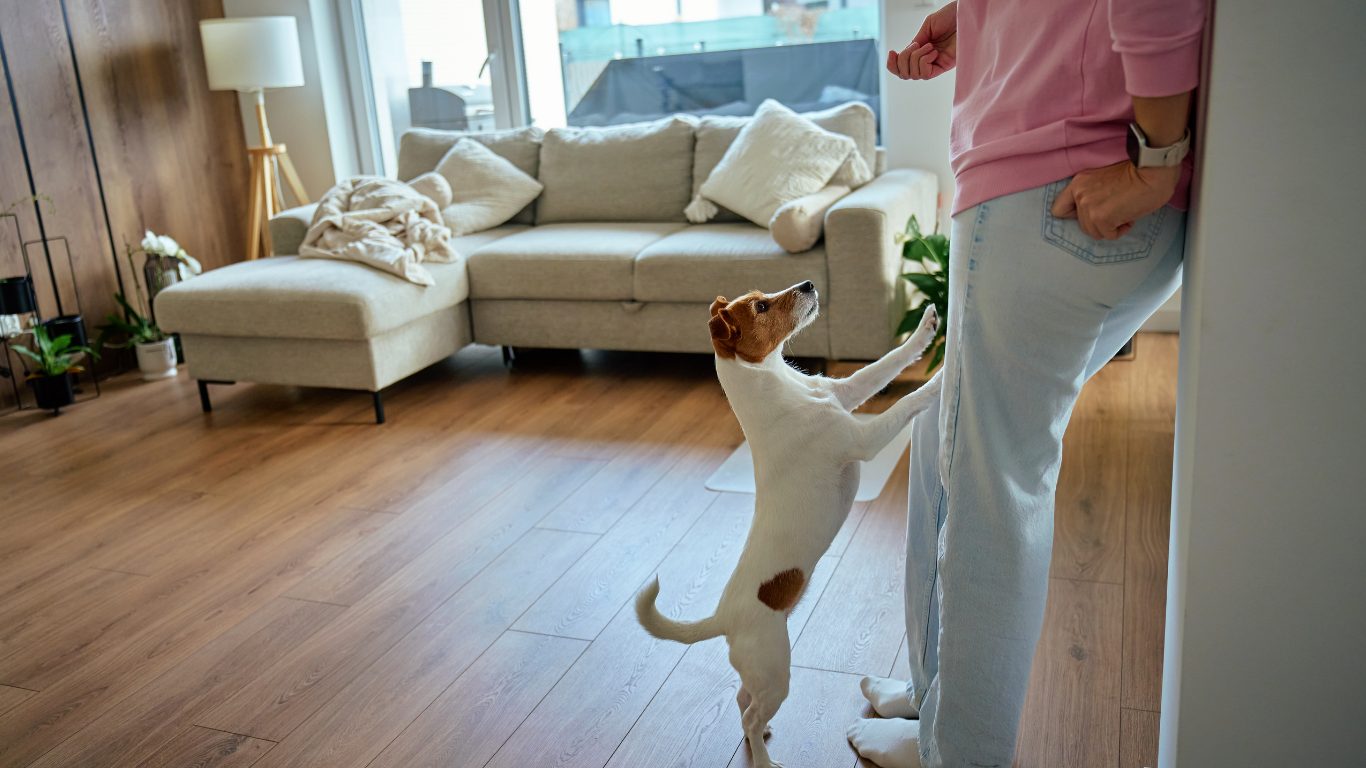
Dog Jumping: Tired of Your Dog Jumping on Visitors?
Dogs jumping on guests can be more than just a minor inconvenience; it can lead to unexpected injuries, especially in households with children or elderly visitors. Reflecting on a client’s concerns, we see how quickly excitement can turn into chaos at the door. These unrestrained leaps of joy can be problematic, but understanding the underlying causes can pave the way to effective solutions.
Historically, dogs have displayed jumping behavior as a form of greeting, tracing back to their days as wild pack animals. Studies indicate that over 60% of dog owners experience issues with their pet’s jumping behavior. Addressing this through structured training and positive reinforcement can create a more welcoming environment for everyone.
Dogs often jump on visitors out of excitement or a need for attention. Training them to sit calmly, using positive reinforcement techniques such as treat rewards and consistent commands, can effectively manage this behavior. Regular exercise also helps reduce excess energy that contributes to jumping. Consistency in training across all family members is crucial.
Dog Jumping: Tired of Your Dog Jumping on Visitors?
Dog jumping can be a nuisance and an embarrassment whenever guests arrive. Often, dogs jump out of excitement and a desire to greet visitors face-to-face. This behavior is common but can be managed with patience and consistent training.
First, understanding why dogs jump is the key to addressing the problem. Dogs are social animals who seek attention by jumping. Training them involves teaching alternative behaviors, like sitting politely for attention. Various techniques like positive reinforcement can be highly effective.
Tools such as clickers and treats can help reinforce good behavior. When a dog jumps, simply turning away and not giving attention can teach them that jumping doesn’t pay off. Combining these strategies with patience can lead to significant improvements over time.
Consider setting up a training plan and including all family members to ensure consistency. Training should be fun and rewarding for the dog, encouraging them to practice good manners regularly. This structured approach will create a welcoming environment for everyone.
Common reasons dogs jump on people
Dogs jump on people for various reasons. Excitement is a primary cause; they simply can’t contain their joy at seeing someone. Often, this behavior is learned as a puppy when jumping was cute and received attention.
Another reason dogs jump is to exert dominance or make themselves appear larger. This is often seen in more assertive breeds or those lacking proper training. Fear or anxiety can also lead to jumping as a way to seek comfort and reassurance from humans.
Sometimes dogs jump because they are trying to greet people face-to-face. They view jumping as a method to get closer and communicate. Consistently rewarding calm behavior can teach them alternative ways to greet people.
Understanding these reasons helps in addressing the behavior effectively. Using positive reinforcement, tools, and consistent training can reduce jumping over time. Being aware of the unique needs of the dog can make the process easier and more successful.
The impact of jumping behavior on family and guests
When dogs jump on family members or guests, it can create an uncomfortable and even unsafe environment. Young children might get knocked over, leading to injuries and fear of dogs. Similarly, elderly guests could face serious risks due to their fragile bones and limited balance.
Besides physical harm, constant jumping can also strain relationships with visitors. Friends and relatives may feel anxious around the dog, impacting social interactions. Over time, this can reduce the frequency of visits, adding to the isolation of both the dog and the family.
The jumping behavior often interrupts the flow of gatherings, diverting attention from conversations to managing the dog’s actions. It distracts from the main purpose of the visit, making social events less enjoyable. Guests might feel forced to keep their guard up, which can be mentally exhausting.
Addressing this behavior can vastly improve the home environment. Teaching dogs to greet people calmly enhances comfort for everyone involved. This proactive approach ensures more relaxed and pleasant interactions, fostering better relationships with family and guests.
Why traditional corrections often don’t work
Traditional corrections, such as yelling or pushing a dog away, often fail to address jumping behavior. These methods can make the dog confused or scared, which may worsen the problem. The dog might not understand what is expected and continue jumping.
When dogs receive negative attention, they might view it as a form of interaction. Even if it’s not the desired response, they still see it as attention. This can reinforce the behavior, making it harder to eliminate.
Physical corrections can also break the trust between the dog and the owner. Building a positive relationship is crucial for effective training. Negative experiences may lead to fear or aggression, complicating future interactions and training efforts.
Positive reinforcement, on the other hand, focuses on rewarding good behavior. This approach creates clear expectations for the dog. When they are calm and greet guests nicely, they receive praise or a treat.
Using tools like clickers and rewards can guide dogs towards better habits. These techniques have been shown to be more effective than traditional methods. The dog learns to associate good behavior with positive outcomes.
The key to changing jumping behavior lies in consistent, positive training. Patience and understanding can transform the way the dog interacts with people. This strategy strengthens the bond between the dog and their family.
How positive reinforcement can change jumping habits
Positive reinforcement is a powerful tool for changing jumping behavior in dogs. This method relies on rewarding desirable actions, encouraging the dog to repeat them. Treats, praise, and attention can be used to signal the dog that they are doing something right.
Consistency is key when using positive reinforcement. Every time the dog greets someone without jumping, they should receive a reward. This consistent reinforcement helps the dog understand what is expected of them and motivates them to behave appropriately.
Training sessions should be short and frequent to keep the dog engaged. Dogs can become bored with long training, making short sessions more effective. During each session, focus on calm, non-jumping greetings.
When visitors arrive, instruct them to ignore the dog if it jumps. Once the dog is calm, the visitor can offer a treat or praise. This teaches the dog that jumping results in no attention, whereas calm behavior receives positive interaction.
Positive reinforcement also helps in building trust and strengthening the bond between the dog and its owner. Unlike punitive methods, this approach is enjoyable for both the dog and the trainer. When the dog feels safe and understood, they’re more likely to listen and respond.
Using tools like clickers can mark the exact moment of good behavior. Clickers paired with rewards can make training more precise. This method creates a clear connection between the dog’s actions and the positive consequences they receive.
Creating a step-by-step plan for a jump-free greeting
Start by identifying the times your dog is most likely to jump. This could be when guests arrive or when the dog is excited. Knowing these moments will help create a targeted plan.
Step one involves training your dog to sit calmly before any interaction. Use treats and praise to reinforce this behavior. Consistently practice this with family members and frequent visitors.
Next, teach your dog to remain sitting while being greeted. Gradually increase the duration of sitting before rewarding them. This helps the dog learn patience and control.
Encourage guests to ignore the dog if it tries to jump. Inform them to only give attention when the dog is calm and seated. Consistent responses from visitors are crucial for reinforcing good behavior.
Utilize tools like clickers to mark moments of good behavior. Click and reward immediately when the dog remains seated during greetings. This helps solidify the connection between sitting and receiving treats.
Regularly practice these steps in various settings. Whether at home or outside, consistency will reinforce the desired behavior. Over time, your dog will develop a habit of greeting people calmly and politely.
Key mistakes owners make when addressing dog jumping
One common mistake owners make is giving attention to the dog when it jumps. Any form of attention, even negative, can reinforce their behavior. Dogs might interpret yelling or pushing as playful interaction.
Ignoring the need for consistent training is another issue. Some owners may only address jumping sporadically, leading to confusion. Dogs need regular reinforcement to understand and change their behavior.
Many owners also fail to train everyone in the household on how to respond consistently. Different reactions from family members can confuse the dog. It’s vital that everyone follows the same approach.
Punitive methods like scolding or physical corrections are often ineffective and can damage trust. Instead, positive reinforcement should be used to encourage good behaviors. Rewarding calm greetings helps create clearer expectations.
A lack of patience during training sessions can hinder progress. Training takes time, and rushing through it leads to incomplete learning. Being patient and persistent ensures lasting results.
Finally, neglecting professional help when needed is a critical error. Sometimes expert guidance can provide insights into specific behavioral issues. Consulting a trainer ensures a well-rounded approach for more substantial improvements.
Practical management tips for greeting guests
Managing a dog’s behavior when guests arrive starts with preparation. Ensure your dog has had enough exercise before the guests arrive. A tired dog is less likely to jump due to excess energy.
Train your dog to stay in a designated area when the doorbell rings. This can be a crate or a specific room. Confine them temporarily until they calm down and are ready to greet guests politely.
Use a leash for controlled greetings. Keep the leash loose, but enough to prevent jumping. Gradually allow the dog to approach guests while maintaining calm behavior.
Instruct guests to turn around and avoid eye contact if the dog jumps. Once the dog settles, guests can offer treats or affection. Consistency from visitors reinforces good behavior.
Positive reinforcement can also be handy. Reward your dog with treats when they greet guests calmly. This teaches the dog that polite behavior is more rewarding than jumping.
Practice these techniques regularly, even when guests aren’t visiting. Simulate greetings to ingrain proper behavior in your dog. This way, your dog becomes accustomed to greeting guests appropriately.
Training techniques to eliminate jumping behavior
Training your dog to stop jumping starts with reinforcing calm behavior. Begin by teaching your dog to sit and stay when someone enters the room. Use treats and praise to reward these actions.
Practice greeting drills regularly. Have family members enter and leave the room while the dog remains seated. Gradually introduce more distractions to reinforce focus and patience.
Use clicker training to mark the exact moment the dog displays calm behavior. Click, then immediately reward with a treat. This helps the dog associate sitting calmly with positive outcomes.
Consistency is crucial. Every time the dog jumps, remove attention until they calm down. Redirect their focus to sitting or another command, then reward them once they comply.
Introduce guests to the training regimen. Explain how they should ignore the dog if it jumps and reward calm behavior. This consistency is vital for effective training.
Utilize structured walks and playtimes to reduce excess energy. A well-exercised dog is less likely to engage in jumping out of excitement. Regular exercise helps maintain overall good behavior.
Tools and resources for ongoing success
Successful long-term training requires the right tools and resources. Clickers are useful for marking good behavior instantly. This helps dogs understand which actions are rewarded.
Treat pouches make it easy to carry rewards during training sessions. Having treats readily available ensures immediate reinforcement. This is vital for encouraging consistent behavior.
Training books and online courses provide valuable insights and advanced techniques. Many experts offer step-by-step guides tailored for specific behaviors. Utilizing these resources can enhance your training approach.
Group classes offer socialization opportunities and professional advice. Participating in a class helps expose your dog to different environments. This can boost confidence and improve overall training success.
Behavioral blogs and forums can be sources of continuous learning. Engaging with other dog owners can provide helpful tips and experiences. This community support is beneficial for staying informed.
Staying consistent with these tools and resources makes all the difference. Regular practice and adaptation of new methods keep training effective. This leads to lasting behavior changes and a happier pet.
Frequently Asked Questions
These questions will help you understand common issues with dog jumping and provide practical solutions.
Learn more about how to manage this behavior effectively and ensure a harmonious home environment.
1 Why do dogs jump on people?
Dogs jump to greet people and get attention. It’s often a natural, instinctive behavior rooted in their excitement and affection. Puppies are encouraged to jump when they’re small, but this habit can become problematic as they grow bigger.
By using positive reinforcement and teaching alternative greeting behaviors, owners can gradually reduce jumping. Consistent training and patience are key to changing this inherent behavior.
2 How can I stop my dog from jumping on visitors?
Train your dog to sit or stay when visitors arrive. Reward calm behavior with treats and praise. This helps the dog learn what is expected during greetings. Ensuring visitors follow the same protocols reinforces consistency.
Using a leash during initial greetings can control the dog’s actions more effectively. Regular practice and consistency will gradually diminish unwanted jumping behavior.
3 Is using a leash effective in preventing jumping?
Yes, using a leash can be very effective. When a dog is on a leash, you have greater control over their movements. It helps guide them away from jumping and towards calmer interactions.
Train your dog to approach guests calmly while on the leash. Over time, the leash can be phased out as the dog learns to greet visitors without jumping.
4 What are the consequences of not addressing dog jumping behavior?
Not addressing jumping can lead to accidents and injuries, especially with small children and elderly guests. It can also create stress and tension during social interactions. Over time, this behavior can damage relationships with visitors who may feel unsafe or uncomfortable.
Consistently training your dog to greet people calmly ensures a safer and more enjoyable environment for everyone. Active management and reinforcement are essential for long-term success.
5 Are there specific breeds more prone to jumping?
While all dogs can exhibit jumping behavior, certain breeds known for their high energy levels might do so more frequently. Breeds like Labradors, Boxers, and some Terriers are more likely to jump due to their playful and excitable nature.
Regardless of breed, consistent training and using positive reinforcement can greatly reduce jumping. Understanding your dog’s needs and behavior is crucial in managing this issue effectively.
Conclusion
Managing a dog’s jumping behavior is essential for a harmonious home. By understanding the reasons behind it, you can employ effective training techniques. Consistency and positive reinforcement are key.
Creating a structured plan and enlisting everyone’s cooperation makes the process smoother. Ultimately, a well-trained dog leads to safer and more enjoyable interactions. This fosters stronger bonds with both family and guests.
"*" indicates required fields