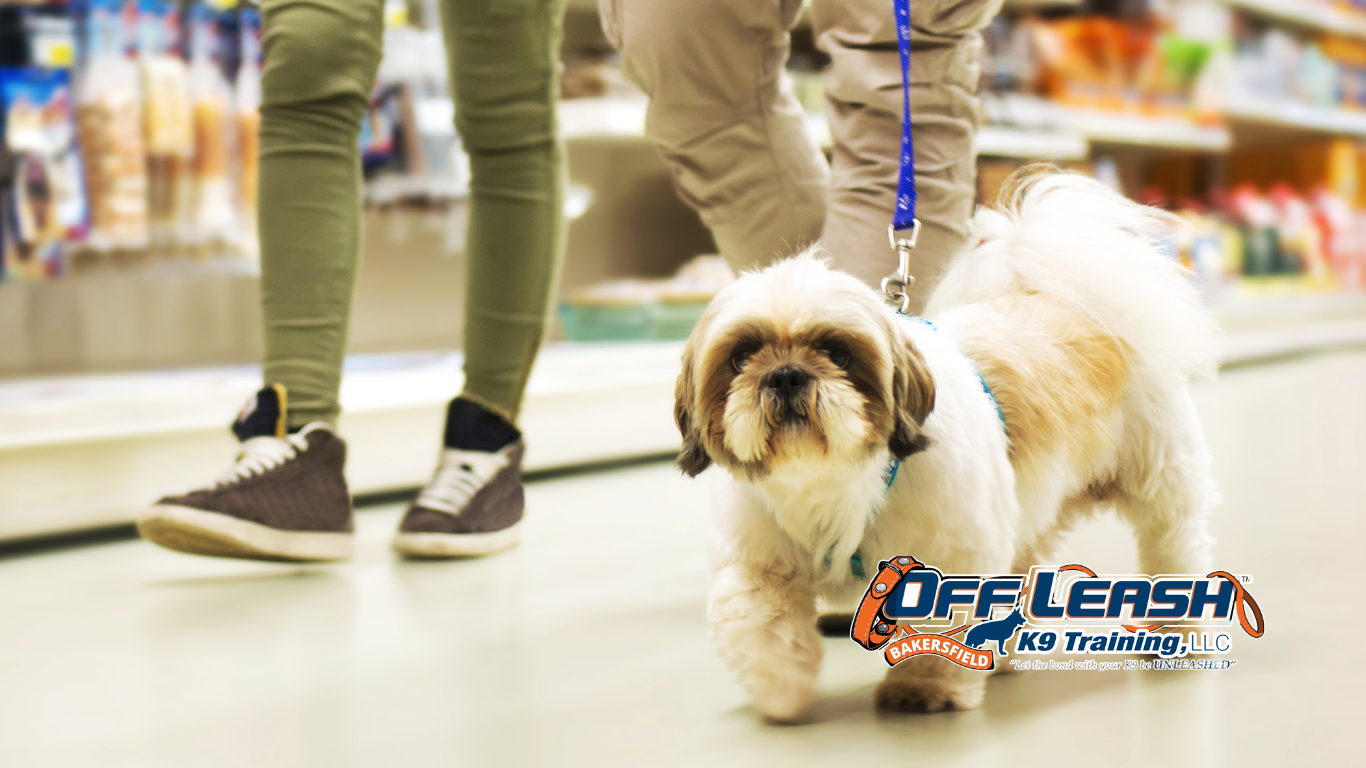
Struggle Near Shopping Centers: Why Dogs Struggle Near Shopping Centers
Struggle Near Shopping Centers is a common problem for many dogs, especially those that have limited experience in busy public environments. A dog that walks politely through a quiet neighborhood may suddenly begin pulling on the leash, barking, ignoring commands, or becoming anxious the moment they approach a shopping center.
To humans, shopping centers may seem like ordinary places. To dogs, however, they are incredibly stimulating environments filled with new sights, sounds, smells, and movement. Every direction offers something different to investigate. People carrying bags, children running, shopping carts rolling past, automatic doors opening unexpectedly, vehicles moving through parking lots, outdoor dining areas, delivery trucks, and unfamiliar dogs all compete for your dog’s attention.
For many dogs, this amount of sensory input becomes overwhelming.
When emotional arousal increases, a dog’s ability to focus on obedience decreases. Instead of paying attention to their owner, they become preoccupied with everything happening around them. Some dogs react with excitement, while others become fearful or frustrated. Regardless of the emotion, the result is often the same: pulling, barking, lunging, or ignoring commands.
Dogs that struggle near shopping centers may display behaviors such as:
- Pulling on the leash
- Barking at strangers
- Lunging toward people or dogs
- Sniffing constantly
- Ignoring commands
- Refusing treats
- Becoming overly excited
- Freezing or hesitating
- Whining
- Scanning every direction
These behaviors do not necessarily indicate poor obedience. More often, they reflect emotional overload. When a dog’s brain is trying to process dozens of distractions at once, learning becomes much more difficult.
Fortunately, these challenges can be improved through structured training. Dogs do not need to avoid shopping centers forever. Instead, they can gradually learn to remain calm, make better decisions, and stay connected with their owner despite the distractions around them.
For Bakersfield dog owners, shopping centers provide excellent real-world training opportunities. With the right approach, these environments become valuable places to build confidence, emotional regulation, loose leash walking, and reliable public obedience.
Key Takeaways
- Shopping centers expose dogs to many distractions at once.
- Emotional overload often causes pulling and barking.
- Dogs need gradual exposure to busy environments.
- Confidence-building improves public behavior.
- Emotional regulation supports better obedience.
- Loose leash walking becomes more difficult under stress.
- Consistent training builds reliable focus.
- Calm behavior should always be rewarded.
- Recovery after stimulating outings is important.
- Most dogs can learn to navigate shopping centers confidently with structured training.
What Does “Struggle Near Shopping Centers” Mean?
When dogs struggle near shopping centers, they have difficulty remaining calm, focused, and responsive because these environments contain far more stimulation than a typical neighborhood walk. A dog that walks politely on a quiet street may suddenly begin pulling, barking, lunging, whining, sniffing excessively, or ignoring commands as soon as they enter a busy commercial area.
This behavior is rarely a sign of stubbornness.
Instead, it usually means the dog’s brain is trying to process an overwhelming amount of information all at once.
Shopping centers expose dogs to:
- Moving people
- Shopping carts
- Automatic doors
- Loud vehicles
- Outdoor dining
- Food smells
- Children
- Other dogs
- Delivery trucks
- Unfamiliar noises
Each distraction competes for the dog’s attention.
When enough distractions occur simultaneously, emotional arousal rises, making it much harder for the dog to think clearly or respond to training.
Understanding this helps owners recognize that the problem is often emotional overload—not a lack of obedience.
Why Shopping Centers Overwhelm Dogs
Dogs experience the world differently than humans.
While people can easily filter out background activity, dogs naturally pay attention to movement, sounds, smells, and environmental changes.
Shopping centers provide stimulation in every direction.
Dogs may notice:
- Hundreds of unfamiliar scents
- Multiple conversations
- Sliding doors opening
- Shopping carts rolling
- Car engines
- Food cooking
- Birds flying
- Children running
- People carrying bags
- Sudden movement
Processing this amount of information requires tremendous mental effort.
Many dogs simply become overwhelmed.
Why New Environments Feel So Busy
Dogs depend heavily on familiarity.
Quiet neighborhood walks become predictable over time.
Shopping centers are different every day.
New people arrive.
Different vehicles appear.
Outdoor seating changes.
Seasonal decorations are installed.
Music may play outside.
Construction or maintenance may occur.
This constant unpredictability increases mental workload.
Environmental Pressure and Sensory Overload
Environmental pressure refers to the combined effect of everything happening around the dog.
Each individual distraction may seem small.
Together, however, they create sensory overload.
Examples include:
- Loud sounds
- Strong food smells
- Fast movement
- Crowded sidewalks
- Narrow walking spaces
- Unexpected greetings
- Traffic
- Reflections in store windows
As environmental pressure increases, dogs must work harder to remain emotionally balanced.
Why Sensory Overload Changes Behavior
Dogs experiencing sensory overload often display:
- Pulling
- Barking
- Constant sniffing
- Scanning every direction
- Refusing treats
- Ignoring commands
- Lunging
- Hyperactivity
- Freezing
- Difficulty relaxing
These behaviors occur because the dog’s attention is divided among numerous competing stimuli.
Instead of focusing on the owner, the dog attempts to process everything happening simultaneously.
Emotional Thresholds
Every dog has an emotional threshold.
Below threshold, dogs can:
- Eat treats
- Follow commands
- Walk politely
- Think clearly
Above threshold, they often:
- Ignore food
- Stop listening
- Pull harder
- React emotionally
- Become frustrated
Successful public training keeps dogs below this threshold whenever possible.
Why Dogs Ignore Commands in Busy Places
One of the most common owner frustrations is watching a well-trained dog suddenly ignore familiar commands.
At home the dog responds immediately.
Near a shopping center they seem to forget everything.
This happens because emotional arousal affects learning.
As excitement or stress increases:
- Attention narrows.
- Impulse control decreases.
- Problem-solving becomes harder.
- Obedience temporarily declines.
The dog is not intentionally ignoring the owner.
Their brain is simply prioritizing environmental information.
Why Focus Becomes Difficult
Imagine trying to study while surrounded by:
- Loud conversations
- Bright flashing lights
- Constant movement
- Strong food aromas
Concentrating would become difficult.
Dogs experience similar challenges in busy public places.
Their senses constantly receive new information.
Without practice, maintaining focus becomes nearly impossible.
Why Familiar Commands Suddenly Stop Working
Owners often notice their dog ignores cues such as:
- Sit
- Heel
- Watch me
- Leave it
- Come
The dog knows these commands.
The problem is emotional state—not memory.
Training should improve emotional regulation rather than simply repeating commands.
Fear vs. Excitement Around Crowds
Not every dog reacts to shopping centers for the same reason.
Some dogs become fearful.
Others become overly excited.
The behaviors may look similar while requiring different training approaches.
Fearful Dogs May:
- Freeze
- Tremble
- Avoid people
- Pull away
- Refuse treats
- Hide behind their owner
These dogs are attempting to increase distance from unfamiliar situations.
Excited Dogs May:
- Pull forward
- Jump
- Bark
- Whine
- Spin
- Rush toward people
These dogs want to investigate everything around them.
Both emotional states reduce focus.
Both require emotional regulation before obedience improves.
Why Emotional State Matters More Than Behavior
Two dogs may both bark near a shopping center.
One barks because they are excited.
The other barks because they are afraid.
Correctly identifying the underlying emotion allows owners to choose the appropriate training strategy.
Treating symptoms without understanding emotion rarely creates lasting improvement.
Emotional Regulation in Public
Emotional regulation allows dogs to experience exciting or unfamiliar situations without becoming overwhelmed.
Emotionally regulated dogs can:
- Notice distractions.
- Stay relaxed.
- Recover after surprises.
- Continue walking politely.
- Respond to commands.
- Accept treats.
- Make thoughtful decisions.
This ability develops through gradual practice.
It is not automatic.
Building Public Confidence
Confidence and emotional regulation develop together.
Helpful public training includes:
- Short successful outings
- Rewarding calm behavior
- Gradually increasing distractions
- Practicing engagement exercises
- Ending sessions before fatigue develops
Every successful outing teaches the dog that busy environments are manageable.
Common Shopping Center Triggers
Shopping centers contain numerous distractions that commonly challenge dogs.
Examples include:
- Automatic sliding doors
- Shopping carts
- Loudspeaker announcements
- Food smells
- Outdoor restaurant seating
- Children running
- Other dogs
- Delivery trucks
- Car horns
- Parking lot traffic
- Store employees carrying boxes
- Reflective glass windows
Dogs rarely struggle because of just one trigger.
Instead, the combination of many distractions creates emotional overload.
Learning to remain calm around these everyday situations prepares dogs for success in nearly every public environment. Through gradual exposure, structured training, and consistent practice, dogs develop stronger emotional regulation, better focus, and the confidence needed to navigate busy shopping centers without becoming overwhelmed.
Common Owner Mistakes
Many owners unintentionally make shopping center training more difficult by asking too much of their dog too soon. Busy commercial areas are some of the most distracting environments a dog will experience, so success depends on preparation, patience, and gradual progress.
Understanding these common mistakes helps dogs build confidence instead of becoming overwhelmed.
Starting in the Busiest Area
One of the biggest mistakes is walking directly into the center of a crowded shopping area.
Dogs immediately face:
- Large crowds
- Shopping carts
- Loud traffic
- Food smells
- Children
- Other dogs
The dog becomes emotionally overwhelmed before learning can begin.
Instead, begin training in quieter areas such as the edge of a parking lot or a calm sidewalk before gradually moving closer to heavier activity.
Expecting Perfect Obedience
Many owners expect their dog to perform exactly as they do at home.
However, obedience depends on emotional state.
A dog that performs perfectly in the backyard may struggle in public because their brain is processing dozens of distractions simultaneously.
Lower expectations while gradually increasing difficulty.
Repeating Commands
Owners often say:
- Heel.
- Heel.
- Heel.
- Watch me.
- Sit.
- Leave it.
Repeated commands rarely improve focus.
Instead, calmly create distance from distractions until your dog can respond successfully.
Moving Too Close to Triggers
Many dogs become overwhelmed when strangers, other dogs, or shopping carts pass within a few feet.
Training succeeds when dogs remain below their emotional threshold.
Creating additional space often restores focus immediately.
Skipping Breaks
Shopping centers require significant mental effort.
Long training sessions often lead to:
- Mental fatigue
- Frustration
- Slower responses
- Increased pulling
- Difficulty concentrating
Several short, successful outings are far more effective than one long session.
Teaching Calm Behavior Around Businesses
Dogs learn public manners gradually through repeated positive experiences.
The goal is not to eliminate distractions.
The goal is teaching dogs how to remain emotionally balanced despite those distractions.
Reward Calm Check-Ins
Whenever your dog voluntarily looks at you, reward the behavior.
This teaches:
“My owner is more valuable than everything happening around me.”
Over time, dogs begin checking in automatically.
Practice Loose Leash Walking
Reward your dog whenever the leash remains loose.
If pulling begins:
- Stop walking.
- Wait for relaxation.
- Continue only after the leash becomes loose again.
Consistency teaches that calm walking—not pulling—moves the walk forward.
Use High-Value Rewards
Busy environments require stronger motivation.
Many dogs respond well to:
- Small pieces of chicken
- Cheese
- Freeze-dried liver
- Turkey
- High-value commercial training treats
As your dog’s confidence improves, you can gradually reduce the value of rewards.
End Sessions Successfully
Always finish before your dog becomes mentally exhausted.
Successful endings build confidence.
Frustrating endings often increase stress during future outings.
Struggle Near Shopping Centers in Bakersfield
Bakersfield offers numerous opportunities for real-world obedience training.
Examples include:
- Outdoor shopping centers
- Retail parking lots
- Pet-friendly stores
- Sidewalk cafés
- Farmers markets
- Community events
- Business districts
- Apartment complexes
Each environment introduces different distractions.
Professional dog training helps Bakersfield owners improve:
- Loose leash walking
- Public obedience
- Emotional regulation
- Confidence
- Impulse control
- Focus around distractions
Gradual exposure helps dogs become comfortable without overwhelming them.
Long-Term Benefits of Public Exposure Training
Dogs that become comfortable around shopping centers often show improvement in many other environments.
Benefits include:
- Better leash manners
- Increased confidence
- Reduced reactivity
- Improved focus
- Stronger engagement with the owner
- Better impulse control
- Easier veterinary visits
- Improved social behavior
- Greater emotional stability
- More enjoyable family outings
Public exposure prepares dogs for everyday life rather than limiting obedience to quiet environments.
Frequently Asked Questions
1. Why does my dog behave differently near shopping centers?
2. Is my dog being stubborn?
Usually not. Most dogs become emotionally overwhelmed rather than intentionally ignoring commands.
3. Should I force my dog to walk through crowds?
No. Gradual exposure is much more effective than forcing dogs into overwhelming situations.
4. Why won’t my dog take treats near stores?
Refusing food often indicates that emotional arousal is too high. Move farther away until your dog feels calm enough to eat.
5. Can puppies train at shopping centers?
Yes. Short, carefully managed visits help puppies build confidence while avoiding overstimulation.
6. How often should I practice?
Several short sessions each week usually produce better progress than occasional long outings.
7. What if my dog barks at shopping carts?
Begin far enough away that your dog notices the cart but remains relaxed. Reward calm behavior and gradually decrease the distance over time.
8. Can professional training help?
9. Will my dog ever enjoy busy public places?
Most dogs become significantly more comfortable with patient, consistent exposure and confidence-building exercises.
10. What is the most important skill for shopping center training?
Emotional regulation. Dogs that remain calm are far more capable of listening, learning, and making good decisions in busy environments.
Comprehensive Conclusion
Struggle Near Shopping Centers is a challenge many dogs face because these environments combine nearly every type of distraction imaginable. Moving crowds, shopping carts, automatic doors, food smells, traffic, unfamiliar dogs, and constant activity can overwhelm even dogs that behave well in quieter locations. When emotional arousal rises, focus naturally declines, making pulling, barking, and ignoring commands much more likely.
The solution is not to avoid busy places forever. Instead, dogs benefit from gradual exposure, structured training, and opportunities to build confidence at a pace they can handle. By rewarding calm behavior, practicing loose leash walking, encouraging regular check-ins, and ending outings on a positive note, owners help their dogs develop the emotional regulation needed to navigate public environments successfully.
For Bakersfield dog owners, shopping centers are valuable real-world classrooms. Whether visiting pet-friendly businesses, walking near outdoor dining areas, or passing through busy retail districts, each outing provides an opportunity to strengthen focus, confidence, and self-control. Over time, these consistent experiences help dogs understand that busy environments are not something to fear or become overly excited about—they are simply another place to remain calm and connected with their owner.
Ultimately, successful public behavior is built through patience, consistency, and trust. A dog that can walk politely through a shopping center without becoming overwhelmed demonstrates more than good obedience—they show emotional resilience, confidence, and the ability to make thoughtful decisions despite distractions. Those skills improve not only public outings but every aspect of life together, creating a calmer, safer, and more enjoyable partnership between dog and owner.
"*" indicates required fields