The Power of Consistency in Dog Training
A well-trained dog is not a product of chance but of systematic effort. Ever wondered why some dogs are seamlessly obedient while others struggle with basic commands? The secret lies in the owner’s unwavering commitment to consistent training techniques.
Consistency has long been lauded as the cornerstone of effective dog training. Historical accounts show that even ancient civilizations recognized the value of repeated behaviors to instill discipline in animals. Modern studies reinforce this, noting that dogs trained with consistent routines show a 50% higher success rate in skill retention and obedience compared to irregular training methods.
Consistency in dog training is essential as it helps dogs understand expectations, builds confidence, and reduces anxiety. By using the same commands, rewards, and corrections consistently, owners create clear communication channels with their dogs. This consistent approach promotes better behavior, stronger obedience, and a more harmonious relationship between dogs and their handlers.
The Power of Consistency in Dog Training
Consistency is a key element in dog training, ensuring that dogs understand and adhere to commands reliably. When training is consistent, dogs develop a clear idea of what is expected of them. This predictability helps reduce their anxiety and builds their confidence. Consistent training can create strong habits that stick. As a result, well-trained dogs often exhibit better behavior and enhanced obedience.
Handlers play a crucial role in maintaining this consistency. It’s important to use the same commands and rewards each time a behavior is reinforced. This helps the dog link the command to the action clearly. Inconsistent signals can confuse dogs, making training less effective. By being disciplined, handlers can create a structured and successful training environment.
Structured routines are essential to maximize the benefits of consistent training. These routines should incorporate regular practice sessions at the same time each day. This predictability helps dogs understand when it’s time to learn or play. It also reinforces the consistent behavior expected from them. With structured routines, dogs can develop more rapidly.
Consistency in training also extends to correcting undesired behaviors. When a dog exhibits an unwanted behavior, it’s critical to address it consistently. This means using the same method of correction each time. Consistent corrections help the dog understand which behaviors are unacceptable. Over time, this will lead to a well-disciplined and well-behaved pet.

The Science Behind Consistent Training Methods
Scientific studies have shown that consistent training methods produce better results in dog behavior. The repetitive nature of consistent commands helps dogs form strong neural connections. This process is called habituation. It means dogs can quickly recognize patterns and react appropriately. Habituation makes training faster and more effective.
Behavioral science also highlights the importance of positive reinforcement in dog training. When a dog receives a reward for a specific behavior, their brain releases dopamine. This chemical makes the dog feel good and encourages them to repeat the action. Consistent positive reinforcement strengthens this bond. Over time, it builds a solid foundation of good behaviors.
Consistent training methods also benefit the bond between the handler and the dog. Creating trust through regular, predictable interactions is crucial. This trust encourages dogs to obey commands more willingly. It also reduces fear-related responses. When dogs know what to expect, they feel more secure and responsive.
Research indicates that inconsistent training can lead to confusion and anxiety in dogs. Mixed signals may result in unpredictable behavior. To avoid this, handlers should stick to a routine that the dog can easily follow. Consistency helps the dog understand the desired actions. Predictable training sessions ensure a calmer, more focused learning environment.
Essential Consistency Techniques for Effective Training
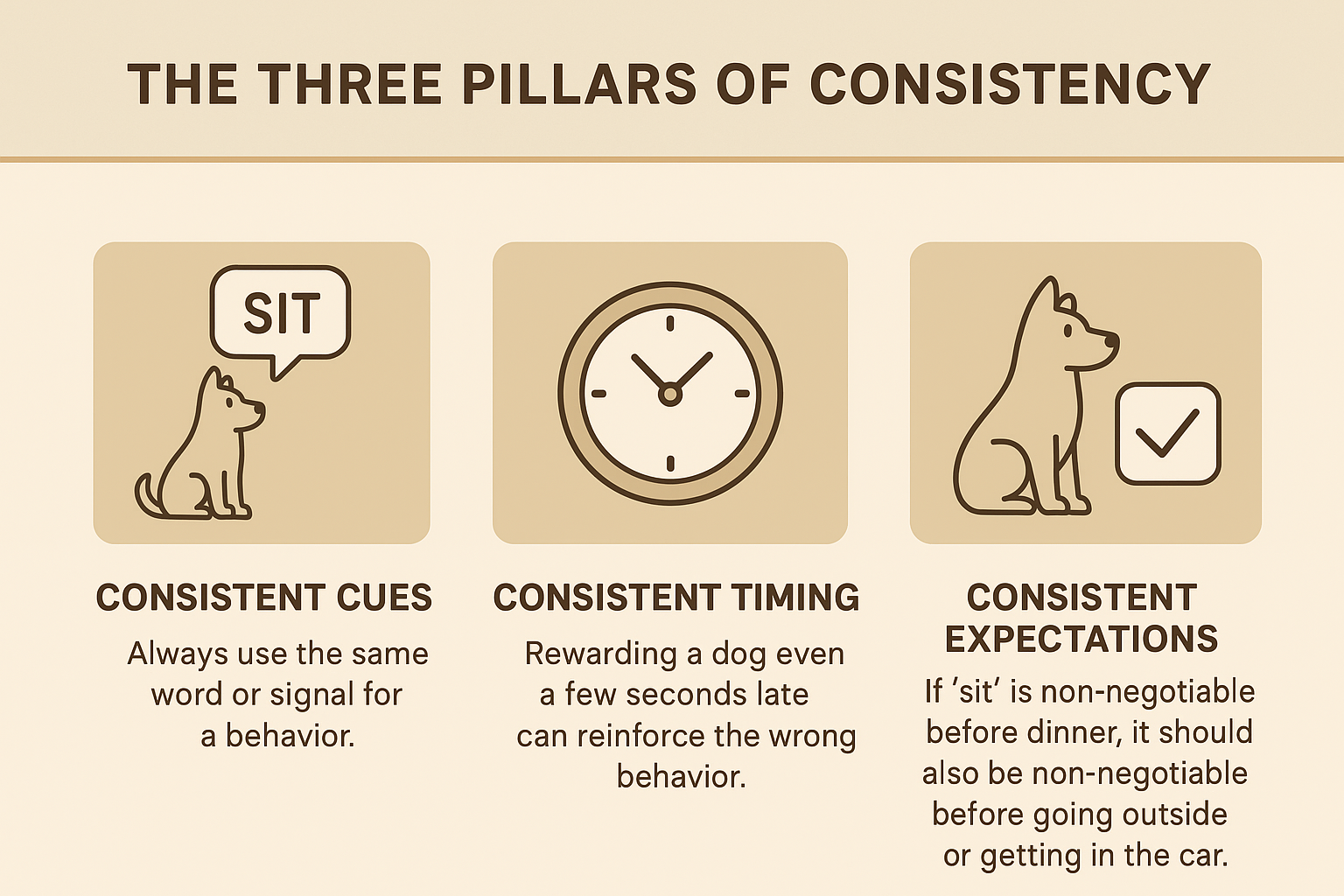
Effective dog training relies on several key consistency techniques. One important technique is using the same commands for specific actions. For example, always say “sit” for that action, never “sit down.” This helps your dog understand what you want clearly. Consistent language is crucial for effective communication.
Timing also plays a significant role in consistent training. Rewards or corrections should happen immediately after the action to help the dog link the behavior with the consequence. This immediate feedback is vital for learning. Consistent timing reinforces proper behavior quickly. Delayed responses can confuse the dog and make training less effective.
Establishing a regular training schedule helps maintain consistency. Training sessions should be at the same time each day, ensuring the dog knows when to expect them. This creates a routine, making learning easier for the dog. Keeping sessions short and focused prevents fatigue. Consistent practice leads to steady progress.
- Use the same commands every time
- Immediate rewards or corrections
- Regular training schedule
- Short, focused sessions
Another effective technique is consistent body language and tone of voice. Dogs pick up on non-verbal cues, so handlers should use the same gestures and tone when giving commands. This helps the dog associate specific actions with both verbal and non-verbal signals. Consistent cues reduce confusion and improve response time. Unified communication methods enhance the overall training experience.
Case Studies: Success Stories of Consistency in Dog Training
One notable success story comes from Max, a Border Collie with severe anxiety. His owners committed to a consistent training schedule, using the same commands and rewards. Over time, Max’s confidence grew, and he began obeying commands reliably. The structured routine helped him understand what was expected. Now, Max excels in agility training and enjoys a calm, happy life.
Luna, a stubborn Labrador Retriever, had trouble following commands. Her handler used consistent positive reinforcement techniques to turn things around. By rewarding Luna immediately for correct actions, she quickly learned desired behaviors. These consistent methods transformed Luna into an obedient and eager-to-please companion. Today, she’s a therapy dog, bringing joy to many.
Another example is Rocky, a rescued German Shepherd with behavioral issues. Rocky’s new owner implemented a consistent training plan, addressing his unwanted behaviors right away. This approach included regular practice sessions and immediate corrections. Rocky’s progress was remarkable, and he soon became a friendly, well-mannered dog. Consistency made all the difference in his rehabilitation.
Bella, a young Poodle with a lot of energy, benefited from consistent body language cues. Her owner always used the same gestures and tone of voice for commands. This consistency helped Bella understand and respond quickly. Today, she performs a variety of tricks and commands effortlessly. Clear, consistent communication was key to her success.
A final story involves Charlie, a Beagle who loved to dig up the yard. His owners addressed this behavior consistently, using the same correction method every time. They also provided alternative activities to keep him engaged. With consistency, Charlie learned to redirect his energy and stopped digging. Consistent corrections helped reinforce acceptable behaviors.
Challenges and Solutions in Maintaining Training Consistency
One common challenge in maintaining training consistency is the handler’s busy schedule. Finding time to train the dog regularly can be difficult. A solution is to incorporate short training sessions into daily activities. Even a few minutes each day can make a difference. Consistent training doesn’t have to be lengthy to be effective.
Another issue is family members giving different commands or using different training techniques. This inconsistency can confuse the dog and slow progress. To address this, all family members should agree on the same commands and methods. Clear communication helps ensure everyone is on the same page. Regular family meetings can reinforce this approach.
Handlers may also struggle with maintaining consistency due to changes in their mood or energy levels. It’s important to stay calm and patient during training sessions. If you’re having a rough day, consider skipping the session rather than risking inconsistent signals. Maintaining a positive and controlled environment is crucial. Consistent mood and energy levels help the dog feel secure.
- Keep training sessions short but regular
- Ensure all family members use the same commands
- Communicate clearly and hold family meetings
- Maintain a positive and calm demeanor
Traveling or changes in routine can disrupt a dog’s training schedule. To minimize this impact, handlers can incorporate portable training tools and exercises. Consistency can be maintained even while on the go. Bringing familiar items from home can help the dog feel more comfortable. Adapting training to new environments keeps progress on track.
Finally, dogs may get bored with the same training exercises. To combat this, handlers should vary the activities while keeping the commands consistent. Introducing new games and challenges can keep the dog engaged. Consistency in training doesn’t mean repetition—it means clarity. Keeping sessions interesting encourages continuous learning.
Frequently Asked Questions
Consistency in dog training is vital for effective behavior management and building a strong bond with your pet. Here, we address common questions to help you understand the importance and techniques of consistent training.
1. How does consistency affect a dog’s behavior?
Consistency in training directly impacts a dog’s understanding of commands and rules. When commands and routines are the same each time, dogs quickly learn what is expected. This reduces confusion and prevents anxiety, making them more obedient and relaxed. Over time, dogs develop good habits through clear and repetitive instruction.
Inconsistent signals often lead to mixed behavior because the dog isn’t sure what the correct action is. This can slow down the training process and create frustration for both the dog and the trainer. Therefore, maintaining a consistent approach ensures a well-behaved and happy pet.
2. What are effective consistency techniques in dog training?
Effective training begins with using the same commands and rewards consistently. This means every family member or handler needs to use identical words for each command. Consistent rewards, whether treats or praise, reinforce the desired behavior. Another technique is to keep training sessions short but frequent. This ensures the dog remains engaged and retains information better.
It’s also helpful to integrate training into daily routines. For example, practice “sit” before meal times, so the dog associates it with positive outcomes. Ensuring consistency in corrections is just as crucial. Address undesirable behavior immediately and in the same manner each time.
3. Can different family members use different commands?
For effective and speedy training, it is best if all family members use the same commands. Differing words and signals can confuse the dog, leading to slower learning and inconsistent obedience. It’s crucial that everyone communicates using standardized commands like “sit,” “stay,” and “come.” This uniformity helps the dog understand expectations clearly.
Family meetings can ensure everyone is on the same page regarding training methods. This not only speeds up the training process but also makes the dog’s learning experience smoother. When everyone in the household is consistent, the dog becomes well-adjusted and quicker to respond to commands.
4. Why is timing important in consistent dog training?
Timing is critical because dogs need immediate feedback to understand the connection between their action and your response. Praise or correct within seconds of the behavior for maximum effectiveness. Delayed reactions can confuse the dog and weaken the training’s impact. Consistent timing ensures the dog associates actions with outcomes clearly.
For example, if you tell your dog to “sit” and they do it properly, giving them a treat right away reinforces the good behavior. On the flip side, if they jump on a guest and you wait too long to correct them, they won’t understand what they did wrong. Consistent timing, therefore, makes training more efficient.
5. How can technology help maintain training consistency?
Technology can be an excellent tool for maintaining consistency in dog training. Training apps can set reminders for regular practice sessions and track progress. Some apps also offer real-time feedback and tips, which can be particularly helpful for new dog owners. Devices like automatic treat dispensers can help reinforce good behavior even when you’re not home.
Additionally, online training courses can provide structured plans and consistency. These programs often include video demonstrations, which show the correct techniques and timings. Wearable devices that monitor a dog’s activity levels also offer insights into how well your training is progressing. Technology thus aids in delivering consistent and well-timed training.
Final Thoughts on Consistent Dog Training
Consistency in dog training is not just beneficial but essential for lasting results. A dog that receives clear and consistent signals learns faster and behaves better. This practice strengthens the bond between the dog and the trainer. Stress and confusion are minimized, leading to a happier pet.
By applying consistent techniques, dog owners can achieve remarkable improvements in their pets’ behavior. The key is to stay patient and remain committed to the process. Consistency not only makes training more effective but also transforms it into a rewarding experience for both the dog and the owner. So, keep your training routines steady, and enjoy the positive changes in your dog’s behavior.
"*" indicates required fields