Developing impulse control in puppies
It has been said that a well-behaved puppy is the result of a dedicated trainer. While it’s true that some puppies naturally exhibit better impulse control than others, all can benefit from structured training. Imagine the transformation when patience meets technique, leading to remarkable improvements in a puppy’s self-control.
The concept of impulse control in puppies has evolved significantly in the last few decades. Historically, many trainers overlooked the importance of developing this skill. Yet, contemporary studies indicate that early impulse control training can reduce behavioral issues by nearly 60%. Therefore, incorporating these methods into routine training can be a game-changer for both puppies and their handlers.
Developing impulse control in puppies involves consistent training with commands like “wait” and “leave it,” rewarding calm behavior, and using interactive toys to engage their minds. Regular practice and patience help puppies learn restraint, leading to better social interactions, reduced destructive behaviors, and a safer environment for both the puppy and the owner.
Developing impulse control in puppies
Developing impulse control in puppies is essential for their growth and integration into your home. Puppies, by nature, are curious and energetic, often acting on immediate urges. Without proper training, these impulses can lead to destructive behavior. Training helps them learn patience and the importance of waiting. This skill is vital for their safety and your peace of mind.
Training puppies involves various techniques, each aimed at teaching restraint and patience. One effective method includes rewarding calm behavior with treats. This positive reinforcement encourages puppies to associate good behavior with rewards. Consistency in training sessions is crucial. Regular practice helps puppies understand and internalize these new behaviors.
Another useful technique is to use commands like “sit” and “stay”. These commands teach puppies to wait for your cue before acting. Incorporating these commands into daily routines enhances their effectiveness. For example, making a puppy sit before receiving food can reinforce patience. This simple exercise can significantly improve their impulse control over time.
Recognizing progress is important, as it reinforces the training process. Early signs of improved impulse control include longer periods of sitting calmly. Celebrating these small victories keeps both the puppy and the trainer motivated. Over time, these behaviors become habits, leading to a well-behaved adult dog. This gradual improvement is a testament to the effectiveness of consistent training.
Key behaviors that signal impulse control in young dogs
Puppies often show signs of developing impulse control through specific behaviors. One key sign is the ability to wait patiently for meals. Instead of jumping around excitedly, a puppy may sit or stay calmly as their food is prepared. This behavior indicates that they are learning to control their immediate urges. Consistent reinforcement of this habit can lead to better self-regulation.
Another behavior that signals impulse control is a puppy’s response to commands like “leave it”. When a puppy can resist the temptation to grab a treat or toy immediately, it shows restraint. Training sessions focused on this command are very beneficial. The puppy learns to pause and look to the trainer for permission. This pause demonstrates growing awareness and control over impulses.
Young dogs also exhibit impulse control when they greet people calmly. Instead of jumping up to seek attention, a calm sit or waiting behavior is preferred. This change in behavior is a clear indication of impulse control development. It makes social interactions more pleasant for everyone. Encouraging this behavior with rewards helps reinforce it.
Lastly, playing games like fetch can help gauge impulse control. A puppy that waits for the command to retrieve a thrown toy shows patience. This behavior suggests they are learning to manage their excitement. Structured playtime with clear rules can enhance impulse control. It’s a fun way to practice these skills consistently.
Why impulse control matters for puppies
Impulse control is essential for puppies because it ensures their safety. Puppies without impulse control might dart into the street without warning. This can lead to dangerous situations and accidents. By teaching impulse control, we reduce these risks. Moreover, it helps puppies learn to navigate their environment safely.
Proper impulse control aids in developing social skills in young dogs. Puppies that can wait their turn or avoid jumping on guests contribute to better social interactions. This helps in building a positive relationship with humans and other animals. Socially adaptive puppies are more likely to be welcomed in various environments. This adaptability is crucial for their long-term well-being.
Training puppies to control their impulses also brings peace to the household. Puppies with poor impulse control may chew on furniture, bark excessively, or show aggression. Teaching them to channel their energy appropriately prevents these issues. As a result, the home becomes a more harmonious place for both dogs and their owners.
Finally, impulse control is the foundation for more advanced training. Puppies that learn to control themselves can easily pick up other commands. This paves the way for success in obedience training. A well-trained puppy has fewer behavioral problems. Therefore, investing time in impulse control training pays off in numerous ways.
Common challenges trainers face during impulse control sessions
One common challenge trainers encounter is dealing with a puppy’s short attention span. Puppies are naturally curious and get easily distracted by their surroundings. This makes it difficult to keep them focused during training sessions. Trainers often need to use high-value rewards to capture and maintain attention. Consistency in training helps overcome this hurdle.
Another challenge is managing a puppy’s energy levels. High-energy breeds may find it particularly tough to sit still and follow commands. This requires trainers to incorporate physical activity before starting impulse control exercises. A tired puppy is more likely to comply with instructions. Balancing exercise and training is key in such cases.
Trainers also struggle with different learning paces among puppies. Some puppies pick up commands quickly, while others need more time. This can be frustrating for trainers who seek uniform progress. Tailoring training techniques to each puppy’s learning curve is essential. Patience and adaptability are critical traits for successful trainers.
External distractions pose another significant challenge during impulse control training. Noises, other animals, and unfamiliar scents can disrupt the training process. Trainers must gradually introduce these stimuli to build a puppy’s concentration. Controlled environments can aid in minimizing distractions at the beginning. Over time, the goal is to train puppies to focus despite these distractions.
Finally, dealing with inconsistent reinforcement at home is a common issue. Families might unknowingly reinforce bad behavior, making it harder for the puppy to learn impulse control. Clear communication between trainers and puppy owners is vital. Consistent application of training methods at home ensures better results. Education of the whole family plays a crucial role in this process.
Effective methods and exercises for building impulse control
One effective method for building impulse control in puppies is the “wait” command. This exercise teaches puppies to pause and wait for your signal before proceeding. Starting with short waits and gradually increasing the duration can build their patience. Use treats as rewards to reinforce positive behavior. Consistent practice of this command can yield impressive results.
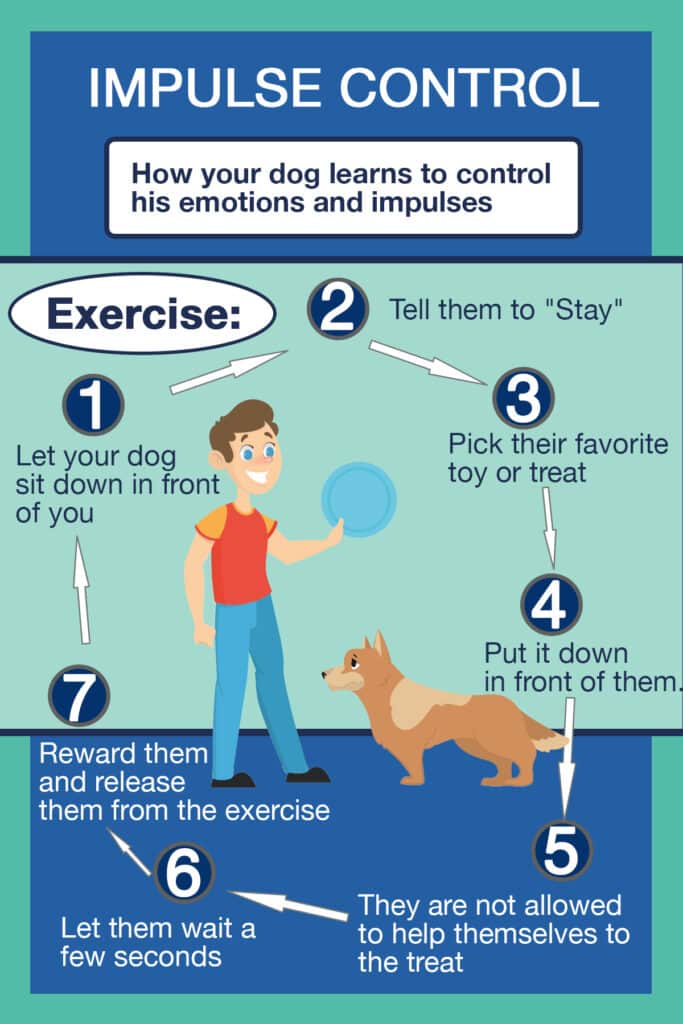
The “leave it” command is another useful exercise. This command helps puppies resist the temptation to grab or investigate an object. Begin by presenting a treat and saying “leave it”. Reward the puppy only when they obey the command. Repetition of this exercise helps solidify the behavior. It’s especially useful in preventing puppies from picking up harmful items.
Using feeding time as a training opportunity can also be very effective. Make your puppy sit and wait before giving them their meal. This teaches them to control their excitement and wait for permission. Over time, the puppy will learn to associate calm behavior with receiving food. This method integrates impulse control training into their daily routine.
Interactive toys can provide both mental stimulation and impulse control training. Toys that dispense treats only when manipulated in specific ways can engage your puppy’s mind. These toys encourage patience and problem-solving skills. Introducing such toys can make training fun and rewarding. They also offer a good way to keep your puppy occupied and reduce undesirable behaviors.
Obedience classes are another excellent way to build impulse control. These classes provide a controlled environment with professional guidance. Puppies can practice commands and learn to manage their impulses in a social setting. The structured nature of the classes provides consistency. Additionally, the presence of other dogs helps in developing better social behavior.
Signs of progress and long-term benefits
Recognizing signs of progress in your puppy’s impulse control is rewarding. One clear indicator is their ability to remain calm during previously exciting situations. For example, a puppy that used to jump at the doorbell now stays seated. This shows significant improvement. It’s a positive sign that training efforts are paying off.
Improved impulse control can lead to better social interactions. Puppies that can control their excitement are more pleasant around people and other pets. They learn to greet guests politely and interact calmly with other dogs. This behavior is beneficial for attending social gatherings. It makes your puppy a well-adjusted and welcome companion in various settings.
Long-term benefits of impulse control training include a more harmonious household. A well-trained puppy is less likely to engage in destructive behaviors like chewing furniture. This reduces stress for pet owners and creates a more peaceful living environment. Consistent training leads to a happier, well-mannered pet. The effort invested in training pays off immensely over time.
Advanced training becomes easier with a foundation of impulse control. Puppies that understand basic commands like “wait” and “leave it” can quickly learn more complex tasks. This foundation is crucial for specialized training such as agility or therapy work. It broadens the opportunities for your puppy’s growth. The skills gained enhance their overall quality of life.
Improved impulse control also has safety benefits. Puppies that can control their urges are less likely to run into dangerous situations. They become more aware of their surroundings and respond better to commands. This awareness can prevent accidents and injuries. Ensuring your puppy’s safety is a significant long-term benefit of impulse control training.
Frequently Asked Questions
Puppy training is a vital part of ensuring young dogs grow into well-behaved adults. Here are some common questions and answers about enhancing impulse control in puppies.
1. How long does it take to develop impulse control in puppies?
The time it takes to develop impulse control in puppies varies based on the dog and consistent training. Generally, it can take a few weeks to several months. Puppies learn at their own pace, with some picking up commands faster than others.
Consistency and patience are critical in training. Regular practice with commands and reinforcement builds strong habits and helps puppies understand expected behaviors over time. Remember, every dog is unique, and progress may differ.
2. What are common mistakes to avoid during impulse control training?
A frequent mistake is inconsistent reinforcement. If rules are not applied consistently, puppies become confused. This leads to inconsistent behavior. It’s crucial to ensure everyone in the household follows the same training guidelines.
Another mistake is using harsh punishment. Negative reinforcement can cause fear and anxiety, hindering progress. Positive reinforcement, like treats and praise, fosters a happier and more responsive puppy. Patience and kindness are key.
3. Can older dogs learn impulse control?
Yes, older dogs can learn impulse control, although it may require more patience. Training older dogs is possible with consistent practice and positive reinforcement. Dogs respond well to structured routines and clear commands.
It’s important to start with basic commands and gradually increase the complexity of tasks. Even older dogs benefit from mental stimulation and structured training. Their progress might be slower, but they can still achieve significant improvements.
4. Are there specific breeds that struggle more with impulse control?
Some breeds may naturally have more energy and impulsive behaviors. Breeds like Border Collies, Jack Russell Terriers, and Siberian Huskies are known for high energy levels. These breeds might require extra effort and patience during training.
However, with the right techniques and consistency, all breeds can learn impulse control. Tailored training approaches that consider breed-specific traits can be highly effective. Understanding a breed’s characteristics helps in setting realistic expectations.
5. How do interactive toys help with impulse control?
Interactive toys are beneficial for teaching impulse control. These toys require problem-solving and patience to access rewards. They engage a puppy’s mind and help them practice restraint. For example, treat-dispensing toys encourage puppies to work for their rewards slowly.
This process reduces boredom and redirects energy into positive activities. Using interactive toys consistently can enhance training and make learning fun for your puppy. They provide mental stimulation, which is as important as physical exercise.
Teach Your Puppy Impulse Control: Impulse Training Drills For Your Dog
Conclusion
Developing impulse control in puppies is essential for their safety and well-being. Through consistent training and patience, puppies can learn to manage their immediate urges. This training leads to better social interactions and a more harmonious household. Ultimately, the benefits of impulse control extend far into their adult life, ensuring a happier, well-adjusted pet.
By understanding the challenges and employing effective methods, trainers and owners can make significant strides. Using tools like interactive toys and positive reinforcement enhances the training experience. Recognizing progress and celebrating small victories motivates both the puppy and the trainer. Investing time and effort in impulse control training is truly rewarding.
"*" indicates required fields