Understanding Dog Prey Drive and How to Manage it.
Dogs’ instincts can sometimes surprise us, especially when it comes to prey drive. Picture this: a peaceful walk suddenly turns into a frenzied chase as your dog bolts after a squirrel. This powerful, primal impulse can be a challenge for even the most experienced dog owner.
Understanding the origins of prey drive helps in managing it more effectively. Prey drive is deeply ingrained and stems from dogs’ wild ancestors who relied on hunting for survival. Engaging in controlled activities like lure coursing or fetch can satisfy this natural instinct while maintaining safety and control. For instance, approximately 50% of dogs have high prey drives, which highlights the importance of managing this behavior to prevent potential risks or accidents.
Dog prey drive, an instinctual behavior rooted in their ancestry, drives them to chase and capture moving objects. Managing it involves structured activities like lure coursing, impulse control training, and focus exercises. Recognizing triggers and redirecting energy through controlled outlets ensures safety while fulfilling their natural instincts effectively.
What is Dog Prey Drive?
Dog prey drive is an instinctual behavior that encourages dogs to chase, capture, and sometimes kill moving objects. This behavior traces back to their wild ancestors who relied on these skills for hunting and survival. Although domesticated dogs no longer need to hunt for food, this intense energy and drive still remain. It’s a powerful force that can be triggered by anything from a squirrel to a passing car. Understanding this natural instinct is crucial for dog owners.
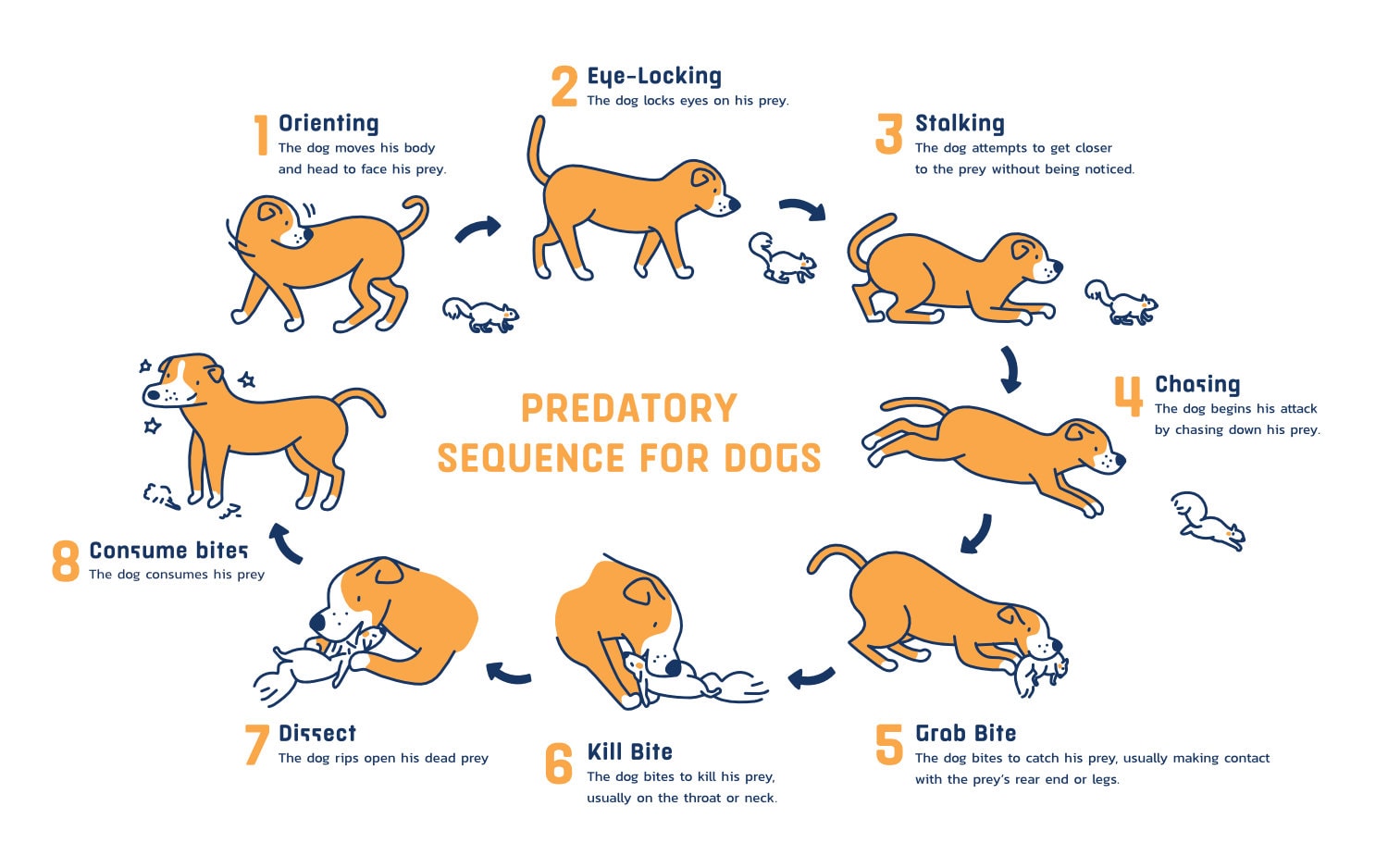
The prey drive consists of several stages, each activating different behaviors. The stages include searching, stalking, chasing, capturing, and killing. Not every dog exhibits all stages; some may only show interest in chasing but not capturing. This sequence can vary based on breed and individual temperament. For example, herding breeds like Border Collies often display strong stalking and chasing behaviors.
Several breeds have a particularly high prey drive due to their genetic makeup. Dogs like Greyhounds and Terriers were historically bred for their hunting abilities. This means they’re more likely to exhibit strong prey drive behaviors. Such dogs require more vigilance and specific training to ensure their instincts do not lead them into dangerous situations. Knowing your dog’s breed traits can help in managing these instinctual behaviors effectively.
Prey drive can be both a blessing and a challenge for dog owners. On one hand, it showcases the agility and intelligence of dogs. On the other hand, it can lead to unwanted chasing and even potential harm. Therefore, redirecting this energy into positive activities like fetch or scent work can be beneficial. Engaging in structured activities helps fulfill their instincts safely and control their behaviors better.
The Biological Roots and Evolutionary Functions of Prey Drive
Prey drive in dogs has deep biological roots. This instinct evolved over thousands of years to help wild ancestors survive. They had to rely on hunting to find food. Over time, these skills were passed down through generations. This made the prey drive an integral part of their makeup.
The different stages of prey drive reflect the natural hunting process. First, dogs locate their prey, then stalk, chase, capture, and, historically, kill it. Each stage involves specific actions and sharpens their focus and coordination. These behaviors were essential for sustaining life in the wild. Even now, in domestic settings, these instincts remain relevant.
Prey drive also plays a role in communication and hierarchy in the wild. Pack animals depended on coordinated hunting efforts. This helped with social bonding and distribution of resources. Wild dogs would often show their status through successful hunts. Such dynamics are less visible in pets but still influence behavior.
Certain breeds were selectively bred to enhance prey drive. For example, Terriers and Hounds have heightened instincts due to their historical tasks. These breeds were developed to excel in hunting and tracking. This selective breeding ensured they remained agile and focused. Thus, understanding their genetic background is crucial for managing their behavior today.
Signs of High Prey Drive in Dogs
Dogs with high prey drive often display noticeable behaviors. They might become fixated on small animals, birds, or even moving objects like bicycles. This intense focus is hard to break and can lead to sudden, unexpected chases. While this can seem playful, it can quickly escalate. Owners may notice their dogs staring, crouching, or even trembling with excitement.
Another common sign is darting movement. Dogs with high prey drive tend to pounce on objects, whether it’s a toy or a creature. They may also exhibit behaviors like lunging on the leash, pulling hard towards their target. This can make walks stressful and challenging for an unprepared owner. Over time, these patterns become more evident and frequent.
Vocalization is also a key indicator. Dogs might bark, whine, or growl when they spot potential prey. This sound is often high-pitched and insistent, reflecting their heightened arousal. They might also display a stiff body posture combined with a rapidly wagging tail. These signals are worth noting, especially in breeds known for high prey drive.
In some cases, dogs show relentless energy and determination. They might dig persistently in certain spots, trying to uncover hidden critters. Their excitement levels can spike dramatically. This often results in restless behavior and difficulty calming down. Observing these signs helps in identifying and managing high prey drive effectively.

Effective Training Techniques to Manage Prey Drive
Training a dog with high prey drive starts with awareness and consistency. The first step is to recognize the trigger points for your dog. These could be small animals, fast-moving objects, or even specific sounds. Once you know the triggers, you can work on creating controlled environments for training exercises. Building a consistent routine helps your dog understand what’s expected.
Focus training is a critical technique. This involves teaching your dog to pay attention to you despite distractions. Use treats or favorite toys to keep their focus. Simple commands like “watch me” or “focus” can be very effective. Over time, your dog will learn to shift their attention from potential prey to you, even in high-distraction scenarios.
Desensitization and counter-conditioning can also be helpful. Gradually expose your dog to their triggers in a controlled manner. Pair these exposures with positive rewards when they remain calm or focused. This helps in reducing the excitement or anxiety associated with the triggers. Over time, your dog’s reaction to prey can be significantly moderated. This gradual approach builds confidence and control.
Engaging your dog in structured activities is another excellent strategy. Activities like agility training, nose work, or even fetch can channel their prey drive constructively. It allows them to exercise their instincts in a safe and controlled environment. This not only satisfies their drive but also improves their overall behavior. Scheduling regular play sessions helps burn off excess energy.
Impulse control exercises are valuable too. Teaching commands like “leave it” or “stay” can save your dog from dangerous situations. Practice these commands consistently using rewards. By reinforcing these behaviors, you create a safer environment for your dog. Consistent reinforcement ensures these habits stick.
Activities to Redirect and Fulfill Prey Drive Instincts
Engaging in lure coursing can be an excellent way to redirect your dog’s prey drive. This sport involves a mechanical lure that dogs chase around a course. It mimics the sensation of hunting and allows dogs to exert their energy safely. Many dog breeds find this activity both stimulating and fulfilling. It also provides a great physical workout.
Interactive toys can also be beneficial. Toys like flirt poles, which mimic the movement of prey, offer a controlled environment for dogs to practice chasing. These toys can be used in your backyard or a local park. Regular play with such toys keeps dogs mentally and physically engaged. Additionally, it helps build a stronger bond between you and your pet.
Nose work activities tap into a dog’s natural hunting instinct by using their keen sense of smell. Hide treats or toys in various spots and let your dog find them. This activity is mentally stimulating and very rewarding for dogs. It channels their natural instincts in a positive way. Plus, it’s a fun game for both the dog and the owner.
Agility training can also serve as an outlet for prey drive. This high-energy activity involves navigating through obstacle courses. It requires focus, speed, and coordination. Regular practice in agility not only fulfills prey drive but also improves overall obedience. Moreover, it’s an inclusive activity that strengthens the human-dog connection.
Enrolling in structured activities, like scent work classes, can provide a controlled environment for your dog to thrive. These classes are designed to enhance your dog’s natural abilities. They offer a focused outlet for their energy and instincts. Such classes also provide a social aspect, allowing dogs to interact with others in a guided setting. This makes the experience enriching and fun for both dogs and their owners.
Frequently Asked Questions
Dog prey drive is a fascinating behavior stemming from their hunting instincts. Here are some frequently asked questions to help you understand and manage this drive in your canine companion.
1. What breeds are known for having high prey drive?
Breeds such as Greyhounds, Border Collies, and Terriers are especially known for their high prey drive. These dogs were bred for hunting, herding, or chasing, enhancing their instinctual desire to pursue moving objects. Recognizing this can help in choosing suitable activities that align with their natural tendencies.
While these breeds excel at tasks requiring focus and agility, they can be challenging to manage in environments with lots of small animals. Structured exercises and mental stimulation are key to managing their high energy levels. Understanding your dog’s breed-specific traits is crucial for effective management and training.
2. Can prey drive be trained out of a dog?
Prey drive cannot be entirely trained out of a dog, as it is an innate and instinctual behavior. However, it can be managed and redirected through consistent training and appropriate activities. Using positive reinforcement techniques helps to control and channel this drive into safe outlets, reducing unwanted chasing behaviors.
Incorporating activities like obedience training, impulse control, and regular physical exercise helps manage high prey drive. The goal is not to eliminate the instinct but to redirect it in a way that is safe and satisfying for both the dog and owner. Consistency and patience are key in this process.
3. How do I know if my dog has a high prey drive?
Signs of a high prey drive include intense focus on moving objects, sudden bursts of chasing, and high alertness. Dogs with high prey drive may also exhibit stalking behaviors, vocalizations, and excessive excitement when spotting potential prey. Observing these behaviors helps identify the level of prey drive in your dog.
If your dog often gets distracted by small creatures or becomes fixated during walks, these are strong indicators. Consistent observation and noting behavioral patterns are essential in understanding your dog’s prey drive. This knowledge aids in tailoring appropriate training and exercises.
4. Are certain activities better for managing prey drive?
Yes, activities like lure coursing, agility training, and nose work are excellent for managing prey drive. These activities allow dogs to engage their instincts in a controlled, safe environment. They also help to expend energy and provide mental stimulation, which is crucial for these high-drive dogs.
Regular playtime with interactive toys can also redirect their focus and fulfill their instinctual needs. Engaging in structured sports and games not only manages prey drive but also strengthens the bond between you and your dog. Choosing activities that mimic hunting behaviors helps in channeling their energy effectively.
5. What should I avoid when dealing with a dog with high prey drive?
Avoid letting your dog off-leash in areas with high prey density, like parks with lots of squirrels. This could lead to sudden chasing and potential danger for your dog. It’s also important to avoid unsupervised play with small animals, as the prey drive can sometimes lead to harmful situations.
Using harsh punishment or negative reinforcement is not advisable as it may increase anxiety and aggression. Instead, focus on positive training methods and safe outlets for their energy. Ensuring a safe and structured environment helps manage their innate instincts without creating stress.
Conclusion
Managing a dog’s prey drive requires understanding, patience, and consistent training. These instincts, deeply rooted in their natural history, can be harnessed in positive and safe ways. Engaging in suitable activities not only fulfills their needs but also strengthens the bond between owner and dog.
By recognizing triggers and employing effective techniques, owners can ensure their dogs remain safe and happy. Redirecting their energy into constructive channels helps in maintaining balance. Ultimately, a well-managed prey drive contributes to a well-rounded, content canine companion.