Impulse Control and Canine Confidence
Understanding the connection between impulse control and canine confidence can deeply impact a dog’s behavior and wellbeing. A dog with poor impulse control may jump wildly at guests or tug at the leash, reflecting its stress and insecurity. Building impulse control can remarkably boost a dog’s confidence, transforming its anxious energy into calm steadiness.
Impulse control training has roots in basic obedience and behavioral science, creating a foundation of trust between a dog and its handler. Studies show that structured training can reduce anxiety-related behaviors by up to 40%. Such training techniques, like ‘sit and stay’ exercises, gradually teach dogs to manage their impulses, fostering greater confidence and better social interactions.
Impulse control training is vital for enhancing canine confidence, as it helps dogs manage their behaviors and reduces anxiety. By teaching dogs to wait for commands and resist urges, they become more predictable and trusting. This structured training fosters a calmer, more confident dog capable of better social interactions and reduced stress.
Exploring the Importance of Impulse Control in Dogs
Impulse control is essential for dogs to behave appropriately in different situations. Without it, a dog may act on sudden urges, like darting into traffic or jumping on guests. By teaching dogs to control their impulses, we help them become safer and more predictable. This training reduces stress for both the dog and the owner. It also strengthens the bond between them.
One of the main benefits of impulse control training is improved obedience. When a dog learns to wait for commands before acting, they are more likely to listen and follow through. This makes everyday activities, like walking on a leash or greeting visitors, much smoother. Dogs with good impulse control are also less likely to develop behavioral problems. It sets a solid foundation for more advanced training.
Another significant advantage is that it promotes mental stimulation. Dogs are naturally curious and energetic, and they need consistent mental challenges to stay happy. Impulse control exercises, such as waiting for permission to eat or sit-stay drills, engage their minds. This helps in preventing boredom-related issues. Mental stimulation through training can make dogs calmer and more content.
Moreover, impulse control is pivotal for social interactions. Dogs that can manage their impulses are better at making friends, both human and canine. They can interact without overwhelming others or getting overly excited. Proper impulse control helps in creating a well-behaved dog that’s welcome in various environments. It contributes greatly to their overall well-being and quality of life.
What is Impulse Control?
Impulse control refers to the ability of a dog to resist immediate urges or temptations. This skill is crucial because it allows dogs to think before they act. For example, a dog might want to chase a squirrel but chooses to stay when commanded. This self-restraint is essential for their safety. It also helps in maintaining discipline and order in various situations.
Training a dog to have impulse control involves teaching them to wait for permission. Handlers use commands like “sit” and “stay” to help dogs manage their impulses. These exercises are simple but effective ways to build this skill. Over time, the dog learns to control their immediate reactions. This training lays the groundwork for more advanced obedience.
Dogs with good impulse control are more enjoyable to be around. They can handle excitement without becoming overly reactive. This makes them better companions in social settings. For example, a dog that waits patiently at the door instead of bolting out is easier to manage. Such behavior enhances the dog’s overall quality of life.
Impulse control also supports emotional stability in dogs. By learning to wait and follow commands, dogs can reduce their anxiety. This is because they understand what is expected of them in various scenarios. Consistent training can lead to a calmer, more confident dog. The effort put into teaching impulse control is well worth the positive outcomes.
Core Benefits for Your Dog
Impulse control training offers several core benefits for your dog. One significant advantage is the enhancement of your dog’s safety. A dog that can control its impulses is less likely to run into dangerous situations, like darting into traffic. This training helps prevent accidents and injuries. Safety is always a top priority for pet owners.
Another benefit is the improvement in social interactions. Dogs with good impulse control are better at meeting new people and animals. They can remain calm and composed rather than acting out of excitement or fear. This makes outings and visits to parks more enjoyable. It also ensures that your dog is welcome in more places.
Impulse control training enriches your dog’s mental health. Engaging in these exercises gives dogs a sense of purpose. This reduces boredom and associated problems such as excessive barking or destructive behavior. Mentally stimulated dogs are happier and more content. It contributes to their overall emotional well-being.
Lastly, this type of training strengthens your bond with your dog. By consistently practicing impulse control, you build trust and understanding. Your dog learns to rely on your guidance and looks to you for cues. This deepens the relationship between you and your pet. The mutual respect that develops is rewarding for both.
Methods to Assess Impulse Control
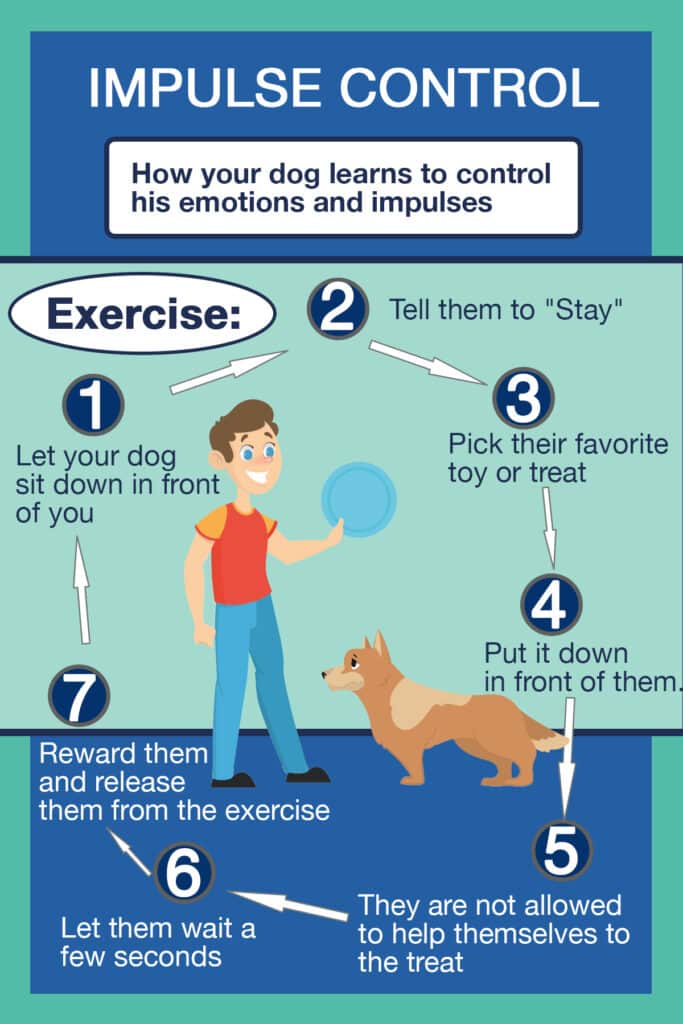
Assessing impulse control in dogs is essential to understanding their behavior. One effective method is the “sit and wait” test. In this test, the dog is asked to sit and stay while the owner places a treat on the ground. The dog must wait for a command to eat the treat. This simple test measures patience and self-restraint.
The “door test” is another useful assessment. The dog is required to wait at the door without bolting when it opens. This helps evaluate their control in high-excitement scenarios. Dogs that pass this test can be safely taken on walks or let outside without risk. It shows they can manage their impulses even when excited.
Another method is the “leave it” command. Here, a desirable object is placed in front of the dog, and they are instructed to leave it alone. This exercise challenges the dog’s ability to resist immediate gratification. Successfully ignoring the object demonstrates excellent impulse control. Consistency in performing this command is key to accuracy.
Playing games like “follow the leader” can also assess impulse control. The dog must follow commands while staying close to the handler. Sudden changes in direction and speed test their focus and self-control. These games are both fun and informative. They help gauge the dog’s responsiveness and restraint.
Formal assessments are also available through professional trainers. These assessments can be tailored to individual dogs and provide a comprehensive evaluation. Trainers use various techniques to test different aspects of impulse control. A professional’s insight can be invaluable for a thorough understanding. This provides a baseline for further training and development.
Canine Confidence: How It Ties With Impulse Control
Canine confidence and impulse control are closely linked. When dogs learn to control their impulsive behaviors, their confidence naturally grows. A confident dog can handle new situations without fear or aggression. This self-assurance makes them more adaptable. It also leads to positive social interactions with both humans and other animals.
Impulse control training provides structure and predictability. Dogs thrive in environments where they know what is expected of them. This sense of security boosts their confidence. As dogs succeed in controlling their impulses, they receive positive reinforcement. This reinforces their self-belief and encourages them to continue making good choices.
Activities that build impulse control also require problem-solving skills. Engaging in these activities challenges dogs mentally. Overcoming these challenges enhances their sense of accomplishment. This mental stimulation contributes greatly to their overall confidence. Confident dogs are more likely to explore and interact without fear.
Confidence affects a dog’s ability to manage stress. Dogs with low confidence might react to stress with unwanted behaviors. Training that includes impulse control helps them handle stress in a calm manner. They learn to process situations thoughtfully rather than reactively. This resilience is key to a well-adjusted, confident dog.
The bond between owner and dog is strengthened through impulse control training. As owners guide their dogs with patience and consistency, trust is built. Dogs learn that they can rely on their owner for support. This trust further enhances the dog’s confidence. A strong, trusting relationship is the foundation of a well-behaved and confident canine companion.
Effective Training Techniques for Enhancing Canine Confidence
Training techniques that boost canine confidence are essential for a well-rounded pet. One effective method is positive reinforcement. This involves rewarding dogs with treats, praise, or toys when they perform a desired behavior. Positive reinforcement encourages them to repeat good behaviors. Over time, this builds their confidence and eagerness to try new things.
Socialization is another key technique. Exposing dogs to different people, animals, and environments helps them adapt better. Early and frequent socialization can prevent fear and anxiety. Leashed walks in busy areas or supervised playdates are excellent options. These experiences teach dogs that new situations are not to be feared.
Using puzzle toys and interactive games is beneficial for mental stimulation. These activities challenge a dog’s problem-solving skills. Successfully completing these tasks gives dogs a sense of accomplishment. Mental stimulation through games helps prevent boredom. It also makes them more confident in their abilities.
Obedience training is fundamental in building confidence. Teaching basic commands like “sit,” “stay,” and “come” provides structure. Consistent practice helps dogs understand what is expected of them. It also builds trust between the dog and the owner. A trained dog is a confident dog.
Agility training can also be very effective. Navigating through an obstacle course requires focus and coordination. This kind of training boosts physical confidence and provides a fun challenge. Agility courses can be set up at home or at a local training center. They are great for both mental and physical exercise.
Finally, creating a calm and supportive environment is crucial. Dogs pick up on their owner’s emotions and energy. Staying calm and positive when training or correcting behavior helps the dog feel secure. A supportive environment fosters trust and confidence. It allows dogs to learn and grow without fear.
Case Studies: Transformation Stories of Dogs
Case studies provide real-world examples of how training can change a dog’s behavior. Meet Bella, a once highly reactive dog who barked at everything. Through consistent impulse control training, she learned to stay calm amid distractions. Her training involved reward-based methods to encourage positive behavior. Now, Bella enjoys peaceful walks and new social interactions.
Another inspiring story is Max, a rescue dog afraid of people and loud noises. His journey began with basic obedience commands to build trust and structure. Slowly, Max was introduced to different environments in a controlled manner. This exposure reduced his anxiety over time. Today, Max confidently meets new friends and handles noisy situations calmly.
Coco was a high-energy pup that couldn’t sit still for a moment. Impulse control exercises like “sit” and “stay” were challenging initially but proved very effective. Over time, Coco learned the value of waiting for commands before acting. Her increased patience has made her more manageable at home and during outings. She’s now the star pupil in her agility class.
Then there is Duke, who had severe separation anxiety whenever left alone. Engaging him in puzzle toys helped redirect his focus when anxious thoughts emerged. Gradually extending the duration he spent alone while rewarding calm behavior worked wonders. Duke’s independence grew positively from these strategies.
Luna had aggression issues due to previous traumas with other dogs which affected her confidence heavily; structured games using impulse control techniques broke the cycle eventually establishing healthier habits during playdates or walks finally restoring harmony between Luna’s indoor companionship as well outdoor explorations making both happy&peaceful experiences!
Resources and Tools for Training Dogs on Impulse Control
Effective training of a dog’s impulse control requires the right resources and tools. There are various items and techniques that can aid this process. Using training treats is essential for positive reinforcement. These treats reward good behavior and help in quick learning. It’s best to keep sessions short and consistent.
Interactive toys are fantastic for mental stimulation. These toys keep the dog’s mind engaged while teaching them to be patient. Puzzle feeders and treat-dispensing toys work wonders. They add an element of fun while training impulse control. Such tools are extremely beneficial for high-energy dogs.
Training collars and leashes can also be very useful. A head halter or no-pull harness can aid in managing difficult behaviors. These tools help maintain control during walks. Consistency in using these tools will reinforce good habits. Always ensure that they are used humanely and correctly.
Professional dog trainers offer various services. Many provide personalized training sessions. Working with a professional can accelerate the training process. They offer specialized techniques and tailored advice. Their expertise can be invaluable.
Books and online resources offer helpful insights and guides. Websites like the ASPCA and the American Kennel Club provide valuable information. Video tutorials are also available for different training exercises. Combining these resources can offer a comprehensive training approach. Consistent education and practice are key to success.
Finally, creating a proper training environment at home is crucial. Ensure the space is free of distractions. Using a designated training area helps the dog focus. A calm and structured environment promotes better learning. This setting proves to be the most effective for impulse control training.
Frequently Asked Questions
Impulse control and canine confidence are closely linked aspects of dog training that significantly impact a dog’s behavior and interactions. Below are some commonly asked questions and their detailed answers on this topic.
1. How can I tell if my dog has impulse control issues?
If your dog acts out of excitement, jumps on people, or rushes out the door, they likely have impulse control issues. These behaviors show that the dog struggles to manage their immediate reactions. It can be challenging for dog owners and make everyday situations stressful.
Observing these patterns can help you identify the need for impulse control training. Improved behavior in these areas will lead to a calmer, more confident dog. Consistent training can correct these behaviors, increasing both safety and enjoyment.
2. Why is impulse control training important for a dog’s safety?
Impulse control training is crucial because it teaches dogs to respond to commands before acting. This helps prevent dangerous situations, like running into traffic or aggressive behavior towards other animals. A well-trained dog learns to wait for the owner’s cue, ensuring a safer environment for everyone.
This type of training reduces the risk of accidents and injuries, providing peace of mind for dog owners. It makes outings and interactions more manageable and less stressful. Investing the time in impulse control training has long-term safety benefits for your dog.
3. What are some simple exercises to improve a dog’s impulse control?
Basic exercises like “sit” and “stay” are excellent starting points for improving impulse control. These commands teach your dog to wait for your permission before acting, which is essential for controlling their impulses. Repetition and consistency are key to success.
Additionally, the “leave it” command can be very effective. This exercise requires the dog to ignore a tempting object or treat until given the go-ahead. Over time, these exercises strengthen the dog’s ability to manage their behavior and act calmly.
4. How does impulse control training strengthen the bond between a dog and its owner?
Impulse control training fosters communication and trust between a dog and its owner. When a dog learns to wait and follow commands, they rely on their owner’s cue, which strengthens their relationship. Consistent training sessions also provide quality time together.
This trust and understanding lead to a more harmonious and cooperative relationship. A well-behaved dog is easier to manage, reducing stress for both the dog and the owner. As a result, the bond between them grows stronger and more positive.
5. Can impulse control training help with other behavior issues?
Yes, impulse control training can help address a variety of behavior issues. By teaching dogs to manage their impulses, they become less reactive and more focused. This training can improve behaviors like excessive barking, leash pulling, and aggression.
As dogs learn to wait for commands, they are less likely to act out impulsively. This makes it easier to address and manage other problematic behaviors. Overall, impulse control training leads to a better-behaved and more balanced dog.
Conclusion
Impulse control and canine confidence are deeply intertwined, playing a crucial role in a dog’s behavior and overall well-being. Training techniques that focus on these aspects foster a safer, happier, and more manageable pet. These methods not only reduce anxiety but also enhance the bond between the dog and its owner.
By investing time in impulse control training, dog owners pave the way for positive outcomes in various scenarios. The benefits extend beyond safety and behavior, contributing to the dog’s emotional stability and social adaptability. Ultimately, a confident, well-trained dog is a joy to live with and is welcomed everywhere.
"*" indicates required fields